Insufficient hygiene practices are a significant factor in the spread of toxoplasmosis. Studies have shown that around 30% of the global population is infected with
T. gondii (
4). Toxoplasmosis poses a significant threat to immunocompromised individuals, including those with malignancies, HIV/AIDS patients, and organ transplant recipients, with symptoms encompassing encephalitis, seizures, and vision disorders (
5,
6). There is an urgent necessity to develop novel, safe, effective, and well-tolerated pharmacological treatments for toxoplasmosis (
27). Current anti-
T. gondii therapies are unable to eliminate parasitic cysts, and patients with compromised immune systems often cannot tolerate these medications (
8). Pyrimethamine and sulfadiazine are first-line medications for treating and preventing toxoplasmosis, but they can cause adverse effects like neutropenia, leukopenia, thrombocytopenia, blood abnormalities, allergic reactions, and increased serum enzymes (
7). Given that severe and life-threatening complications of toxoplasmosis remain unresolved on a global scale, prioritizing the development of novel anti-toxoplasma therapies is imperative to combat the infection and mitigate its spread (
28,
29).
To date, research has focused on the antibacterial and antiparasitic properties of 2-nitroimidazole, including its effects on
Giardialamblia and
T.cruzi. However, there have been no published studies investigating the anti-toxoplasmic activity of 2-nitroimidazole (
30-
32). This study represents the initial investigation into the effects of 2-nitroimidazole on
T. gondii infections and its comparison with sulfadiazine, both in vitro and in vivo.
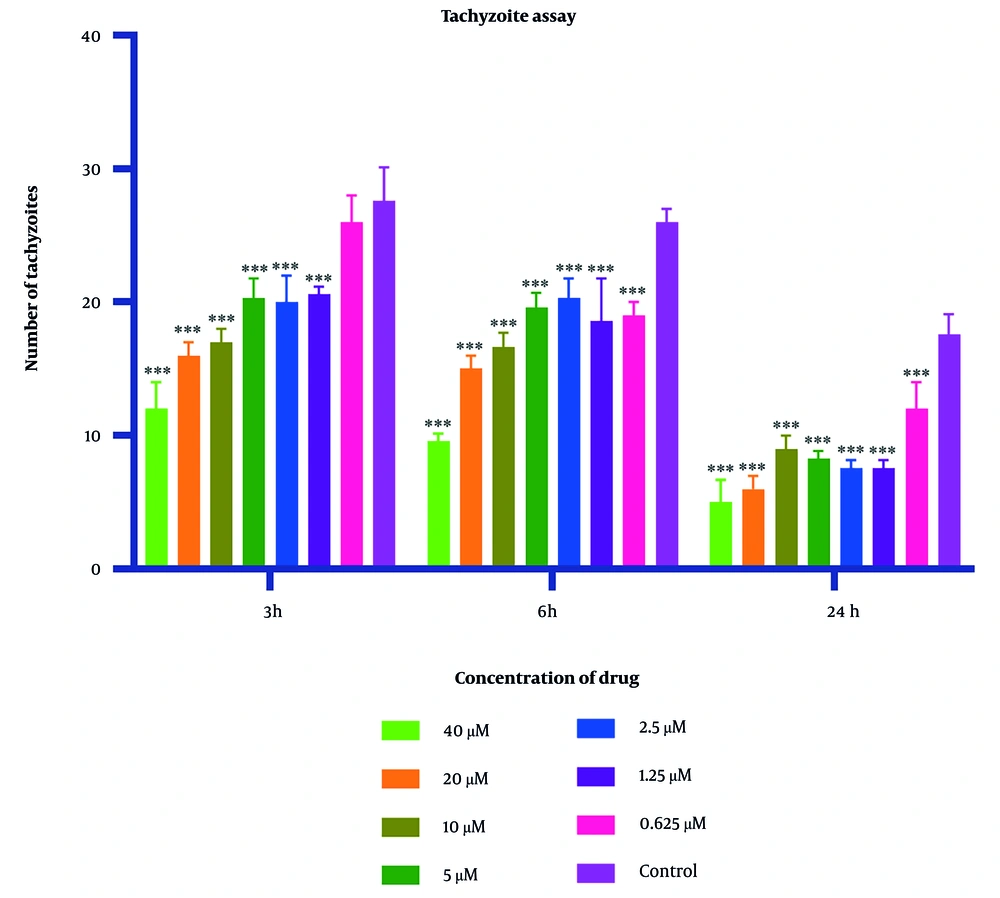
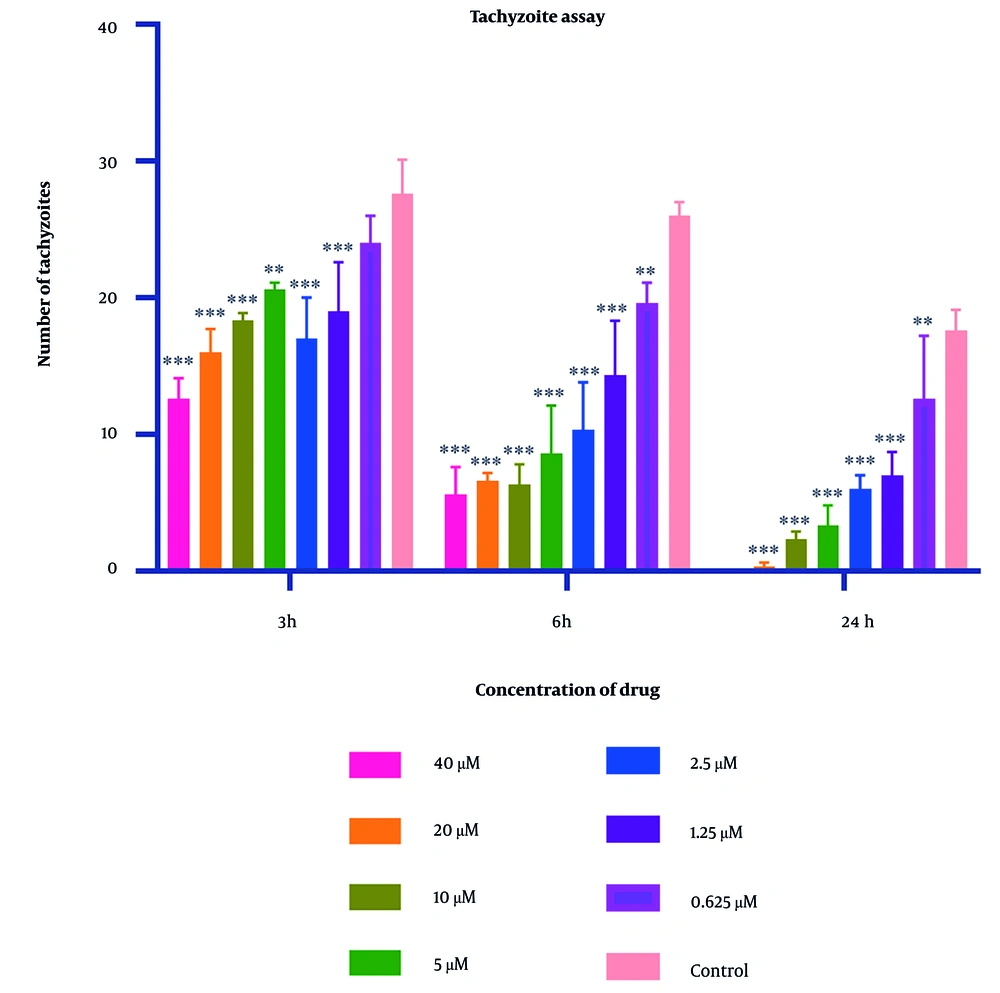
In this investigation, varying concentrations of 2-nitroimidazole and sulfadiazine were administered in culture plates containing T. gondii. According to the counting of tachyzoites with a hemocytometer slide and light microscope, the data revealed that higher concentrations of these drugs, combined with extended exposure durations to tachyzoites, substantially increased the lethal effect on the parasite. Significantly, the highest mortality rate of tachyzoites was observed with 2-nitroimidazole at a concentration of 40 μM and with sulfadiazine at a concentration of 40 μM following a 24-hour exposure period.
The results of this study suggest that 2-nitroimidazole holds promise as a potential therapeutic agent for
T. gondii, demonstrating efficacy comparable to the standard treatment, sulfadiazine, with potentially fewer side effects. In vitro, 2-nitroimidazole exhibited a potent anti-parasitic effect, with an IC50 value of 5.43 μM, which was slightly higher than that of sulfadiazine (2.99 μM). In agreement with our study, a 2022 study by Faria et al. synthesized two novel 2-nitroimidazole compounds and evaluated their efficacy in L929 cell cultures infected with
T. cruzi. The most promising compound, the 5b 2-nitroimidazole derivative, demonstrated significant anti-trypanosomal activity, with a half-maximal inhibitory concentration (IC50) of 2.3 μM (
33). These findings highlight the anti-toxoplasmic activity of 2-nitroimidazole, emphasizing its potential as an effective treatment for toxoplasmosis.
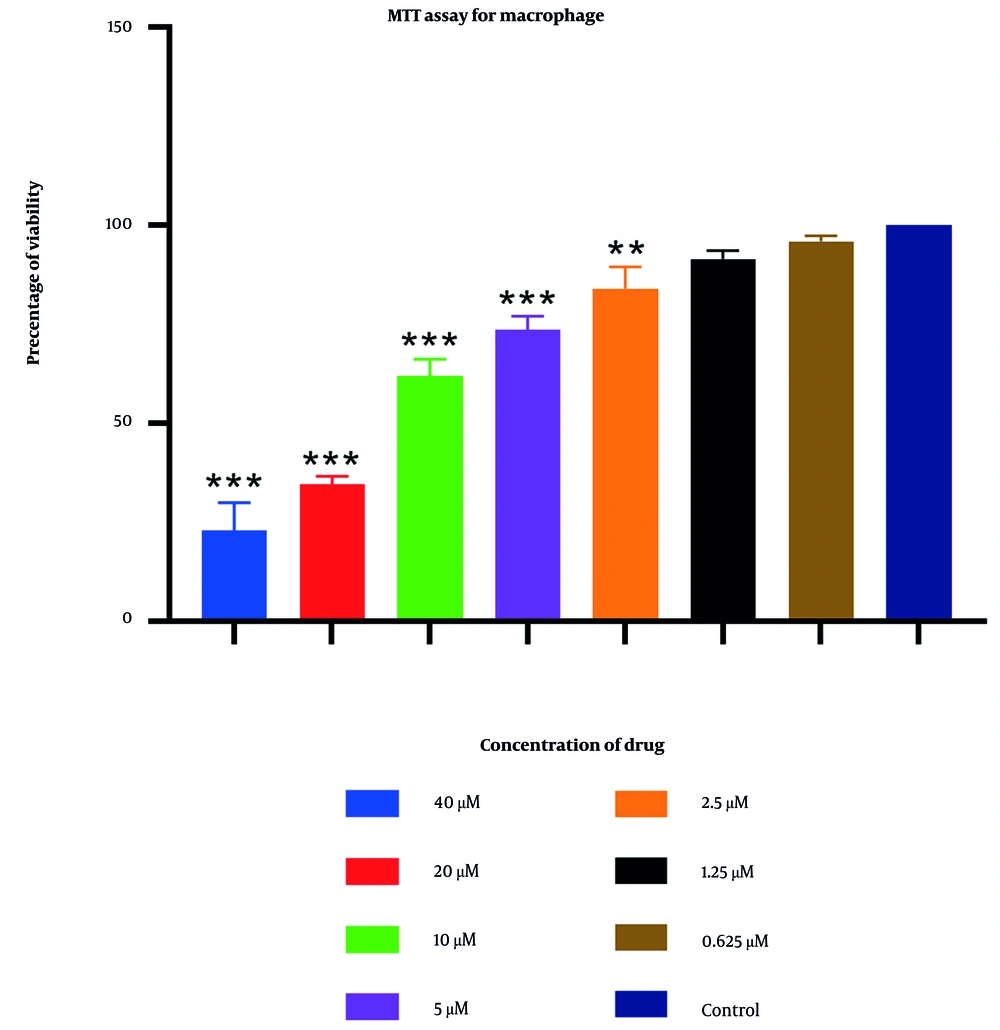
Additionally, the MTT assay was employed to assess the potential cytotoxicity of 2-nitroimidazole on macrophages. The results indicated a high survival rate of macrophages at lower concentrations of 2-nitroimidazole, demonstrating minimal toxicity. Specifically, at concentrations of 2.5 μM, 1.25 μM, and 0.625 μM, the survival rates of macrophages were 84%, 91.5%, and 96%, respectively. This aspect is vital, as an optimal therapeutic agent must effectively target the parasite while preserving the viability of host cells. The combination of low cytotoxicity and potent anti-tachyzoite activity positions 2-nitroimidazole as a promising candidate for further development and potential clinical application in toxoplasmosis treatment. This is a notable advantage over sulfadiazine, which is associated with a range of adverse effects, including neutropenia, leukopenia, and thrombocytopenia.
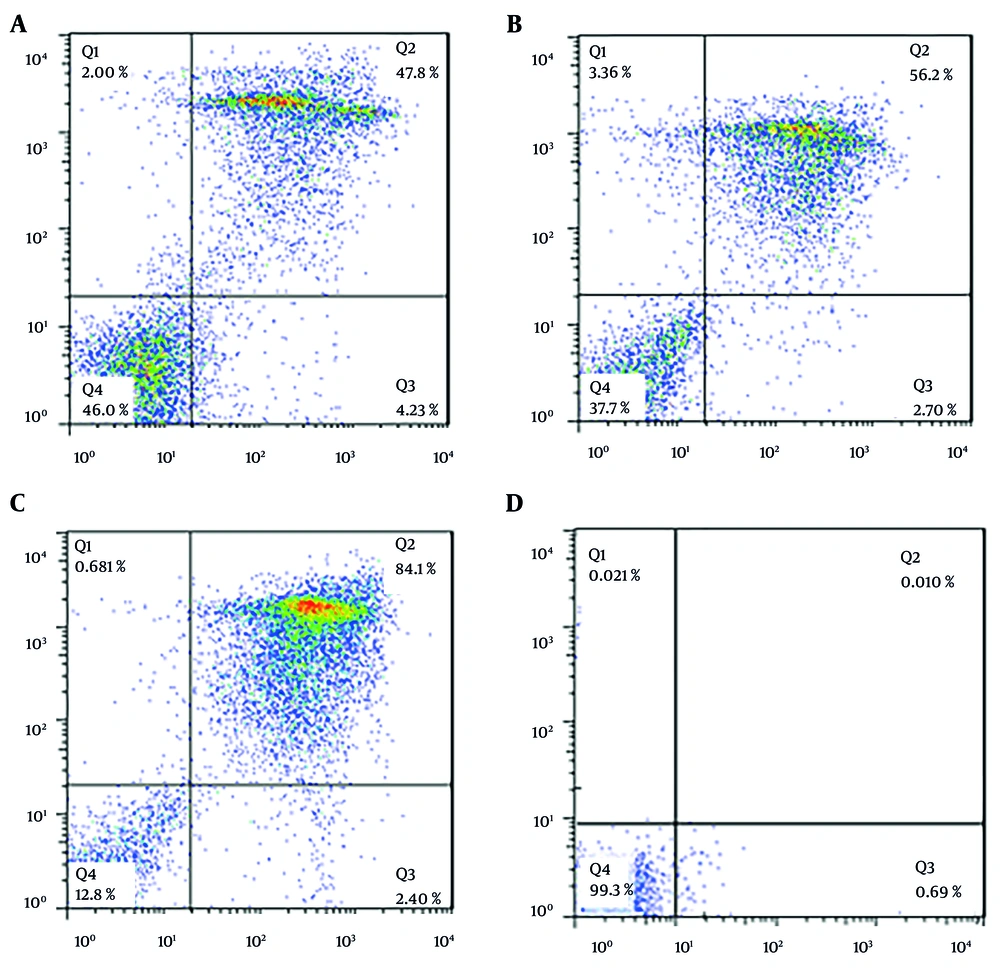
Additionally, these findings could encourage further research to optimize dosing regimens and explore the synergistic potential of these drugs in combination therapy. Flow cytometry analysis revealed that 2-nitroimidazole and sulfadiazine induced apoptosis in approximately 58.9% and 86.5% of tachyzoites, respectively. The flow cytometry analysis revealed that 2-nitroimidazole induced apoptosis in a significant proportion of T. gondii tachyzoites (58.9%) with minimal necrosis, supporting its targeted action against the parasite without excessive host cell damage. This is particularly important as effective anti-parasitic treatments should minimize harm to the host, especially in immunocompromised individuals who are more vulnerable to treatment-related side effects.
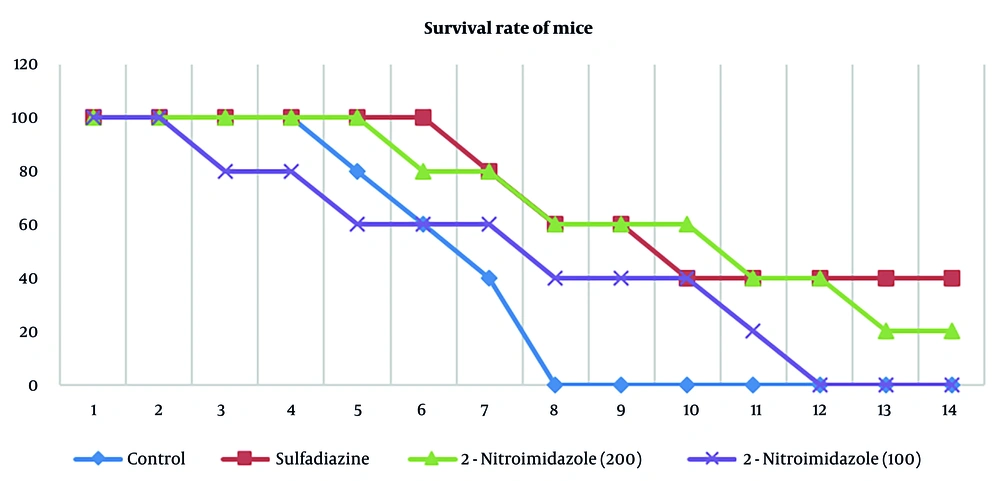
Both MTT and flow cytometry analyses validated the efficacy of 2-nitroimidazole as a viable therapeutic option for toxoplasmosis. To further substantiate these findings, 2-nitroimidazole and sulfadiazine were administered to BALB/c mice for treatment evaluation. All mice in the control group perished by the eighth day. In vivo, while sulfadiazine provided the best survival outcome, with two mice surviving until day 14, 2-nitroimidazole demonstrated comparable efficacy, with one mouse surviving to the same endpoint. These findings highlight the potential of 2-nitroimidazole as an effective alternative to sulfadiazine, with the added benefit of lower cytotoxicity to host cells.
Given these findings, 2-nitroimidazole presents as a promising candidate for further development, particularly in combination therapies or as an adjunct to standard treatments. Further research, including optimizing dosing regimens and exploring its efficacy in chronic and latent stages of T. gondii infection, will be essential in determining its clinical applicability. Additionally, the lower cytotoxicity observed in this study suggests that 2-nitroimidazole may offer a safer alternative, particularly for immunocompromised patients who require long-term treatment.
5.1. Conclusions
This research underscores the potential of 2-nitroimidazole as a treatment option for T. gondii. The findings from both in vitro and in vivo experiments revealed notable anti-tachyzoite effects and low toxicity, suggesting it could be a valuable candidate for further study. While sulfadiazine continues to be the standard therapy, 2-nitroimidazole demonstrated similar effectiveness and may present a safer alternative with fewer adverse effects. To fully realize its clinical value, future work should focus on larger sample sizes, expanded dosing studies, and combination approaches to refine its therapeutic use.