Fulltext
The full text of this article is available on PDF.
Journal of Clinical Research in Paramedical Sciences
The Official Journal of Paramedical School, KUMS
Authors
Background: Nurses must stay awake during the night to provide nursing cares that can causes Sleepiness disorders. It has been shown that Transcutaneous Electrical Acupoint Stimulation (TEAS) as a new method of acupuncture with low side effect and invasion
has an appropriate effect to improve the Sleep disorders. The aim of this study was to determine the efficacy of TEAS on Sleepiness disorder of nurses who works in afternoon and night shifts.
Methods: in this study 60 nurses (38 female 22 male) who work in afternoon and night shifts in were studied. Sleepiness disorder evaluated by Epworth Sleepiness Scale (ESS). If a person had ESS≥9 was qualify for entrance to study. Patients divided in three groups
including acupressure points (Electrical acupoint sstimulation in SP6, H7 and Li4), Sham points and control group with no intervention. For these patients, TEAS was done in 10 sessions (5 minute). Finally, data were analyzed by SPSS 16.
Results: Of 60 nurses, 36 nurses (60%) had ESS≥9. There wasn’t any significant difference between ages, sex, marriage and experience with ESS (P>0.05). Also, there is no significant difference in ESS between three groups before intervention (P>0.05). After intervention, there is significant improvement in the all of ESS in the acupressure points group, while in the Sham points and control group there isn’t significant improvement.
Conclusion: According to the results of this study, the prevalence of Sleepiness disorder in shift worker nurses is high and screening and treatment of this disorder should be done. The results of this study showed TEAS is an effective, non-invasive and easy method for
treatment of Sleepiness disorder in these patients.
© 2015, Journal of Clinical Research in Paramedical Sciences. This open-access article is available under the Creative Commons Attribution-NonCommercial 4.0 (CC BY-NC 4.0) International License (https://creativecommons.org/licenses/by-nc/4.0/), which allows for the copying and redistribution of the material only for noncommercial purposes, provided that the original work is properly cited.
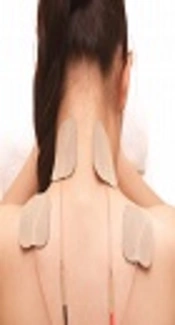
Qanbari Zadeh B, Hadadian F, Salari N, Maazinezhad S, Khaledi Paveh B. The Effect of Transcotaneus Electrical Acupoint Stimulation on Sleep Quality in Nurses. J Kermanshah Univ Med Sci. 2018;22(1):e68669. doi: https://doi.org/10.5812/jkums.68669
Aghamohammadi A, zafari M, moslemi L. Using of Trascutaneous Electrical Nerve Stimulation in Acupuncture Points for Reducing Labor Pain. Zahedan J Res Med Sci. 2013;15(2):e93092. doi:
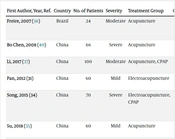
Samadi S, Mehrain A, Kheirollahi A, Baradaran M, Arab Bafrani M. Efficacy of Acupuncture in the Treatment of Obstructive Sleep Apnea: A Review. Arch Neurosci. 2024;11(2):e144231. doi: https://doi.org/10.5812/ans-144231
Hadadian F, fayazi S, Ghorbani A, Falah H, Latifi SM. The effect of trancscutaneus electrical acupoint stimulation (TEAS) on fatigue reduction in hemodialysis patients. J Kermanshah Univ Med Sci. 2011;15(3):e79354. doi:
Nejati P, Angoorani H, Khatami F, Mousavi R. Acupuncture Plus Dry Needling, an Effective Treatment Method for Chronic Neck Pain. Shiraz E-Med J. 2015;16(6):e27942. doi: https://doi.org/10.17795/semj27942
Last Update: 2 weeks ago
Last Update: 2 weeks ago
Last Update: 2 weeks ago
Last Update: 5 days ago