Fulltext
The full text of this article is available on PDF.
Journal of Clinical Research in Paramedical Sciences
The Official Journal of Paramedical School, KUMS
Authors
Background: Autism syndrome is a complex neurological disorder. The main causes of autism disorder is not fully understood. However, the results of some studies indicated that
change in serum level of brain-derived neurotrophic factor (BDNF) has role in autism etiology but, amount and how to change of this factor in not clear today. The aim of this study was to determine the serum levels of BDNF and its relation with repetitive behaviors test in autistic newborn rats.
Methods: In this study we used 15 virgin female rats that divided into 2 case and control groups; for inducing of autism in their newborns, they exposed to Valporic acid on 12.5 of pregnancy. For measuring serum levels of BDNF and evaluation of repetitive behaviors, we used elisa method and Maze Y test, respectively.
Results: The results of this study indicated that in autistic rats, median of BDNF serum levels is significantly increase in compare to the control group (P<0.001). Also, in female rats, serum levels of BDNF is significantly higher than male rats (P<0.01). There wasn’t significant relation between serum levels of BDNF and repetitive behaviors (P=0.23).
Conclusion: In summary, we concluded that serum levels of BDNF has change in autism syndrome and it can has role in etiology of this disorder. However, according to conflicting results of studies about serum levels of BDNF and it relation with severity of this disorder, more research recommended.
© 2015, Journal of Clinical Research in Paramedical Sciences. This open-access article is available under the Creative Commons Attribution-NonCommercial 4.0 (CC BY-NC 4.0) International License (https://creativecommons.org/licenses/by-nc/4.0/), which allows for the copying and redistribution of the material only for noncommercial purposes, provided that the original work is properly cited.
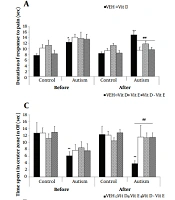
Abbarin D, Vafaei AA, Rashidy Pour A, Bandegi AR, Taherian A, et al. Vitamins D and E Improve Valproic Acid-Induced Autistic-Like Behaviors and Oxidative Stress in the Rat Offspring. Middle East J Rehabil Health Stud. 2023;10(2):e129627. doi: https://doi.org/10.5812/mejrh-129627
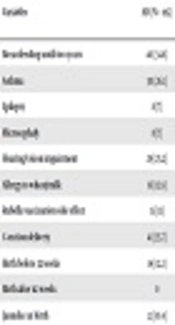
Malek A, Farhang S, Amiri S, Abdi S, Razzaghi Rezaih A, et al. Risk Factors for Autistic Disorder: A Case-Control Study. Inn J Pediatr. 2019;29(3):e80935. doi: https://doi.org/10.5812/ijp.80935
Nazari Y, Nikbakht M, Habibi A, Shakeryan S. Acute and Chronic Effects of Combined Training on Brain-Derived Neurotrophic Factor Levels and Its Association with Anthropometric Variables in Overweight Men. Ann Mil Health Sci Res. 2016;14(4):e13037. doi: https://doi.org/10.5812/amh.13037
Salehzadeh Einabad Z, Nasiri M, Barin S, Roshan R. The Relationship between Depression and Broader Autism Phenotype in Nonclinical Population. Zahedan J Res Med Sci. 2017;19(9):e11552. doi: https://doi.org/10.5812/zjrms.11552
Moghadasi M, edalat manesh MA, moeini A, namatollahzadeh M. Effects of eight weeks resistance training on brain derived neurotrophic factor in female patients with multiple sclerosis. koomesh. 2015;17(1):e150776. doi:
Last Update: 2 weeks ago
Last Update: 2 weeks ago
Last Update: 2 weeks ago
Last Update: 5 days ago