Fulltext
The full text of this article is available on PDF
Journal of Kermanshah University of Medical Sciences
Peer-reviewed Medical Quarterly
Authors
Introduction: Polycystic ovary syndrome is characterized by ovulatory dysfunction and hyperandrogenism. Although insulin resistance is not a diagnostic criterion for polycystic ovary syndrome, it has an important role in the development of the clinical presentation in a majority of patients with this syndrome. Many studies have examined the relationship of epicardial fat thickness with insulin resistance and cardiovascular complications. This study aimed to determine the relationship of epicardial fat thickness with polycystic ovary syndrome and insulin resistance.
Methods: This cross-sectional study recruited women with polycystic ovary syndrome presenting to endocrinology clinic in Kermanshah city. Sixty-four patients with polycystic ovary syndrome, without underlying diseases, were divided into two groups of 32 according to the HOMA-IR index as insulin resistant and insulin sensitive. Their epicardial fat thickness was measured by transtorasic echocardiography.
Results: The results of this study suggest that epicardial fat thickness has a direct and significant relationship with insulin resistance and BMI in patients with polycystic ovary syndrome.
Conclusion: According to the results, the increase in the thickness of epicardial fat is independent of the disease in patients with polycystic ovary syndrome. The cause of the increased thickness is the metabolic syndrome and increased insulin resistance in these patients.
© 2017, Journal of Kermanshah University of Medical Sciences. This open-access article is available under the Creative Commons Attribution-NonCommercial 4.0 (CC BY-NC 4.0) International License (https://creativecommons.org/licenses/by-nc/4.0/), which allows for the copying and redistribution of the material only for noncommercial purposes, provided that the original work is properly cited.
Elshorbagy HH, Fouda ER, Kamal NM, Bassiouny MM, Fathi WM. Evaluation oF Epicardial Fat and Carotid Intima-Media Thickness in Obese Children. Inn J Pediatr. 2016;26(1):e2968. doi: https://doi.org/10.5812/ijp.2968
Eren E, Koca B, Ture M, Guzel B. Epicardial Adiposity in Children with Obesity and Metabolic Syndrome. Inn J Pediatr. 2014;24(4):. doi:
Hatami H, Montazeri SA, Hashemi N, Ramezani Tehrani F. Optimal Cutoff Points for Anthropometric Variables to Predict Insulin Resistance in Polycystic Ovary Syndrome. Int J Endocrinol Metab. 2017;15(4):e12353. doi: https://doi.org/10.5812/ijem.12353
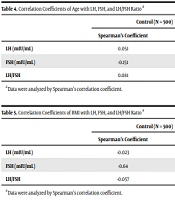
Fazli D, Moghaddasi SP. Correlations Between Gonadotropin Hormones and the Manifestations of Polycystic Ovary Syndrome. Thrita J Neu. 2022;11(1):e117396. doi: https://doi.org/10.5812/thrita-117396
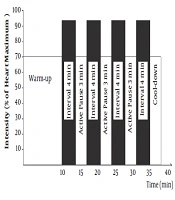
Faryadian B, Behpoor N, Taedibi V. The Effect of 12 Weeks of Intense Interval Training on Changes in Adipose Levels and Visceral Adiposity Index in Women with Polycystic Ovary Syndrome. J Health Rep Technol. 2020;6(1):e97401. doi: https://doi.org/10.5812/ijhls.97401
Last Update: 1 week ago
Last Update: 1 week ago
Last Update: 1 week ago
Last Update: 3 days ago