Journal of Semnan University of Medical Sciences
Immunopathology of multiple sclerosis
Authors

Abstract
Multiple sclerosis (MS), an inflammatory disorder of central nervous system (CNS), is the most common cause of neurological disability especially in young adults. The disorder results from interplay between unidentified genetic and environmental factors. In MS, cells of immune system attack myelin, progressive loss of certain body function and physical ability occur. In severe cases, the progression of disease leads to permanent damage. The auto-reactive peripheral CD4+ T cells recognize auto-antigen within CNS parenchyma and polarize toward Th1 phenotype. Activated Th1 cells cause myelin disruption and release of new potential CNS auto- antigen. Pro-inflammatory cytokines such as interferon- g , TNF- a and chemokines which is secreted by Th1 cells induce additional unspecific inflammatory cells and specific anti myelin antibody-forming B cells that amplify tissue injury. Finally, the apoptotic death of the T cells or conversion of the T cells toward Th2 phenotype positively modulates the outcome of the lesions in CNS . Clinical manifestation of the disease is classified in three types, primary: direct damage (weakness, tremors, tingling,etc) secondary: result of primary (paralysis lead to bedsores and bladder/urinary incontinence problems) tertiary: social, psychological and vocational complication (depression is very common). The aims of treatment are: reduction of sickness attack (by corticosteroid, interferon beta 1b and 1a, glatriamer acetate, natalizumab, etc) and reduction of the disorder. The prospect of the potential tools to prevent MS is tempting, yet challenging to investigate studies about roll of vitamin D in reduction of development of disease. Intensive research on MS provides a promising prospective of the disease management in the future.
Highlights
Copyright
© 2013, Author(s). This open-access article is available under the Creative Commons Attribution 4.0 (CC BY 4.0) International License (https://creativecommons.org/licenses/by/4.0/), which allows for unrestricted use, distribution, and reproduction in any medium, provided that the original work is properly cited.
Similar Articles
Connective tissue diseases mimicking multiple sclerosis
Moghaddassi-Jahromi M, Sahraian MA. Connective tissue diseases mimicking multiple sclerosis. Zahedan J Res Med Sci. 2011;13(6):e93828. doi:
Cognitive Impairment in Multiple Sclerosis
Sahraian MA, Etesam F. Cognitive Impairment in Multiple Sclerosis. Zahedan J Res Med Sci. 2013;16(1):. doi:
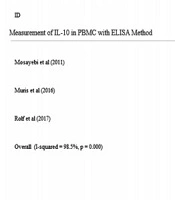
Effects of Vitamin D Supplementation on Inflammatory Markers in Multiple Sclerosis Patients: A Systematic Review and Meta-analysis
Mehrabadi S, Zahedi E. Effects of Vitamin D Supplementation on Inflammatory Markers in Multiple Sclerosis Patients: A Systematic Review and Meta-analysis. J Arch Mil Med. 2021;9(1):e112426. doi: https://doi.org/10.5812/jamm.112426
Comparing the Cognitive Function in Multiple Sclerosis Patients
Raghibi M, khosravy M. Comparing the Cognitive Function in Multiple Sclerosis Patients. Zahedan J Res Med Sci. 2012;14(2):e93580. doi:
- Scopus by DOI: 0
Last Update: 0 months ago
- Scopus by Title: 0
Last Update: 0 months ago
- Scopus by Title (Ref): 3
Last Update: 0 months ago
- CrossRef: 0
Last Update: 2 days ago