
1. Context
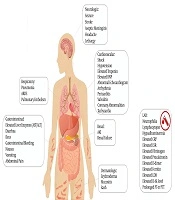
Juvenile or child-onset idiopathic inflammatory myopathies (JIIMs) are a diverse group of rare autoimmune diseases that primarily affect children under 18 years old. These conditions mainly affect skeletal muscles but can also extend to the skin and other systemic organs, such as the lungs, gastrointestinal tract, joints, cardiovascular system, and peripheral nerves (1). The estimated incidence of JIIM is between 1 - 4 cases per million children per year, with a prevalence of 2 - 3 cases per 100,000 children (2). Studies have shown that severe morbidity and mortality rates can reach around 8% in certain cohorts (3).
The European Alliance of Associations for Rheumatology–American College of Rheumatology (EULAR–ACR) has classified the most common form of JIIM, juvenile dermatomyositis (JDM), into antibodies-specific or antibody-associated variants. However, further improvements are needed to include other variants of JIIM, immune-mediated necrotizing myopathy (IMNM), overlap myositis syndromes (OMS), and a rarely sporadic inclusion body myositis (sIBM) (1, 4). Recently, the classification has been updated to include myositis-specific antibodies (MSAs) to the myositis syndromes, which might be present in approximately 50 - 60% of children (5, 6). This addition has helped identify associated serious medical conditions, such as interstitial lung diseases (ILD). Factors such as disease severity, duration of disease activity, organ damage, and functional disability contribute significantly to the high mortality and morbidity rates observed in JIIM (7).
Although IBM is generally sporadic in adults, it is rare to be familial and inherited (8). However, there have been a few reported cases of inherited IBM, particularly in Jewish and Brazilian families, as well as in families with autosomal dominant or recessive patterns (8-12). Genetic susceptibility factors have also been observed to play a role in sIBM (sporadic IBM) (13). It is believed that certain human leukocyte antigen (HLA) haplotypes might be necessary but not sufficient for the development of IBM (9). Garlepp et al. found DR52 and DR3 genotypes in more than 90% of patients with sporadic IBM; however, more than 70%% of DRb1 0301, DRb3 0101, or DRb3 0202 alleles (DR3 haplotype) and DQb1 0201 confirms its association with HLA class II (13)]. Major histocompatibility complex (MHC) allele HLA-DRB1*03:01 showed the most significant association with IBM, and that risk could be largely attributed to amino acids within the peptide-binding pocket. The identified gene sequencing in IBM rare missense variants in proteins regulating protein homeostasis includes VCP and SQSTM1 (9).
The age during early diagnosis and weakness distribution pattern differs between inherited IBM (h-IBM) and sIBM. Patients with sIBM usually present with prominent thigh and forearm weakness after the age of 50 years; nevertheless, h-IBM patients present earlier in life, and the pattern of weakness varies (8, 11). In some cases, the 8.1AH haplotype has been associated with various autoimmune diseases, including sporadic IBMs (11). The inherited form of IBM expanded to include a broader range of hereditary groups of inclusion body myopathies, which might not exhibit inflammatory features but histologically resemble sIBM (8).
2. Methodology
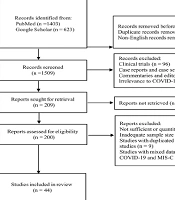
A literature review of over 44 medical articles in different databases, including Google Scholar, Web of Science, and Scopus, was carried out with specific terms such as JIIM, IBM, Inflammatory Myopathies in Children, and Inherited IBM. The main inclusion criteria were inflammatory myopathies or myositis, age less than 18 years, no familial predispositions, and microscopic and serological features of IBM. The main excluded criteria were patients above 18 years, inherited myopathies, non-inflammatory myopathies, and no remarkable signs of IBM features. The search also included all types of medical articles, including original articles, case reports, review articles, and preliminary reports.
2.1. Sporadic Inclusion Body Myositis (sIBM) in Adults and Children
Sporadic inclusion body myositis is a rare variant of JIIM that is rarely seen in children. It is characterized by an acquired and slowly progressive myopathy, which is often misdiagnosed as other forms of muscular and inflammatory myopathies, particularly JDM, during the early stage of the disease (14). The estimated prevalence of adult sIBM is approximately 20 - 40 cases per 1,000,000 individuals, with higher rates observed in individuals above 50 years of age (>200 cases per million people) (15, 16). The annual incidence rates for individuals above 30 years old range from 1 to 10 cases per million per year (16). Notably, there have been no reported cases of sIBM in children based on available data. Previously, sIBM was primarily associated with elderly individuals, particularly men. However, with advancements in pathological studies, including the use of muscle biopsy and muscle enzyme profiles in clinical practice, cases of sIBM in younger patients have been reported (17-19) (Table 1). It remains unclear whether the disease is truly absent in these age groups or if it is due to a lack of recognition by clinicians.
Table 1.
Reported Cases of Sporadic Inclusion Body Myositis (sIBM) in Children Since 1980
| Age (y) | Gender | Presentation | Associated Conditions | Serology | CK mu/mL | Treatment | Reference |
|---|---|---|---|---|---|---|---|
| 14 | Female | Weakness and dysphagia | Hyperthyroidism/SLE/SD | Anti Ro52 | Normal | IVIG/Steroid/Rituximab | Chen et al. (17) |
| 9 | Male | LGMD-like weakness | Left ventricular hypertrophy | Not reported | 3000 | No data | Riggs et al. (18) |
Abbreviations: SD, Sjogren disease; SLE, systemic lupus erythematosus; IVIG, intravenous immunoglobulin; LGMD, limb-girdle muscular dystrophy.
In the early stages of the disease, the diagnosis of sIBM is challenging as its features can resemble other associated conditions, such as early onset dermatomyositis, limb-girdle muscular dystrophy (LGMD), or OMS. Inclusion body myositis is a specific type of inflammatory muscle disease that primarily affects older adults. It is characterized by progressive muscle weakness and atrophy, particularly in the muscles of the arms and legs. Inclusion body myositis is considered a distinct entity from LGMD and overlaps myositis. The difference between these diseases is clearly defined by clinical presentation and muscle biopsies.
Limb-girdle muscular dystrophy refers to a group of genetic muscle disorders that primarily affect the muscles of the hips and shoulders. It is characterized by progressive muscle weakness and wasting, leading to difficulties with walking, climbing stairs, and other activities. Limb-girdle muscular dystrophy is caused by mutations in various genes and, in some cases, is inherited. In a muscle biopsy, LGMD is histologically different from IBMs as it does not show any inflammation, and the muscle fibers appear necrotic and are associated with significant atrophic and hypertrophic fibers and multiple internal nuclei. Overlap myositis, on the other hand, is a term used to describe a condition that shares features of both IBM and other autoimmune myositis, such as dermatomyositis or polymyositis. It is characterized by muscle weakness, inflammation, and the presence of specific autoantibodies. Overlap myositis can present with symptoms and features that overlap with both IBM and other autoimmune myositis, making it a challenging condition to diagnose and manage. Close follow-up and monitoring of the disease progression are crucial for establishing a definitive diagnosis of sIBM.
2.2. Clinical Features of sIBM in Adults and Children Versus Other Types of JIIM
The clinical manifestations of patients with Juvenile JIIMs can vary. Typically, most JIIM patients experience symmetrical myositis affecting the proximal muscles. One notable characteristic of JDM is the presence of calcinosis in approximately 20% of patients (20). Various MSAs or myositis-associated antibodies are frequently detected in all forms of JIIM. Among these, anti-TIF1 antibody which has been reported in up to 35% of JIIM cases (6). Skin involvement occurs in about 20% of cases, particularly in patients with anti-TIF1 and anti-M2 antibodies (5). In children, myopathy associated with anti-SRP or anti-HMGCR antibodies might present with slowly gradual muscle weakness, which can be misdiagnosed as muscular dystrophy (21). Although rare, myositis can also be a clinical presentation of childhood sarcoidosis or granulomatous myositis (22). Consequently, these two conditions should be considered in children presenting with myositis and hypercalcemia. Patients with sIBM also present with painful muscle weakness affecting predominantly the finger extensors and proximal lower limbs.
Dysphagia, respiratory depression, and facial twitching were reported commonly in the late stage of the disease, and its occurrence is still well understood (23, 24). Dysphagia was observed to be significant, affecting 65% of patients, and approximately 30 - 50% of cases required feeding tube placement 10 years after the onset of symptoms (25). While magnetic resonance imaging (MRI) can be a useful diagnostic tool for identifying muscle or skin involvement in JDM, its sensitivity is lower in children with sIBM (26). Sporadic inclusion body myositis is typically not a monogenic disease, and the progression of muscle weakness is often associated with different connective tissue diseases (CTDs), such as Sjogren's syndrome (SS), systemic lupus erythematosus (SLE), scleroderma, and autoimmune thyroiditis (AT). Chen et al. reported a case of a 14-year-old female diagnosed with sIBM after experiencing long-term symptoms of SLE, Sjogren's disease, and hyperthyroidism (17). Riggs et al. also diagnosed a case of sIBM after a long-term misdiagnosis as LGMD (18) (Table 1).
2.3. Myositis-Specific Antibodies (MSAs) in IBM of Adults and Children Versus JIIM
As previously mentioned, MSAs are commonly used in the diagnosis of JIIM to determine disease phenotype and guide personalized management approaches (4). Myositis-specific antibodies-myositis associated antibodies (MSA-MAA) profiling panel has the potential to impact treatment decisions by providing information on the likelihood of a chronic disease progression or the development of specific complications, such as ILD or calcinosis. However, there is insufficient evidence regarding the clinical usage of specific antibodies for diagnosing sIBM. While myositis antibody profiling is recommended for children, the findings are not promising, and it remains unclear if the same antibodies are associated with adult sIBM.
Anti-cN1A antibodies have a sensitivity of 35% and a specificity of 98% for sIBM (5). Furthermore, the existence of the anti-Ro52 antibody is linked to a myositis overlap phenotype and a heightened likelihood of ILD. The progression of sporadic inclusion body myositis (sIBM) is long-term, necessitating the use of multiple medications and exhibiting a lower rate of remission (4, 27). Anti-cN1A antibodies might impact protein degradation in muscle fibers, making the determination of anti-cN1A autoantibodies potentially valuable for diagnosing sIBM (28). Chen et al. reported a positive case of anti-Ro52 antibody and anti-cN1A antibody in a child with sIBM (17). Patients with sIBM also exhibit a high proportion of hyperdifferentiated CD8+ T cells in both blood and skeletal muscle tissue (15). Furthermore, the presence of anti-cN1A antibodies in sIBM cases suggests the involvement of B-cell immunity and its potential impact on muscle fiber protein degradation (29).
2.4. Probable Pathogenesis of sIBM in Adults and Children
Juvenile idiopathic inflammatory myopathy involves a complex interaction between genetic factors and environmental influences, resulting in dysfunction of the immune system, blood vessels, and metabolism. Ongoing inflammation and tissue damage are driven by a complex interplay between innate and adaptive immunity. Ultraviolet (UV) radiation, air pollution, and viral infections are considered devastating environmental triggers for JIIM (30). Type-I interferon activation is assumed to play a principal role in the pathological changes observed in numerous body tissues. The presence of a type-I interferon signature is a well-identified component of JIIM; however, further research is required to explore the main drivers of this signature and the subsequent immune dysregulation it leads to (31).
Immune dysregulation occurring within the affecting skeletal muscles or other tissues is thought to contribute to the disease pathogenesis. In skeletal muscles, the overexpression of major histocompatibility complex (MHC) proteins is induced by interferons, leading to endoplasmic reticulum (ER) stress and inflammatory cell hyperactivation through the nuclear factor kappa B (NF-κB) pathway. The pathogenesis of sIBM has been recently reviewed; nevertheless, its exact cause remains undefined.
Sporadic inclusion body myositis has also been frequently described in association with multiple sclerosis, CTDs, and rheumatoid arthritis (27, 28). According to a study conducted by Chen et al., the coexistence of anti-cn1a antibodies and thyroid autoantibodies might indicate the potential development of sIBM, particularly in patients who exhibit decreased muscle strength but normal early muscle enzyme levels (17). In the case of the patient, the persistent presence of thyroid autoantibodies and anti-SSA antibodies could potentially be associated with the presence of anti-cN1A antibodies in children. The pathogenesis of sIBM might involve the unfolding and misfolding of proteins, leading to the formation of inclusion bodies. The abnormal accumulation of unfolded proteins within cells can result in their aggregation and the subsequent formation of inclusion bodies. The persistent presence of thyroid peroxidase antibodies (TPO-Ab) and thyroglobulin antibodies (Tg-Ab) in the patient might have triggered the development of sIBM through the abnormal accumulation of unfolded proteins (17).
There have been reports of an association between sIBM and viral infection (32). Riggs et al. reported a case of sIBM in a child who initially presented with LGMD-like weakness and had a history of mumps virus infection during early childhood (18). Recent research indicates the implication of mitochondrial dysfunction and ER stress in sIBM and related myositis conditions. In the case of JDM, neutrophil extracellular traps (NETs) were discovered to harbor mitochondrial DNA (mtDNA). This finding is significant because studies on SLE have demonstrated that mitochondrial dysfunction can induce the release of oxidized mtDNA within NETs, subsequently activating a type-I interferon response (33, 34). The analysis of gene expression in skeletal muscle has also implicated mitochondrial dysfunction in JDM. However, further exploration through experiments and advanced trials is needed to investigate this aspect in sIBM. The limited reporting of sIBM in children has led to an underestimation of the number of cases.
Genetic aberrations are commonly observed in JDM due to extensive data in cohorts. A large study conducted in 2022 showed a strong association between the HLA-DRB1*03:01 allele and amino acid position 37 within HLA-DRB1 in JDM. This finding allowed for the differentiation between juvenile and adult-onset disease (35). Human leukocyte antigen haplotypes have also been reported in familial h-IBM (11). However, no genetic studies have been conducted on sIBM cases in children due to the low number of detected or reported cases.
2.5. Histopathological Features of sIBM in Children
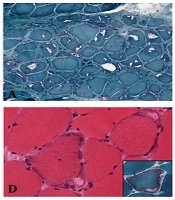
In a muscle biopsy, the typical findings in sIBM patients include myonecrosis, muscle fiber regeneration, rimmed vacuoles, eosinophilic protein aggregates, endomysial inflammation with invasion of non-necrotic muscle fibers, and amyloid deposition as observed through Congo-red staining. Electron microscopy (EM) reveals the presence of tubulofilamentous inclusions measuring 15 - 21 nm (8). Mitochondrial dysfunction is commonly associated with sIBM, particularly more so than the hereditary form (36). These changes are typically observed in IBM cases and are not specific diagnostic markers for early-onset disease. Generally, children with sIBM rarely exhibit notable features. The predominant features described in the two reported cases included myonecrosis, CD8 T-cell infiltration, one or two rimmed vacuoles, and minimal MHC-I expression (17, 18).
2.6. Current Treatment of Adult and Children sIBM Versus JIIM
When approaching the treatment of juvenile JIIMs, it is crucial to take into account the disease's severity, encompassing both systemic and/or organ involvement, and the specific disease phenotype. The utilization of the MS-MAA profiling panel can aid in the selection of the most optimal treatment for the patient. This is due to the associations observed between certain MSAs and MAAs with distinct clinical phenotypes, prognosis, and the potential risks of complications. The Childhood Arthritis and Rheumatology Research Alliance (CARRA) guideline, which is referenced as a reliable source, offers consensus treatment plans tailored to different levels of severity in juvenile myositis cases. (37). For most cases of JIIM, the first-line induction treatment is a combination of high-dose corticosteroids and methotrexate. Clinicians have the option to administer oral prednisolone or intravenous methylprednisolone at a dosage of 10 mg/kg/day, with a maximum of 1 g/day. Limited evidence exists regarding the use of tacrolimus or azathioprine for treating JIIMs (38, 39); however, this evidence is constrained by the small number of patients involved. It is important to note that there is currently no effective treatment for sIBM (28).
The treatment of sIBM might explore new directions, such as intravenous immunoglobulin (IVIG) and rituximab (40). Its effect is not yet promising. Additionally, rituximab was also considered the treatment option; however, its efficacy lacks substantial evidence from several studies. Sporadic inclusion body myositis can sometimes be misdiagnosed as other inflammatory myopathies and is often considered only after long-term use of high doses of steroids or when IVIG proves ineffective. It is worth noting that the use of steroids has been associated with inevitable side effects and economic burdens for patients, as referenced in a study (41). Some studies have indicated that both steroids and IVIG might have a detrimental impact on sIBM progression (29). Therefore, it is suggested that functional exercise should be the primary focus of treatment (42).
The level of disease activity in JIIMs might exhibit variability during the course of treatment. In a study conducted on adult patients with JDM at an average age of 20 years, it was reported that 60% of participants perceived their myositis to still be active. Additionally, 65% of the participants were still undergoing treatment with immunosuppressive medication, as stated in a mentioned source (43). Due to limited reported cases and a lack of research studies in this particular field, it is very difficult to provide the outcomes of the treatment of children with sIBM.
2.7. Probable Criteria to Diagnose sIBM in Children
Diagnosing sIBM in children can be particularly challenging, especially when the patient presents with general myopathic features or symptoms resembling LGMD. Establishing diagnostic criteria for sIBM in children is difficult; however, certain features might indicate the possibility of JIIM with a focus on IBM. In children under 18 years old, the presence of muscle weakness and mild pain affecting both proximal and distal limbs, along with moderate or normal CK levels and no rash, might raise suspicion of JIIM, specifically IBM. The presence of anti-Ro52 antibodies or features of CTDs can also aid in the diagnosis. While muscle biopsy is a more definitive diagnostic method, it might be challenging to perform in younger children. However, if a muscle biopsy is conducted, it should reveal myopathic features, T-cell inflammation primarily consisting of CD8 positive cells, rimmed bascules, and rare MHC-I expression.
3. Conclusions
Sporadic inclusion body myositis is a rare form of JIIMs that primarily affects adults. Although its occurrence in children lacks evidence-based support, there have been rare, documented reports in the literature. Diagnosing sIBM in children at an early stage can be challenging due to the presence of coexisting diseases, such as LGMD or CTDs. The pathological features of sIBM in children are similar to the adult form of the condition. The exact mechanism or cause of IBM in children has not been fully explained. However, discussions have revolved around potential environmental factors, such as viral infections, specific MSAs, such as anti-Ro52, and possibly certain HLA haplotypes. Given the rarity of reported cases of sIBM in children, further clinical research studies are recommended to better investigate and understand the underdiagnosed instances of this condition.