
In the pandemic era of coronavirus disease 2019 (COVID-19), vaccines have been developed and approved to control the pandemic that might reduce the COVID-19 mortality. Transplant recipients are among the high-risk groups and are more susceptible to COVID-19 infection. According to the available data about COVID-19 vaccines, some platform technologies include vector-based, inactivated, protein subunit, virus-like particles, mRNA, and DNA vaccines (1). There are several guidelines about vaccination in immunocompromised individuals for both non-live- and live vaccines. However, there are still limited evidence-based data about COVID-19 vaccines in the hematopoietic stem cell transplantation (HSCT), and establishing a proper recommendation for vaccination in these patients would be challenging (2, 3).
Transplant recipients may have shown lesser responses to the vaccines compared with the general population, and it is unknown to what extent the vaccine is effective in this group of patients. Also, in many countries, the vaccination schedule is not adjustable by the patients or physicians, and selecting a particular time window for the best efficacy of immunization is impossible. In this regard, the main concern in the patients treated with immunosuppressive drugs is not worsening symptoms and disease following vaccination. The most critical issue is determining the best time for vaccination to increase its efficacy.
Here are some considerations about vector-based, inactivated, and mRNA- nanoparticle vaccines, but most evidence is not based on the results of cohort or clinical trial studies.
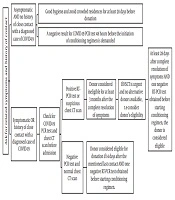
Before HSCT, patients could receive the COVID-19 vaccine if they are not already immunosuppressed. According to evidence about other inactivated vaccines, such as the influenza vaccine, the interval to start the conditioning regimen could be considered 2 - 4 weeks following the vaccination (4). In autologous HSCT patients, COVID-19 vaccination can be considered 1 - 3 months after transplantation if there has been a community outbreak. If acquiring or transmitting severe acute respiratory syndrome coronavirus 2 (SARS-CoV-2) was well controlled, vaccination could be withheld after six months of transplantation. In the current pandemic, COVID-19 vaccination in allogeneic HSCT patients could be considered at least three months after transplantation. If transmission of SARS-CoV-2 was controlled, vaccination could be withheld after six months of transplantation (4-6).
Vaccination of patients with chronic graft versus host disease (cGVHD) receiving less than 20 mg/day prednisolone (or equivalent) for less than 2 weeks, can be considered similar to the HSCT recipients with no GVHD (5). Vaccines in HSCT recipients with active SARS-CoV-2 infection are not effective thus, receiving the vaccine is not recommended. If an HSCT recipient has received the COVID-19 vaccine before HSCT, re-vaccination after transplantation is suggested (6). The administration of the vaccine is considered when the immune system acquired functional competence.
Transplant donation should not be delayed due to the vaccination of the donor to protect the patients in case the transplant is urgent (6). It was reported that recipients who have received anti-B cell antibodies might get the vaccine at 3 - 6 months after the administration and four weeks before the next course of B cell-depleting therapy. If this time window was not possible, vaccination can be regarded under B-cell depleting therapy, considering a suboptimal response to the vaccine (7).
It should be noted that the effects of rituximab may last for six months or even a year. Also, the decision to order vaccines following the use of rituximab should be based on the level of immunoglobulins and CD19. There is no strong evidence for the short duration of vaccination following the use of rituximab (such as 3 to 6 months). However, despite the low efficacy of the vaccine in such conditions, it is recommended to get the vaccine whenever available.
It is reasonable that recipients who have received therapy with antithymocyte globulin (ATG) or alemtuzumab, get the vaccine at least 6 months and at least 3 months after the administration respectively (8, 9).
If patients do not have access to the vaccine at the optimal intervals, it is suggested to order the vaccine. The best vaccines with the best efficacy in this group of patients have not yet been determined, and further clinical trials are required. These considerations can be used as long as more data are available.