Image Credit:

The Human Invasive Cysticercosis by Atypical Taenia Species

Author(s):
Viroj WiwanitkitViroj Wiwanitkit1,*
1Visiting Professor, Hainan Medical University, China
*Corresponding Author: Corresponding author: Visiting Professor, Hainan Medical University, China. E-mail: Email: [email protected]

Archives of Clinical Infectious Diseases:Vol. 13, issue 3; e62720
Published online:Jun 23, 2018
Article type:Letter
Received:Feb 08, 2017
Accepted:Oct 21, 2017
How to Cite:Wiwanitkit V. The Human Invasive Cysticercosis by Atypical Taenia Species. Arch Clin Infect Dis. 2018;13(3):e62720. doi: https://doi.org/10.5812/archcid.62720

Dear Editor,
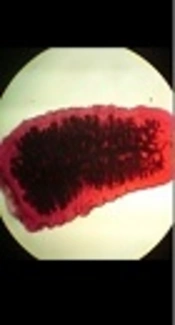
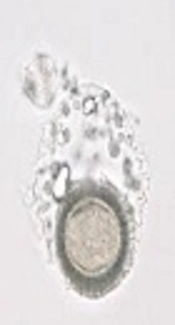
Taenia genus is the group of parasites that can cause infection in humans. The invasive form of the infection is possible and can cause the internal parasitic cystic lesion namely cysticercosis. The cysticercosis lesion can be observed at any organ and the most fatal lesion is at the brain, which is clinically known as cerebral neurocysticercosis. At least three common species can cause neurocysticercosis including Taenia solium, T. asiatica, and T. martis (1). Recently, T. multiceps also proposed as a new species causing neurocysticercosis (2) and ship is its intermediate host (2).
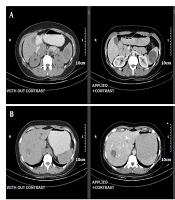
Nevertheless, there are also other atypical species that can cause invasive cysticercosis in internal organs of human beings. Those species are usually forgotten human infections. The case of T. crassiceps infection is already mentioned for its importance due to causing invasive cysticercosis in the cases with immune deficiency (3-5). The infection is a zoonosis from fox (2-4). According to a recent report on human cysticercosis from Germany (5), there is an additional species considered as the fifth species, T. serialis (coenurosis) that can cause invasive cystcercosis in human beings. In the same study (5), T. crassiceps was also detected. The two species, T. crassiceps and T. serialis (coenurosis), are interesting uncommon findings (5). The clinical presentations of the two species are similar to the other species that can cause human cysticercosis. The silent internal cystic lesion, usually accidentally detected, is the most common clinical presentation. The diagnosis is usually due to the examination of excision specimen by molecular diagnosis. The new species are considered emerging zoonosis from dog. Based on the author’s experience in a tropical country, Thailand, the diagnosis of atypical cysticercosis seems to be difficult, since the pathological laboratories usually diagnose the cysticercosis without species classification.
References

  • 1.
    Joob B, Wiwanitkit V. Cerebral Neurocysticercosis due to Taenia martis, the Third Species That Needs Attention. Arch Neuroscience. 2016;3(1). https://doi.org/10.5812/archneurosci.31856.
  • 2.
    El-On J, Shelef I, Cagnano E, Benifla M. Taenia multiceps: a rare human cestode infection in Israel. Vet Ital. 2008;44(4):621-31. [PubMed ID: 20411489].
  • 3.
    Francois A, Favennec L, Cambon-Michot C, Gueit I, Biga N, Tron F, et al. Taenia crassiceps invasive cysticercosis: a new human pathogen in acquired immunodeficiency syndrome? Am J Surg Pathol. 1998;22(4):488-92. [PubMed ID: 9537478].
  • 4.
    Chermette R, Bussieras J, Marionneau J, Boyer E, Roubin C, Prophette B, et al. [Invasive cysticercosis due to Taenia crassiceps in an AIDS patient]. Bull Acad Natl Med. 1995;179(4):777-80. discussion 780-3. [PubMed ID: 7648312].
  • 5.
    Maillard H, Marionneau J, Prophette B, Boyer E, Celerier P. Taenia crassiceps cysticercosis and AIDS. AIDS. 1998;12(12):1551-2. [PubMed ID: 9727578].

Copyright

Copyright © 2018, Archives of Clinical Infectious Diseases. This is an open-access article distributed under the terms of the Creative Commons Attribution-NonCommercial 4.0 International License (http://creativecommons.org/licenses/by-nc/4.0/) which permits copy and redistribute the material just in noncommercial usages, provided the original work is properly cited

Similar Articles

23
Jan
2016

Cerebral Neurocysticercosis due to Taenia martis, the Third Species That Needs Attention

Beuy Joob,
Viroj Wiwanitkit

Joob B, Wiwanitkit V. Cerebral Neurocysticercosis due to Taenia martis, the Third Species That Needs Attention. Arch Neurosci. 2016;3(1):e31856. doi: https://doi.org/10.5812/archneurosci.31856

6
Aug
2016

Islam and Neurocysticercosis

Sayed Alireza Mirsane,
Sayed Mojtaba Mirsane,
Nasrin Oraei

Mirsane SA, Mirsane SM, Oraei N. Islam and Neurocysticercosis. Arch Neurosci. 2016;3(4):e38060. doi: https://doi.org/10.5812/archneurosci.38060

31
Dec
2008

Hepatic Toxocariasis in a Child: A Case Report from Shiraz, Southern Iran

Seyed Sadjjadi,
Bita Geramizadeh,
Farzaneh Firoozeh,
Mohammad Zibai

Sadjjadi S, Geramizadeh B, Firoozeh F, Zibai M. Hepatic Toxocariasis in a Child: A Case Report from Shiraz, Southern Iran. Hepat Mon. 2008;8(4):e70014. doi:

28
Apr
2018
<i>Coenurus serialis</i> in Northeastern Iran: A Probable Danger to Human

Coenurus serialis in Northeastern Iran: A Probable Danger to Human

Amin Moshiri,
Seyed Aliakbar Shamsian,
Fariba Berenji,
Abbas Jadidoleslami,
Elham Moghaddas

Moshiri A, Shamsian SA, Berenji F, Jadidoleslami A, Moghaddas E. Coenurus serialis in Northeastern Iran: A Probable Danger to Human. Int J Infect. 2018;5(2):e13218. doi: https://doi.org/10.5812/iji.13218

31
Jul
2025
Int J Endocrinol Metab

Hydatid Cyst Disease of the Thyroid Gland: A Rare Case Report

Pooneh Dehghan,
Fatemeh Ghiasi,
Seyyed Hasan Langari,
Hossein Moradkhani

Dehghan P, Ghiasi F, Langari SH, Moradkhani H. Hydatid Cyst Disease of the Thyroid Gland: A Rare Case Report. Int J Endocrinol Metab. 2025;23(3):e163775. doi: https://doi.org/10.5812/ijem-163775

Download PDF63.83 KB
Indexed in

Crossmark

Crossmark

Checking

Share on
Cited by
Metrics

Ordering Reprints

Articles are published under the Creative Commons license stated on each article. No permission or royalty fee is required for uses permitted by that license. CCC handles optional bulk and customized reprint orders. Any quotation covers production and delivery services only, not copyright permission. > Request Reprints from CCC