Full Text
Full text is available in PDF
Archives of Clinical Infectious Diseases
Infectious Diseases and Tropical Medicine Research Center, SBUMS
Authors
Tick paralysis is a disease of human and animals characterized by an acute ascending flaccid motor paralysis. The condition may terminate fatally unless the tick(s) are removed before respiratory paralysis occurs.
A 48 years old female was referred to a clinic in Tehran with edema at the head and neck regions. She had fever and disequilibrium. She reported a travel to mountainous parts of Tehran in early spring. During physical examination a small tick was found attached firmly to the head. It has been detached and sent to Razi Research Institute and a female Dermacentor marginatus (Acari: Ixodidae) was verified. Following the tick removal the patient's condition was improved.
With respect to a rich fauna of Ixodid ticks in Iran, it is important to keep in mind the tick associated complications in this area.
© 2006, Author(s). This open-access article is available under the Creative Commons Attribution 4.0 (CC BY 4.0) International License (https://creativecommons.org/licenses/by/4.0/), which allows for unrestricted use, distribution, and reproduction in any medium, provided that the original work is properly cited.
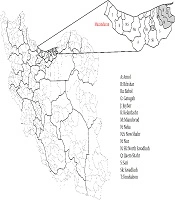
Salehi-Vaziri M, Pouriayevali MH, Azad-Manjiri S, Ahmadi Vasmehjani A, Baniasadi V, et al. The Seroprevalence of Tick-Borne Encephalitis in Rural Population of Mazandaran Province, Northern Iran (2018 - 2019). Arch Clin Infect Dis. 2020;15(1):e98867. doi: https://doi.org/10.5812/archcid.98867
Metanat M, Tabatabaei M, Afsharmanesh A. Prevalence of Tick-Borne Relapsing Fever in Febrile Patients Suspicious for Malaria Admitted in Chabahar. Zahedan J Res Med Sci. 2014;16(4):. doi:
Heidari A, Sheikhi S, Fallah P, Keshavarz H. Relapse of a Plasmodium vivax Infection in an Iranian Patient: A Case Report. Jundishapur J Nat Pharm Prod. 2017;12(4):e14499. doi: https://doi.org/10.5812/jjnpp.14499
Sedaghat MM, Shemshad K, Kamali K, Charrahy Z, Biglarian A, et al. The Eco-Epidemiology of Tick-Borne Hemoparasitic Diseases Using Geographic Information Systems. Zahedan J Res Med Sci. 2013;15(12):e4329. doi:
Seifi A, Hajiabdolbaghi M, Mohammadnejad E. Co-infection of Leptospirosis and Crimean-Congo Hemorrhagic Fever. Arch Clin Infect Dis. 2016;11(3):e32380. doi: https://doi.org/10.5812/archcid.32380
More by these authors
Last Update: 3 weeks ago
Last Update: 3 weeks ago
Last Update: 3 weeks ago
Last Update: 8 hours ago
Last Update: 1 day ago
Last Update: 4 days ago