Fulltext
Fulltext is available in pdf file.
Archives of Clinical Infectious Diseases
Infectious Diseases and Tropical Medicine Research Center, SBUMS
Image Credit:Arch Clin Infect Dis
Authors
Clostridium difficile is a Gram-positive sporeforming anaerobic bacillus, which is found in the stool flora of 25-80% of healthy infants but rarely in the stool of healthy adults and children over the age of 12 months. Ingested spores of C. difficile survive the gastric acid barrier and germinate in the colon. Colonization of the adult intestinal tract occurs when antibiotics alter normal intestinal flora, which otherwise facilitates resistance to colonization. Between one third and two thirds of patients colonized develop clinical symptoms. Some strains of C. difficile are non-toxinogenic, but the majority make two protein exotoxins, toxin A, a 308 kDa protein and toxin B, a 275 kDa protein. Toxin A binds to a specific receptor on the brush border of the intestinal epithelium, a glycoprotein with an α-linked galactose; the intestinal receptor in humans for toxin B is less well-characterized. Both toxins modify Rho proteins at a specific threonine residue by addition of a glucose molecule, leading to inactivation of the protein. This is followed by disaggregation of polymerized actin, opening of tight junctions between cells, cell rounding and subsequent cell death. The toxins also induce the release by various cells of pro-inflammatory mediators and cytokines (such as IL-8), as well as activation of the enteric nervous system, leading to neutrophil chemotaxis and fluid secretion. Toxin B is not enterotoxic in animals (as is toxin A), but it is a much more potent cytotoxin in tissue culture than toxin A. Occasional toxinogenic strains of C. difficile associated with clinical illness make toxin B but contain an internal deletion in the gene for toxin A and do not make an active form of this toxin. Strains of C. difficile that produce neither toxin A nor B do not cause clinical illness.
© 2007, Author(s). This open-access article is available under the Creative Commons Attribution 4.0 (CC BY 4.0) International License (https://creativecommons.org/licenses/by/4.0/), which allows for unrestricted use, distribution, and reproduction in any medium, provided that the original work is properly cited.
Rezazadeh Zarandi E, Mansouri S, Nakhaee N, Sarafzadeh F, Moradi M. Spore Production of Toxigenic and Non-Toxigenic Clostridium difficile Isolates in Sub-MIC of Vancomycin, Clindamycin, and Ceftazidime. Jundishapur J Microbiol. 2019;12(5):e57905. doi: https://doi.org/10.5812/jjm.57905
Armin S, Shamsian S, Drakhshanfar H. Colonization with Clostridium difficile in Children with Cancer. Inn J Pediatr. 2013;23(4):. doi:
Mardani M. What’s up With Clostridium difficile Infection Now?. Arch Clin Infect Dis. 2012;7(3):e93427. doi:
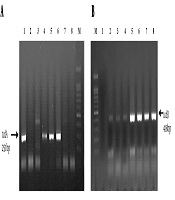
Majidpour A, Boustanshenas M, Rasouli Koohi S, Bakhshi B, Rahbar M, et al. Molecular Characterization and Diagnosis of Nosocomial Clostridium difficile Infection in Hospitalized Patients. Arch Clin Infect Dis. 2020;15(2):e97330. doi: https://doi.org/10.5812/archcid.97330
Fang Y, Chen Y, Gu S, Zhang X, Lv T, et al. Molecular Characterization and Antibiotic Profile of Clostridium difficile Isolated from Bacteremia. Jundishapur J Microbiol. 2019;12(3):e83520. doi: https://doi.org/10.5812/jjm.83520
Last Update: 3 weeks ago
Last Update: 3 weeks ago
Last Update: 3 weeks ago
Last Update: 3 hours ago
Last Update: 1 day ago
Last Update: 4 days ago