1. Background
Handball is among the most popular team sports, alongside soccer, basketball, and volleyball. The game is characterized by a fast-paced tempo, which includes throwing, cutting, jumping, and landing, as well as frequent contact and collisions between players (1). As a result, the injury incidence in handball is higher than that in other team sports, including volleyball, basketball, football, baseball, and field and ice hockey (2, 3). The injury rate in handball was reported to be between 89 - 145 injuries per 1000 player hours, and the most common injury sites are the knee and the hand/finger (2, 3). Therefore, injury prevention in handball matches and training sessions is crucial.
Sports injuries have increased in young athletes due to sports specialization at a young age, exposure to an excessive and rapid increase in the training load, and lower physical fitness (4-6). Although injury prevention programs can reduce the risk of injury in young athletes (3, 7), Perera and Hägglund reported that only 58% of players aged 12 - 17 years correctly performed a specified prevention program, and the entire injury prevention program was completed in only 13% of the sessions (8). Andersson et al found that the main factors influencing the non-completion of a prevention program were the length of training and lack of player motivation (9). Therefore, attention must also be paid to compliance in young athletes.
Between 2019 and 2020, the COVID-19 pandemic spread worldwide. Previous viral pandemics, such as the 2009 H1N1 outbreak, were characterized by school closures and activity limitations, which positively prevented the spread of the virus (10, 11). In Japan, the government declared a state of emergency to limit sporting activities and gymnasium use and announced school closures in April 2020, which affected young handball players. The COVID-19 pandemic has impacted the quality and safety of training, imposed quarantine regulations, and resulted in the cancellation or postponement of athletic activities (12). Therefore, the COVID-19 pandemic has created a need to assess activities and update injury prevention programs for youth handball players. However, research on the limited training environment and application of injury prevention programs for youth handball players during COVID-19 or other pandemics is minimal.
2. Objectives
This study is a preliminary survey to know how restricting the training environment during the COVID-19 pandemic affected young handball players in performing prevention training to update the injury prevention program in preparation for a future pandemic. We also evaluated barriers and motivational factors influencing participation in prevention programs. In addition, we investigated the training sessions, injury incidence, and injury prevention program participation of youth handball teams during the COVID-19 pandemic. We hypothesized that many teams were affected by the COVID-19 pandemic due to training volume and intensity restrictions. Therefore, there was a reduced participation rate in injury prevention programs.
3. Methods
A total of 89 teams (comprising 45 boys' teams and 44 girls' teams) were retrospectively evaluated in this study. The teams included 75 coaches and 1086 players, of which 606 were boys and 480 were girls; they had participated in a national championship held at the end of March 2021. All the teams won local competitions to participate in the national championship. All players were 13 or 14 years of age. However, no other national handball championships were held in Japan between March 2020 and February 2021 due to the COVID-19 pandemic. Self-reporting questionnaires were provided to all teams before this national championship. Questionnaires were answered anonymously and placed in a questionnaire box set up at the venue on the day of the game. We informed all teams, including coaches, players, and their parents, about the purpose and design of the study. Because the players were 13 or 14 years old, they were instructed to check and complete the questionnaires with their parents. The players assented, and their parents gave informed consent for their children to participate in the study. Therefore, participants were considered to have assented to participate in this study by answering and submitting the questionnaire. This study and its survey methods were approved by the institutional review board of our institute (#3238-1).
3.1. Questionnaires for Coaches
The coaches were asked 3 questions about regular training between April 2020 and March 2021 during the COVID-19 pandemic. The questions were designed to elucidate the training length and intensity changes before and during the COVID-19 pandemic to investigate the impact of the COVID-19 pandemic on the training environment. These questions had specific multiple-choice responses. Moreover, the coaches were asked how the training had changed due to the COVID-19 pandemic. Multiple answers were permitted in response to this question. In addition, an open-ended response field was provided if the coaches selected “other” while answering the question.
3.2. Questionnaires for Players
The following information was collected from all players: the team they belong to, their sex, injury experience, the type of injuries (if any) obtained between April 2020 and March 2021, and the regular training time (hours/week). The players were asked if, when, and how many injury prevention exercises were performed. Injury prevention exercises were defined as stretching, core training, balance exercises, and handball-specific movements performed during the warm-up or training session to prevent injuries. If participants answered that they had not performed injury prevention exercises, they were asked a follow-up question about the main reason for not performing them. Finally, all players were asked what factors were most important to motivate them to perform the injury prevention exercises. The questions about the motivation for and barriers to performing the injury prevention exercises were extracted from those reported by a previous study (9). The injuries were defined as time-loss injuries that caused players to miss one or more days of team activities after the day of injury (13). Injury types were classified as acute or overuse injuries, as previously described (14). An acute injury was defined as an injury with a sudden onset associated with known trauma. In contrast, an overuse injury was defined as an injury with a gradual onset and increasing intensity of discomfort without known trauma. For example, a sprain was considered an acute injury, while tendinitis was considered an overuse injury. This study did not consider other handball matches or extra training sessions. The cancellation of training due to gymnasium restrictions or school closures was also not considered. Therefore, the precise player exposure hours were unknown. The players were divided into 2 groups: Prevention exercise and control groups. The players who performed injury prevention exercises at least once a week were assigned to the prevention exercise group. In contrast, the players who answered that they had not performed injury prevention training regularly were assigned to the control group.
3.3. Statistical Analyses
All data were analyzed using SPSS version 24.0 (SPSS Inc, Chicago, IL, USA). The chi-square test was used to compare the sex between players who responded to the survey and those who did not and between the prevention exercise and control groups. In addition, the t-test was used to compare regular training between the 2 groups. P-values less than 0.05 were considered statistically significant.
4. Results
4.1. Response Rate of Questionnaires
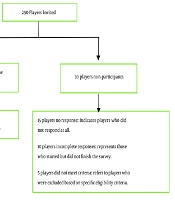
Out of the total of 89 teams, 75 coaches, and 1086 players that were assessed, 66 teams (74.2%), 48 coaches (64.0%), and 745 players (68.6%) completed the questionnaire. In more detail, 66.8% (405/606) of boys, 70.8% (340/480) of girls, 73.3% (33/45) of boys’ teams, and 75.0% (33/44) of girls’ teams completed the questionnaire. There were no significant differences in the players and teams that completed the questionnaire between boys and girls (P = 0.158 and 0.857, respectively). Furthermore, most of the players who did not respond to the survey were included in the teams that did not respond (boys: 190/201 [94.5%], girls: 130/140 [92.9%]).
4.2. Influence of the COVID-19 Pandemic on the Training Environment
The answers from the coaches are listed in Table 1. The responses associated with “other” in Table 1 included gym use and activity restriction and school closures (12/48 teams, 25.0%) and limitations on the training length per day (8/48 teams, 16.7%).
Table 1.
The Influence of the COVID-19 Pandemic on Training
| Questions and Responses | No. (%) |
|---|---|
| Has the training time changed in the last year due to the COVID-19 pandemic? | |
| Increased | 0 (0) |
| Unchanged | 16 (33.3) |
| Decreased | 32 (66.7) |
| Has the intensity of the training changed in the last year due to the COVID-19 pandemic? | |
| Increased | 4 (8.3) |
| Unchanged | 22 (45.8) |
| Decreased | 22 (45.8) |
| How has the training changed due to the COVID-19 pandemic? (Multiple responses were permitted.) | |
| Decreased player contact | 16 (33.3) |
| Limitations on the number of players training at the same time | 0 (0) |
| Decreased number of games or competitions | 44 (91.7) |
| Unchanged | 2 (4.2) |
| Other | 22 (45.8) |
4.3. Injury Incidence and Prevention Program
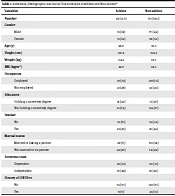
A total of 355 players (355/745, 47.6%) experienced 359 injuries (253 acute and 106 overuse injuries). Four players experienced both acute and overuse injuries during the study period. Of the 745 players, 521 (70.0%) performed injury prevention exercises (mean ± SD: 4.5 ± 1.7 times/week). The characteristics of the players in both the prevention exercise and control groups are shown in Table 2. The timing and factors affecting the adoption and implementation of prevention exercise programs are shown in Table 3.
| Variables | Prevention Exercise (N = 521) | Control (N = 224) | P-Value |
|---|---|---|---|
| Sex (boys: girls) | 274: 247 | 130: 94 | 0.173 |
| Training time (hours/week) | 13.4 (13.0 - 13.7) | 13.4 (13.0 - 14.0) | 0.794 |
a The chi-square and t-test were used.
b Statistical significance was set at P < 0.05.
c Data are presented as means (± 95% CI).
Table 3.
Timing and Factors Affecting the Adoption and Implementation of Prevention Exercise Programs
| Questions and Responses | No. (%) |
|---|---|
| When were the prevention exercises performed? (n = 521 respondents) (multiple responses were permitted.) | |
| Pre-training | 246 (47.2) |
| Warming up | 279 (53.6) |
| During training | 59 (11.3) |
| Post-training | 256 (49.1) |
| Individual (e.g., at home) | 143 (27.4) |
| What was the main reason for your team’s non-compliance with the prevention exercise? (n = 224 respondents) | |
| You do not know the program. | 110 (52.1) |
| The program is too time-consuming | 47 (22.3) |
| You think that the program is not needed | 42 (19.9) |
| The players lack motivation | 6 (2.8) |
| Other | 6 (2.8) |
| What factors do you require for the prevention exercise to continue? (n = 745 respondents) | |
| The exercise is relevant to handball | 373 (51.7) |
| The exercise improves physical fitness | 236 (32.7) |
| The exercise is not too challenging | 66 (9.2) |
| The exercise has many variations | 30 (4.2) |
| The exercise is updated regularly | 11 (1.5) |
| Other | 5 (0.7) |
5. Discussion
This study found that training times and intensities were limited in the Japanese youth handball teams during the COVID-19 pandemic due to restrictions on the training environment, reduced gameplay, and decreased player contact. However, in these circumstances, 70% of players performed some injury prevention exercises. The main reason for not performing prevention exercises was a lack of knowledge on how to perform them correctly. Therefore, the inclusion of handball movement-related exercises and exercises that improve physical fitness could be the key motivational factors influencing young athletes to perform the prevention exercises.
Furthermore, most teams were affected by the COVID-19 pandemic, with the main impact being match cancellations; this supports our hypothesis. Ding et al reported that more than 40% of participants in 11 countries were insufficiently active and decreased their physical activity during the lockdown due to the COVID-19 pandemic (15). In this survey, a quarter of all teams had gym use and activity restrictions and school closures, and 16.7% had limitations on the training length per day. Furthermore, although intense contact play is the hallmark of handball, more than 30% of the teams limited contact play during training sessions. This means that practical training was limited even if the team could keep gym and training time. In addition, many teams lacked both training quantity and quality. Therefore, when injury prevention training is updated, we should consider programs involving time-saving or practical movements.
Contrary to our hypothesis, 70% of the players performed some injury prevention exercises in this study. However, due to the nature of the questionnaire-based retrospective cohort study, the details of the prevention programs adopted by each player and team were unknown, and the training varied from player to player.
The main reason for not performing prevention exercises was a lack of knowledge on how to perform them correctly, followed by the exercises being too time-consuming. Furthermore, approximately 20% of players thought that the program was unnecessary. These findings suggest that education and follow-up on correctly performing the prevention program should be prioritized. Andersson et al reported that it was essential not only to improve the program’s content but also to emphasize the importance of the preventative effect of the program for widespread dissemination (9). Evidence-based prevention programs are generally evaluated in highly controlled settings and do not reflect real-world sports settings (16, 17). As a result, dissemination and widespread use of these programs may be limited in terms of real teams and players. The full potential of these programs will only be realized if the targeted end users adopt, implement, and maintain the programs as intended (16). Therefore, educating the players and coaches about injuries and injury prevention is essential.
In this study, the inclusion of handball movement-related exercises and exercises that improve physical fitness were the main factors that motivated players to perform the prevention program. In handball, more injuries occur while attacking than defending, meaning that most injuries occur when the players frequently cut, jump, land, and throw balls to score (14, 18). When handball players handle the ball with their hands, they are susceptible to hand and finger injuries (3). Cutting and landing movements are common causes of knee injuries (19). Moreover, previous studies revealed that specific physical fitness training in balance, proprioception, and functional strength is essential in preventing injuries in young athletes (7, 20-22). Van Tiggelen et al suggested that prevention programs should be part of skill training from a young age and become an accepted part of the routine environment to promote behavior modifications aimed at injury prevention (23). Therefore, motivational factors (such as handball movement-related exercises and training to improve physical fitness) may help players to improve compliance with prevention training. These factors may also be vital in preventing injury.
This study surveyed many junior handball players who belonged to the team that won the regional competition in Japan. However, during the COVID-19 pandemic, many teams had restricted training environments. Therefore, further study is required to evaluate the effects of and compliance with the injury prevention training, including motivational factors found in this study, the limited training time, or restricted contact play during COVID-19 or other pandemics.
This study had some limitations. First, recall bias could not be avoided as this study was a questionnaire-based retrospective cohort study. Because there was no pilot study, the validity of the questionnaire in this study was uncertain. Second, although the players were instructed to complete the questionnaire with their parents, some players may have completed it without assistance. Because there was no confirmation from their parents, we do not know the extent of parental assistance received by the players in completing the survey. Therefore, since they were 13 or 14 years old, they may not have been knowledgeable enough to provide accurate data. Third, we did not establish whether players consulted a medical doctor regarding their injuries; therefore, we could not determine the injuries’ severity, diagnosis, and site. Fourth, due to the study’s retrospective nature, the injury prevention programs were inconsistent among the teams and players. Moreover, the number of prevention exercises performed varied from player to player. Therefore, the effect of the injury prevention programs in this study was unknown. Fifth, it was uncertain whether the injuries occurred during a game or a training session. Many previous studies have reported that the risk of injuries was much higher during games than during training sessions (7, 14). However, as mentioned above, most games and tournaments were limited in Japan during the study period.
5.1. Conclusions
The COVID-19 pandemic influenced the training sessions of Japanese youth handball teams in many ways. Education on correctly performing injury prevention program exercises is a key factor in maximizing the adoption of such programs. Furthermore, injury prevention exercises must be handball-specific to ensure that players are motivated to keep performing such exercises.