Full Text
Full text is available in PDF
Asian Journal of Sports Medicine
Sports Medicine Research Center, TUMS
Authors
 ,*
,*Optimal training intensity and the adequate exercise level for physical fitness is one of the most important interests of coaches and sports physiologists. The aim of this study was to investigate the validity of the Narita et al target heart rate equation for the adequate exercise training level in sedentary young boys.
Forty two sedentary young boys (19.071.16 years) undertook a blood lactate transition threshold maximal treadmill test to volitional exhaustion with continuous respiratory gas measurements according to the Craig method. The anaerobic threshold (AT) of the participants then was calculated using the Narita target heart rate equation.
Hopkin's spreadsheet to obtain confidence limit and the chance of the true difference between gas measurements and Narita target heart rate equation revealed that the Narita equation most likely underestimates the measured anaerobic threshold in sedentary young boys (168.7615 vs. 130.0814.36) (Difference 90% confidence limit: 38.118). Intraclass correlation coefficient (ICC) showed a poor agreement between the criterion method and Narita equation (ICC= 0.03).
According to the results, the Narita equation underestimates the measured AT. It seems that the Narita equation is a good predictor of aerobic not AT which can be investigated in the future studies.
© 2013, Author(s). This open-access article is available under the Creative Commons Attribution 4.0 (CC BY 4.0) International License (https://creativecommons.org/licenses/by/4.0/), which allows for unrestricted use, distribution, and reproduction in any medium, provided that the original work is properly cited.
pnkchatterjee@yahoo.com P, Banerjee AK, Das P, Debnath P. A Regression Equation for the Estimation of Maximum Oxygen Uptake in Nepalese Adult Females. Asian J Sports Med. 2010;1(1):e93456. doi: https://doi.org/10.5812/asjsm.34873
Nazari Radgiglou S, Safarzade A, Shirinbayan V. Comparison of Two Types of High-Intensity Interval Training: Heart Rate Based vs. Speed/Time Based. Asian J Sports Med. 2022;13(3):e123355. doi: https://doi.org/10.5812/asjsm-123355
Pashaei S, Nikbakht H, Shakeri N. Heart Rate Variability Following Eight Week Progressive Physical Training in Nonathlete Young Males. J Clin Res Paramed Sci. 2017;6(2):e81252. doi:
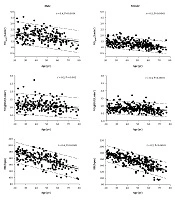
Pornsuriyasak P, Ngaojaruwong K, Saovieng S, Patumanond J, Kruthkul K, et al. Reference Values and Predictive Equations for Cardiopulmonary Exercise Testing in Thai Adults. Asian J Sports Med. 2020;11(2):e101808. doi: https://doi.org/10.5812/asjsm.101808
Bekrizadeh H, Weisi H. Optimal correlation between maximal volume oxygen and maximal voluntary ventilation indicators for measuring cardiorespiratory readiness of athlete students. J Kermanshah Univ Med Sci. 2010;14(1):e79541. doi:
Last Update: 1 week ago
Last Update: 1 week ago
Last Update: 1 week ago
Last Update: 2 hours ago
Last Update: 9 hours ago
Last Update: 5 days ago