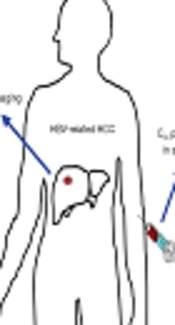
Cover image of the article: Arginase - 1 - Based Diagnosis as Indicator of the Risk of HBV - Related HCC

Image Credit:Gene Cell Tissue

Arginase - 1 - Based Diagnosis as Indicator of the Risk of HBV - Related HCC

Authors

Bita Moudi1, 2,*
1Infectious Diseases and Tropical Medicine Research Center, Zahedan University of Medical Sciences, Zahedan, Iran
2Department of Histology, School of Medicine, Zahedan University of Medical Sciences, Zahedan, Iran
*Corresponding Author: Corresponding author: Bita Moudi, M.Sc., Department of Histology, School of Medicine, Zahedan University of Medical Sciences, Zahedan, Iran. Postal Code: 98167 - 43175, Tel: +98-5433295794, Fax: +98-5433295794, E-mail: Email: bita.moodi@yahoo.com

Gene, Cell and Tissue:Vol. 5, issue 1; e79725
Published online:Dec 30, 2017
Article type:Letter
Received:Apr 02, 2017
Accepted:Apr 25, 2017
How to Cite:Moudi B. Arginase - 1 - Based Diagnosis as Indicator of the Risk of HBV - Related HCC. Gene Cell Tissue. 2018;5(1):e79725. doi: https://doi.org/10.5812/gct.79725

Dear Editor,
Hepatocellular carcinoma (HCC) is a common primary liver malignancy worldwide with a poor prognosis (1) and is the third leading cause of cancer - related deaths (2).
Chronic hepatitis B (HBV) infection, which can cause liver inflammation, has been seen in many individuals with HCC. In addition, fibrosis and cirrhosis are inevitable complications of the infection, which leads to the death of a patient (3, 4).
Early diagnosis of this can prevent the death of a patient and is a crucial factor in the treatment process (5).
It seems that urea cycle enzymes are reliable marker for hepatocytes. For example, arginase - 1 (Arg - 1), which mainly concentrates in periportal hepatocytes (6), is one of the urea cycle enzymes that is expressed in a healthy liver (7).
Chrzanowska et al., assessed Arg - 1 expression by advanced PCR methods and found decreased expression of Arg - 1 in cirrhotic nodules and HCCs (8).
Recently, we found that the expressions of Arg - 1 significantly reduced in patients with HBV - related HCC compared to the patients with only HBV, which can probably manage the diagnosis process of HCC in a way that is time - consuming. The specificity of Arg - 1, among all groups we tested, was 88.4%. Our data emphasized that Arg - 1 can be one of the best markers for HCC on fine - needle aspiration specimens. The results of this study will be released. We also reported Arg - 1 as a very sensitive marker for hepatocytes, which supports Benjamin et al., conclusion as well (9).
Benjamin et al., (9) found the overall sensitivity to be about 96.0% for Arg - 1 in hepatocytes and hepatocellular neoplasms. In addition, all HCCs in their study were reactive for Arg - 1. Moreover, the study of nonhepatocellular tumors revealed that only 2 non - HCC tumors were reactive for Arg - 1.
Furthermore, proper combination of Arg - 1, with some reliable biomarkers such as HepPar - 1 could increase the specificity, accuracy, and precision of natural history of HBV - related HCC diagnosis. We proposed an algorithm to study the natural history of HCC using 2 markers of malignancy (HepPar - 1 and Arg - 1) and found that the respective specificity of Arg - 1 + HepPar - 1 is 100% when we examined HCC cases that were infected previously with HBV.
In another study, Timek et al., (10) performed a triplet algorithm including Arg - 1, hepatocyte paraffin - 1 (HepPar1), and glypican - 3 on liver specimens. They showed that none of the nonhepatic tumor cases were positive for Arg - 1. A total of 19 HCCs samples responded to all three markers, 9 samples responded with only 1 or 2 markers and only 1 case was negative for all 3 markers. Timek suggested the use of 3 markers in differentiating between HCC and metastatic carcinoma.
In conclusion, most of the Arg - 1 studies demonstrated that Arg - 1 has a high sensitivity and specificity in diagnosis of HBV - related HCC and it seems that Arg - 1 can probably be used in detecting HBV infected patients, which are susceptible to HCC. Arg - 1 can develop as an identifier biomarker in pathology of HCC. In addition, the proper combination of Arg - 1 and some well - known and reliable biomarkers is more effective in the study of natural history of the liver malignancy in different stages.

References

  • 1.
    Moudi B, Heidari Z, Mahmoudzadeh-Sagheb H, Alavian SM, Lankarani KB, Farrokh P, et al. Concomitant use of heat-shock protein 70, glutamine synthetase and glypican-3 is useful in diagnosis of HBV-related hepatocellular carcinoma with higher specificity and sensitivity. Eur J Histochem. 2018;62(1):2859. [PubMed ID: 29569872]. [PubMed Central ID: PMC5806503]. https://doi.org/10.4081/ejh.2018.2859.
  • 2.
    Li H, Wang S, Wang G, Zhang Z, Wu X, Zhang T, et al. Yes-associated protein expression is a predictive marker for recurrence of hepatocellular carcinoma after liver transplantation. Dig Surg. 2014;31(6):468-78. [PubMed ID: 25632982]. https://doi.org/10.1159/000370252.
  • 3.
    El-Serag HB, Rudolph KL. Hepatocellular carcinoma: epidemiology and molecular carcinogenesis. Gastroenterology. 2007;132(7):2557-76. [PubMed ID: 17570226]. https://doi.org/10.1053/j.gastro.2007.04.061.
  • 4.
    Moudi B, Heidari Z, Mahmoudzadeh-Sagheb H. Impact of host gene polymorphisms on susceptibility to chronic hepatitis B virus infection. Infect Genet Evol. 2016;44:94-105. [PubMed ID: 27346643]. https://doi.org/10.1016/j.meegid.2016.06.043.
  • 5.
    Tawada A, Kanda T, Yokosuka O. Current and future directions for treating hepatitis B virus infection. World J Hepatol. 2015;7(11):1541-52. [PubMed ID: 26085913]. [PubMed Central ID: PMC4462692]. https://doi.org/10.4254/wjh.v7.i11.1541.
  • 6.
    Sekine S, Ogawa R, McManus MT, Kanai Y, Hebrok M. Dicer is required for proper liver zonation. J Pathol. 2009;219(3):365-72. [PubMed ID: 19718708]. https://doi.org/10.1002/path.2606.
  • 7.
    Multhaupt H, Fritz P, Schumacher K. Immunohistochemical localisation of arginase in human liver using monoclonal antibodies against human liver arginase. Histochemistry. 1987;87(5):465-70. [PubMed ID: 3323144].
  • 8.
    Chrzanowska A, Gajewska B, Baranczyk-Kuzma A. Arginase isoenzymes in human cirrhotic liver. Acta Biochim Pol. 2009;56(3):465-9. [PubMed ID: 19636440].
  • 9.
    Yan BC, Gong C, Song J, Krausz T, Tretiakova M, Hyjek E, et al. Arginase-1: a new immunohistochemical marker of hepatocytes and hepatocellular neoplasms. Am J Surg Pathol. 2010;34(8):1147-54. [PubMed ID: 20661013]. [PubMed Central ID: PMC3160135]. https://doi.org/10.1097/PAS.0b013e3181e5dffa.
  • 10.
    Timek DT, Shi J, Liu H, Lin F. Arginase-1, HepPar-1, and Glypican-3 are the most effective panel of markers in distinguishing hepatocellular carcinoma from metastatic tumor on fine-needle aspiration specimens. Am J Clin Pathol. 2012;138(2):203-10. [PubMed ID: 22904131]. https://doi.org/10.1309/AJCPK1ZC9WNHCCMU.

Copyright

Copyright © 2018, Gene, Cell and Tissue. This is an open-access article distributed under the terms of the Creative Commons Attribution-NonCommercial 4.0 International License (http://creativecommons.org/licenses/by-nc/4.0/) which permits copy and redistribute the material just in noncommercial usages, provided the original work is properly cited

Similar Articles

1
Apr
2006
Occult HBV Infection among Chronic Hepatitis C Patients

Occult HBV Infection among Chronic Hepatitis C Patients

R Aghazadeh,
Honarkar,
SM Alavian,
Sh Samiee,
K Saeedfar,
M Baladast
,et al.

Aghazadeh R, Honarkar , Alavian S, Samiee S, Saeedfar K, et al. Occult HBV Infection among Chronic Hepatitis C Patients. Shiraz E-Med J. 2006;7(2):20372. doi:

16
Dec
2023
Molecular Investigation of Occult Hepatitis B Virus Infection Among Patients with Liver Cancers

Molecular Investigation of Occult Hepatitis B Virus Infection Among Patients with Liver Cancers

Davod Javanmard,
Arezoo Marjani,
Mohammad Hadi Karbalaie Niya,
Ahmad Tavakoli,
Seyed Jalal Kiani,
Maryam Fatemipour
,et al.

Javanmard D, Marjani A, Karbalaie Niya MH, Tavakoli A, Kiani SJ, et al. Molecular Investigation of Occult Hepatitis B Virus Infection Among Patients with Liver Cancers. Int J Cancer Manag. 2023;16(1):e137093. doi: https://doi.org/10.5812/ijcm-137093

28
Feb
2014
Non-Invasive Histologic Markers of Liver Disease in Patients With Chronic Hepatitis B

Non-Invasive Histologic Markers of Liver Disease in Patients With Chronic Hepatitis B

Simin Dokht Shoaei,
Shahnaz Sali,
Mehdi Karamipour,
Esmail Riahi

Shoaei SD, Sali S, Karamipour M, Riahi E. Non-Invasive Histologic Markers of Liver Disease in Patients With Chronic Hepatitis B. Hepat Mon. 2014;14(2):e14228. doi: https://doi.org/10.5812/hepatmon.14228

31
Dec
2004
Occult Hepatitis B as a Cause of Cryptogenic Cirrhosis

Occult Hepatitis B as a Cause of Cryptogenic Cirrhosis

Zahra Honarkar,
Seyed Moayed Alavian,
Shahram Samiei,
Kayvan Saeedfar,
Mahnaz Baladast,
Rahim Aghazadeh
,et al.

Honarkar Z, Alavian S, Samiei S, Saeedfar K, Baladast M, et al. Occult Hepatitis B as a Cause of Cryptogenic Cirrhosis. Hepat Mon. 2004;4(8):. doi:

3
May
2016
Predictive Factors in the Incidence of Cirrhosis in Chronic Hepatitis B Virus Infections

Predictive Factors in the Incidence of Cirrhosis in Chronic Hepatitis B Virus Infections

Seyed Moayed Alavian,
Mohammad Hadi Imanieh,
Mohammad Hossein Imanieh

Alavian SM, Imanieh MH, Imanieh MH. Predictive Factors in the Incidence of Cirrhosis in Chronic Hepatitis B Virus Infections. Hepat Mon. 2016;16(5):e58756. doi: https://doi.org/10.5812/hepatmon.34790

More by these authors

Bita MoudiPubMedScholar
Share
Cited by
Metrics