
1. Background
Increasing the frequency and intensity of extreme weather is usually related to climate change caused by greenhouse gases and aerosol anthropogenic emissions. During the last century, human activities and settlements were developed increasingly. Temperature of the earth increased about 0.7°C in the last 100 years (1). Greenhouse gases in the atmosphere sharply increased due to the combustion of fossil fuels and human activities. Factors affecting human health are divided into 2 categories: genetic and environmental ones. The interaction of these factors can promote or lower the quality of health. Heredity, environmental factors, lifestyle, socioeconomic status, health status, and family welfare are among these factors. Global temperature is highly rising due to the anthropogenic emission of greenhouse gases. About 0.2°C increase per decade is estimated by the intergovernmental panel on climate change with predicting a mean temperature rise of 1.8°C to 4°C by the end of 21st century (1, 2). Changes of climate indicators (3) such as famine, drought, and extreme weather events, as well as regional conflicts are the signs and prerequisites for the increase of different diseases. These factors also have other health threatening outcomes, which need urgent plans and policies at local, regional, national, and universal levels (3). Climate applies some direct and indirect influences on the occurrence and prevalence of infectious diseases in humans as well as animals. The climatic changes affect the frequency of infection and geographical spread of vector-borne diseases such as (4) zoonotic infections. Based on evidence, climatic situation influenced epidemic diseases even before identifying the contributing factors, in the late 19th century (5). Human being activities changed the world climate and the changes continue at its highest level even in the upcoming decades (6, 7). Climatic changes are the biggest threat for global health in the 21st century (8); they lead to morbidity and mortality following natural events such as heat wave, flood, or drought (4). The world health organization (WHO) emphasized that the climatic changes may cause some changes in ecological systems, which significantly affects the infectious agents in European area; for example, the seasonal activity of local vectors and establishment of subtropical species (9). The probable role of climate change in human health status, especially in terms of occurrence and severity of diseases, is an extensive field of study, which can be even more complicated and specialized every year (10). Air temperature and air pollution (CO, NO, NO2, SO2, O3) are of the remarkable human health indicators and higher levels of SO2 and CO can significantly affect circulatory and skin diseases (11). Till 2008 the residents of some areas of the world were displaced due to sea level rise. Some populations were influenced by climatic changes such as droughts and famines and some other factors such as decreased agricultural lands, increased food-borne diseases, water-borne diseases, vector-borne diseases, and increased death and diseases caused by air pollution also affected humans (3, 12, 13). Since air pollution significantly influences the human respiratory system, the effect of indoor and outdoor air pollution on the human respiratory system is investigated extensively (11). Generally, diseases that are transmissible from vertebrates to humans are called zoonosis. The term was previously applied to some kind of diseases acquired from domestic animals (14). Such diseases are prevalent all over of the world; however, they are a significant threat to human health in the developing countries. A large amount of human diseases are naturally zoonotic and can be transmitted from animals to humans. There are already 605 active zoonotic diseases in the world, which constitute 75% of infectious diseases. Infections may be naturally transmissible from animals to humans (15-17). The number of zoonotic diseases is gradually increasing following the identification of potential source of epidemics and the emergence of new pathogens. Climate changes play an important role in the prevalence of zoonotic diseases. Release of human excretion in water resources helps to spread water-borne infectious agents to drinking water or foodstuff. Rainfall is another effecting factor in transporting infectious agents, and the temperature can also affect growth and survival of such agents. In order to have a green and healthy world with less anthropogenic impacts, the issue of climate change should be considered more seriously by societies and governments (18). Generally, higher temperature increases the developmental ratio of ticks and accordingly, the over-winter survival rate is also increased. There is considerable evidence for direct and indirect effects of climatic changes on human health. To have more healthy communities, a good balance between socioeconomic and ecologic systems is required (19). The impact of zoonoses on different human life variables can be quantified; in other words, the economic burden of zoonotic epidemics exceeded US$ 120 billion from 1995 to 2008 worldwide (4, 20). Similar epidemiologic and social conditions may be influenced by climatic changes (21, 22). South Khorasan province, located in the subtropical area experiences various subtropical and extratropical climates throughout the year, but its climate is generally dry. So, the region naturally has a variable climate (23), although during the last years it had a very changeable climate. Some of these changes were very cold and warm winters, very hot summers, unusual droughts, and torrential rains followed by destructive floods (23, 24). Climate changes probably promote the proliferation of insect vectors, prolong transmission cycles, or the appearance of vectors or reservoirs in the region. Also, it can remain an adverse impact on biodiversity and distribution of animals and microflora that may result in zoonotic diseases outbreaks (25). Many studies showed that most climate series result from artificial separations that should be controlled (4, 26). Understanding this association is important due to the huge burden of such diseases on national economics and public health, while it was limited several times in some of these diseases, such as zoonoses. Factors such as global warming, climate change, and extreme weather events have an adverse impact on the distribution of animals and microflora biodiversity. All of these factors enhance the emergence of zoonotic diseases. The impact of climatic changes on zoonotic disease is epidemiology manifested by changes in reservoir and vector dynamics. Climatic changes create new ecological niches for vectors and alter temporal and spatial distribution of the disease (27). Based on the definition of the world health organization (WHO), an appearing zoonotic is “a newly known or newly evolved disease, or what existed previously, but increasingly demonstrated recently in a geographical region” (28). The distribution and prevalence of zoonotic diseases partly attribute to the degree of climate sensitivity (29). However, human and climate factors contribute to the emergence and prevalence of zoonoses, pathogen features, and animal behaviors.
2. Methods
2.1. Study Area
The South Khorasan province is located in the Southeastern Iran. The total area is about 174000 km2, basically located in a valley surrounded by heights and mostly stony mountains from 3 sides and opens to the sea from the South. It has a variety of climatic conditions due to a large geographical scale and changing topography (Figure 1). The semi-arid climate of the province is also characterized with a relatively cold and humid winters and hot and dry summers. Some of the other problematic issues in South Khorasan province include poor control over vectors, which cause an awkward situation in the case of remote rural populations and outdoor breeding sites. The emergence of zoonoses from 1996 to 2007 was globally evaluated and the results are somehow attributed to climate changes (28).
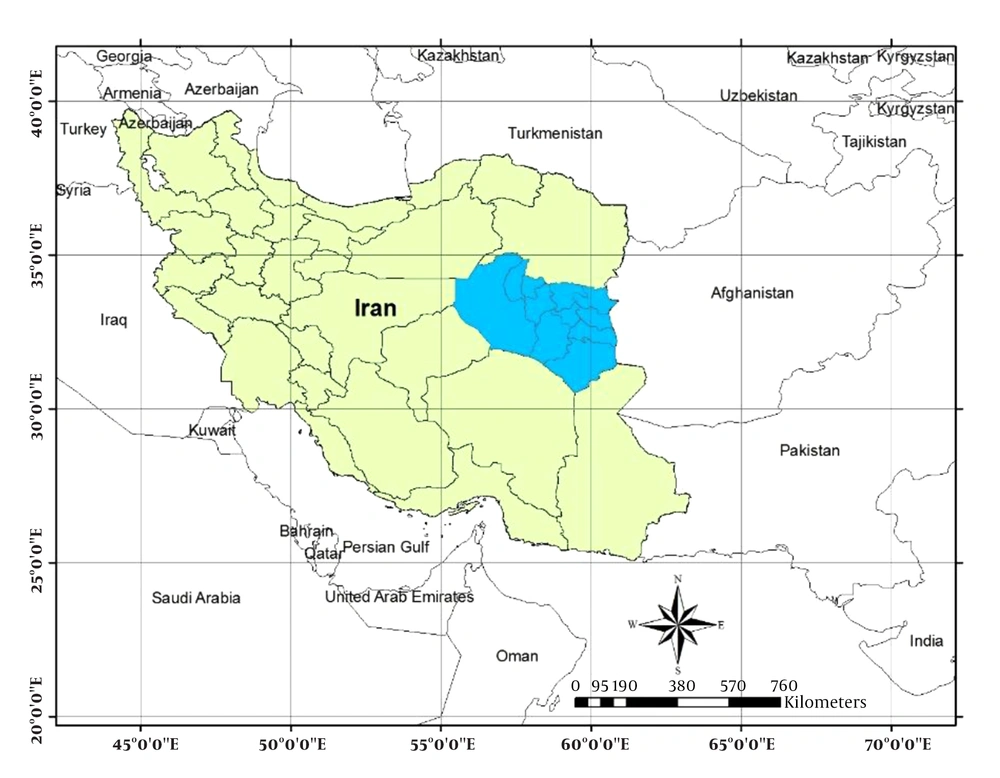
Figure 1.
The Map of South Khorasan Province; the Study Area
2.2. Data Collection and Analysis
The methodology of the current research included the variables on climate conditions (maximum temperature) and zoonoses (Source: weather institute of south Khorasan and school of public health, Birjand University of Medical Sciences) features. The current study analyses were mostly relied on quantitative data. Zoonotic cases of local residents from all age groups reported from 11 cities of the province were counted from 2005 to 2015, and the results were compared with the climate change data including temperature changes in the same period of time. In order to understand the complicated association of biological and ecological systems with climatic changes and its impact on human health, various statistical analyses, mostly relied on linear regression, indicated a significant correlation between climatic anomalies and remarkable changes in the epidemiological patterns of diseases, or even direct and indirect association of disease emergence with time and place. In spite of statistical techniques, the geographical information system (GIS) also supported some other observations in order to investigate the recolonization of such diseases, based on the climatic variations. In the last decade, in a large area of South Khorasan province the mean maximum temperature was about 19.9°C (standard deviation = 0.48°C). The mean annual maximum temperature of the province was a little warmer about 20.9°C (SD = 0.59°C) (Figure 2).
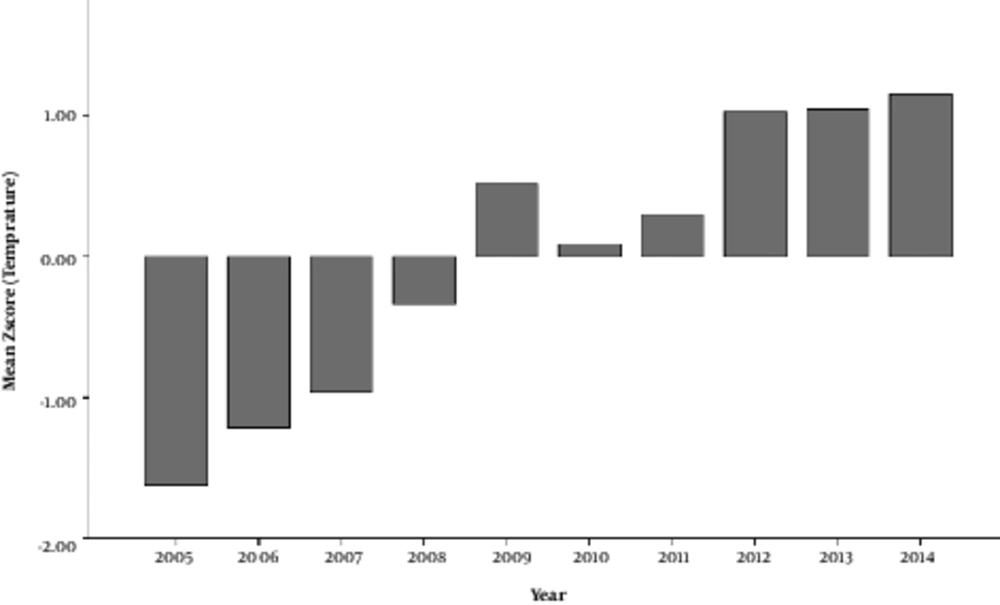
Figure 2.
The Anomalies of Mean Annual Maximum Temperature
3. Results and Discussion
The most important and common diseases transmitted from animals to humans in South Khorasan province were rabies, hydatid cysts, brucellosis, anthrax, and cutaneous leishmaniosis. The epidemiology of zoonotic diseases affecting the province residents is not properly documented.
Human and animal health issue was of great importance during the last 10 years due to the emergence of zoonotic diseases (Figure 3). Zoonotic diseases such as brucellosis, leishmaniosis, anthrax, and bites of animals were reported from different cities of the province. The highest prevalence of brucellosis was in Qaen and cutaneous leishmaniosis was reported from Darmian. Zoonotic diseases are also linked to temperature raise in recent years since 2005. Zoonotic bacteria, such as tilriviz and Bacillus anthracis are also linked to climate variability. Pearson correlation was used to assess the effect of climate variability on zoonotic diseases. Pearson coefficient was used to evaluate the linear dependence between the 2 variables of x and y; in this formula, y is zoonotic diseases and x is climate variability (Formula 1). The normality of data was checked with the Shapiro-Wilk test and normal curve with SPSS software.
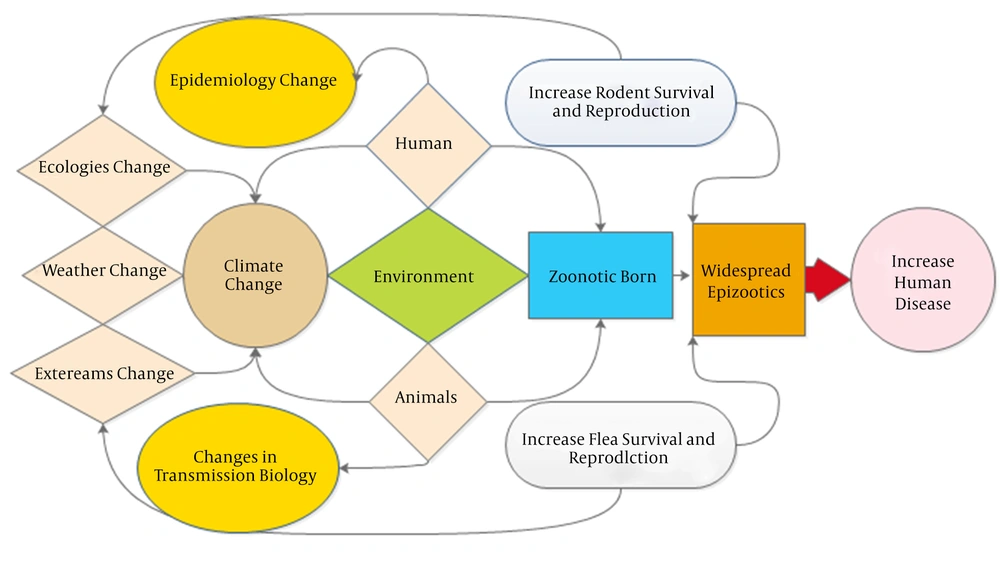
Figure 3.
Concept of Zoonotic and Climate Changes
Climate warming reduced the average numbers of days with the mean temperature of below 0°C in South Khorasan province. It changed geographical distribution of residents in the province. The available information showed how climatic changes affected the occurrence of zoonotic diseases in Western and Southern regions of South Khorasan province. In recent years, the prevalence of zoonotic diseases increased in the province. Therefore, there are relationships between climate changes and change in the distribution of residents (Figures 4 and 5).
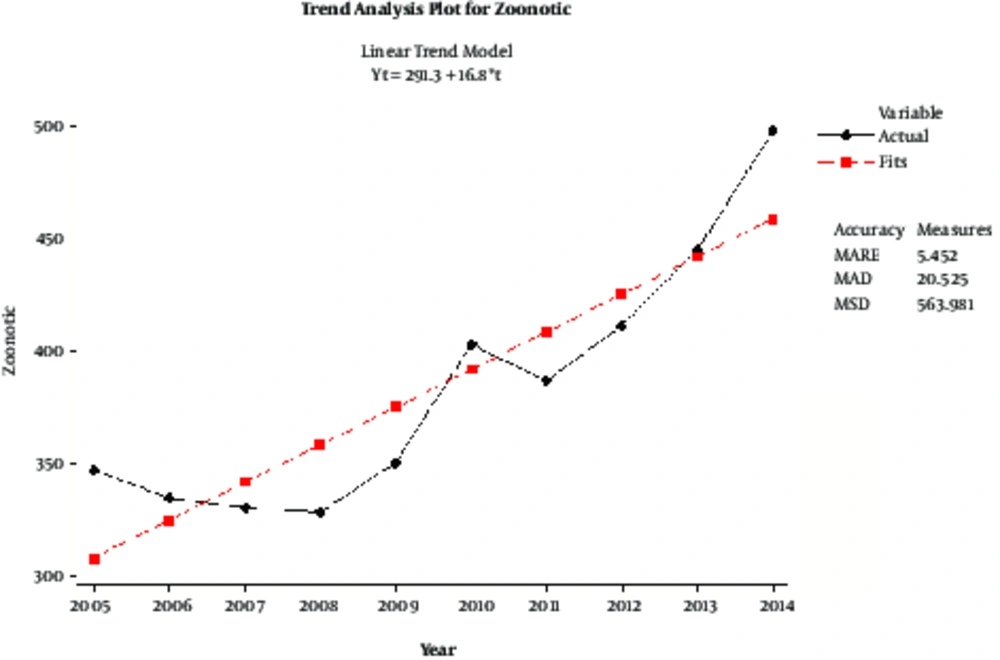
Figure 4.
Analysis of Zoonotic Diseases in South Khorasan Province
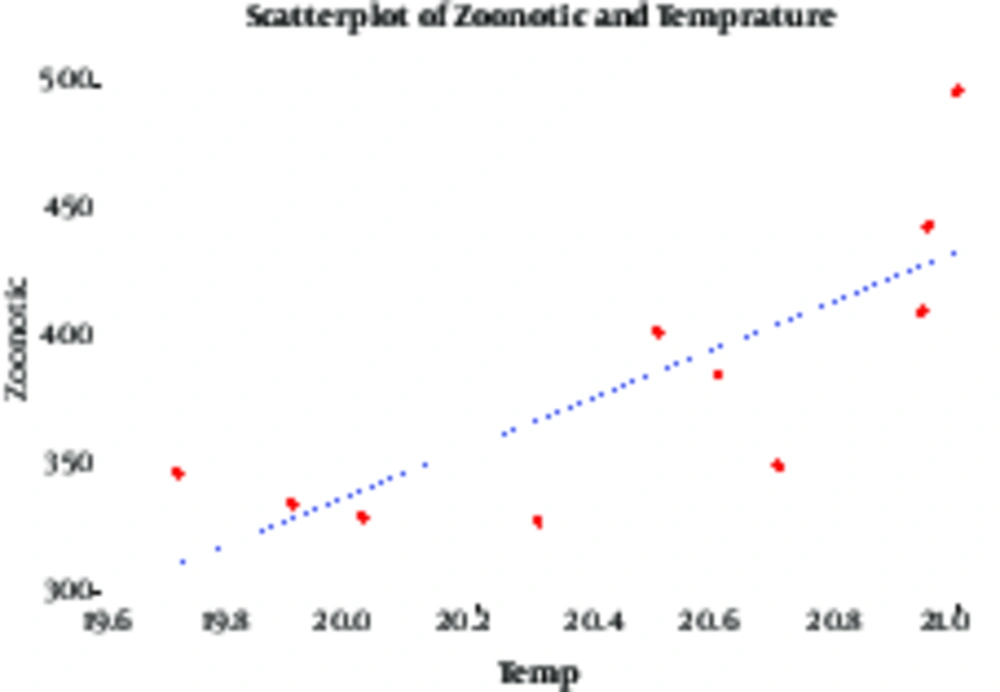
Figure 5.
Relationship Between Temperature and Zoonotic Diseases in South Khorasan Province
In other words, there is positive correlation between the changes of climate patterns and spatial distribution of the disease in the province. Climate change can alter the ratio of parasites, in some of them accelerate the proliferation cycle, and consequently the influence the geographical distribution in South Khorasan province. The frequency of disease is higher in the Western cities of the province, Tabas and Boshrooye. It was visible by the end of rainy season and the first high temperate in dry areas. Figure 4 shows geographic distribution of zoonotic diseases in South Khorasan province. Rabies in the province was of great concern in the past due to involving cats, dogs, and human being; rabies was a serious public health issue in Nehbandan (Table 1).
Table 1.
Frequency and Threshold of Zoonotic Diseases in the Cities of South Khorasan Province
| City | Frequency of Diseases | Test Value | Significant Level |
|---|---|---|---|
| Birjand | 48 | 0.49 | 0.03 |
| Qaen | 37 | 0.51 | 0.012 |
| Nehbandan | 59 | 0.89 | 0.0 |
| Tabas | 53 | 0.88 | 0.0 |
| Boshrooye | 55 | 0.83 | 0.001 |
| Ferdos | 30 | 0.41 | 0.02 |
| Sarayan | 15 | 0.43 | 0.0 |
| Darmiyan | 14 | 0.48 | 0.0 |
| Sarbishe | 42 | 0.57 | 0.02 |
| Zirkooh | 33 | 0.52 | 0.0 |
| Khosf | 18 | 0.48 | 0.01 |
When the means of annual zoonotic diseases were compared between mean annual maximum temperature of the province, significant differences were observed (r = 0.78, N = 11, P < 0.001). The number of diseases increased in the whole region (mean = 8.5%) with the increase of temperature in recent years, compared with past years. basically the province faced remarkable climatic changes, with a high temperate and heat weaves within the last 10 years as well as extreme drought during the recent 15 years. During this time, the number of zoonotic diseases also increased. The awareness of the connection between zoonotic diseases and climatic changes may assist strengthening the management of such diseases.
Climate changes are very small, but probably have an important impact on the geographical spreading of zoonotic diseases and vectors as well as their density and activity and the periods of reproduction (Figure 6). On the other hand, continuous warming and drought may decrease this valence in the province. Eventually, there are suggestions or solutions to control the spread of zoonotic diseases: First, in connection with the risks of livestock and their products, the most effective measures to prevent diseases transmissible to humans are the strict implementation of ongoing programs and projects to combat such diseases by veterinary networks. The programs should be supported and continued without interruption. Secondly, proper measures such as comprehensive scientific programs should be taken and implemented by the municipality, as well as environment, health, veterinary, and government offices to control the wildlife population and effectively make the public aware of the risks of infections and diseases and how to protect against them through the mass media and educational programs. The manufacturers and distributors of animal food should consider the rules and regulations of veterinary requirements to provide healthy food products. Awareness of consumers and people in contact with animals about the characteristics of healthy livestock products also plays an important role in the control and prevention of the zoonotic diseases. There is a need to improve laboratory diagnostics for many of such diseases. Researchers believe that climate changes can increase the risks of the emergence of zoonotic infectious diseases (Table 2).
Table 2.
Comparison of the Current Study Results with Those of Other Studies
| Current Study Result | Results of Other Studies | ||
|---|---|---|---|
| Researchers | Location | Results | |
| In the recent decade, climate indicators of the region showed changes that provided suitable conditions for the endemicity that did not exist previously; and at last led to such a high prevalence of the zoonotic diseases. The most important and common diseases transmitted from animals to humans were rabies, hydatid cyst, brucellosis, anthrax, and cutaneous leishmaniosis | Boris Revich et al. | Russia | Climate changes increased the emergence of zoonotic infectious diseases: tick-borne encephalitis, tularemia, brucellosis, leptospirosis, rabies, and anthrax. |
| B.B. Singh et al. | India | Climate changes that lead to warmer and more humid conditions may increase the risk of transmission of airborne zoonoses, and hot and drier conditions may lead to a decline in the incidence of such diseases such as leishmaniosis. | |
| Karsten Hueffer et al. | USA, Alaska | The increasing ambient temperature in Alaska and other regions of the Arctic may influence the incidence and distribution of zoonotic and parasitic infections in humans by changing the population density and range of wild and domestic animals and insect hosts. Zoonotic diseases occurring in Alaska include brucellosis, toxoplasmosis, trichinellosis, giardiasis/cryptosporidiosis, echinococcosis, rabies, and tularemia. | |
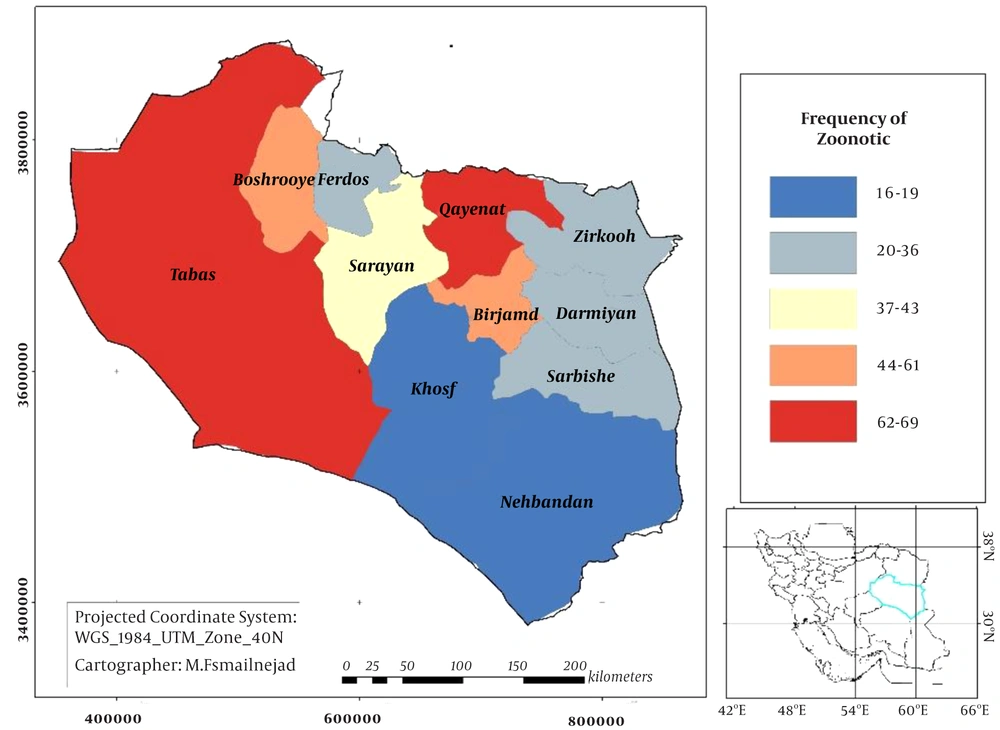
Figure 6.
Spatial Pattern and Frequency of Zoonotic Disease in the South Khorasan Province
3.1. Conclusion
Climate change creates favorable conditions for the emergence of 1 or more new diseases in the region. In dry climates, such as that of South Khorasan province, many fungal infections increase with warmer weather. Climate changes, which may affect the control of zoonotic diseases mostly observed in Western and Southern regions of the province. Generally, there are 3 types of research to connect climatic circumstances and transmission of infectious diseases. The first type studies concentrate on the relationship between the incidence of climatic variability and infectious diseases. Another type is to study the early indicators of already appeared infectious diseases influenced by long-term climatic changes. And the third one makes predictive models by the above mentioned evidence to estimate the future load of infectious diseases under climatic change scenarios. The current study used the first approach to examine the relationship between zoonotic diseases and climate by comparing temperature distributions. The current study described the empirical relationships between zoonotic diseases incidence and climate indicators. Some of the diseases with viral agents are caused by climatic variability or climate changes in South Khorasan province. A remarkable increase in the occurrence of rabies happened recently including many epidemiological and even eco-epidemiological and social factors. The correlation between the change in the number of zoonotic cases in this area, in the last decade, and climate indicators pointed that climatic changes provided the proper conditions for endemicity, which did not exist before, and enhanced and kept high outbreak of the zoonotic diseases through this period in the province. The changes in climate elements such as maximum temperature, increased the prolonged transfer cycles or the entrance of vectors or animal reservoirs; it is shifted the geographical patterns to the Western areas of South Khorasan province, too. Finally, the province, due to its geographical location, is always threatened by the zoonotic diseases; unfortunately, climate changes and an increase in the incidence of pests and diseases are effective as well.