Full Text
Full text is available in PDF
International Journal of Endocrinology and Metabolism
Research Institute for Endocrine Sciences
Authors
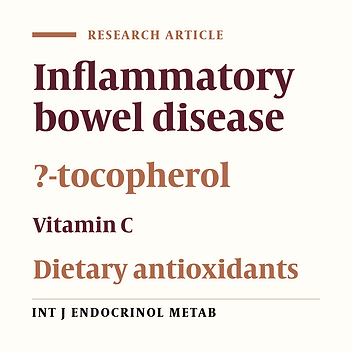
Inflammatory bowel disease (IBD) is a chronic gastrointestinal inflammatory disease of unknown etiology. Nutrition has been proposed as an important factor in etiology of IBD. The aim of this study was to compare dietary intake of antioxidants and serum levels of α -tocopherol and vitamin C in IBD patients with that of healthy subjects. Materials and Methods: Twenty-six IBD and twenty-eight sex and age matched healthy subjects were selected as the case and control groups from gastroenterology and other wards respectively, during the fall and winter of 2005. Subjects’ serum vitamin C and alpha-tocopherol levels were analyzed using the HPLC method. Semi-quantitative food frequency questionnaires were completed by all subjects during interviews. Results: There was no significant difference in serum levels of vitamin C and α-tocopherol between the two study groups. Intakes of whole grain bread and fresh vegetables in healthy subjects were 2.5 and 1.5 times higher than those of patients, respectively (p<0.05). Although patients consumed fewer cups of tea daily (p<0.05), no significant difference was seen in the intakes of other dietary antioxidant sources between the two groups. Conclusion: Results of this study indicated that although there was no significant difference between vitamin C and α-tocopherol serum levels in the both groups, dietary intake of the main antioxidant sources in IBD patients was lower than healthy matched subjects. More advanced studies with higher number of subjects are needed to explore the antioxidant status in such patients.
© 2009, Author(s). This open-access article is available under the Creative Commons Attribution 4.0 (CC BY 4.0) International License (https://creativecommons.org/licenses/by/4.0/), which allows for unrestricted use, distribution, and reproduction in any medium, provided that the original work is properly cited.
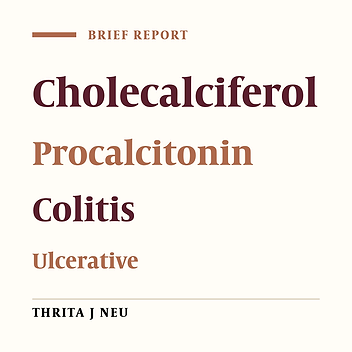
Shahverdi E, Konjedi MA, Shahverdi A, Dehghanian A, Khedmat H. Vitamin D and Its Role in Ulcerative Colitis. Thrita J Neu. 2015;4(4):e29996. doi: https://doi.org/10.5812/thrita.29996
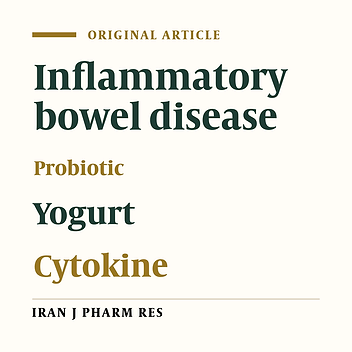
Shadnoush M, Shaker Hosseini R, Mehrabi Y, Delpisheh A, Alipoor E, et al. Probiotic yogurt Affects Pro- and Anti-inflammatory Factors in Patients with Inflammatory Bowel Disease. Iran J Pharm Res. 2013;12(4):e125761. doi: https://doi.org/10.22037/ijpr.2013.1351
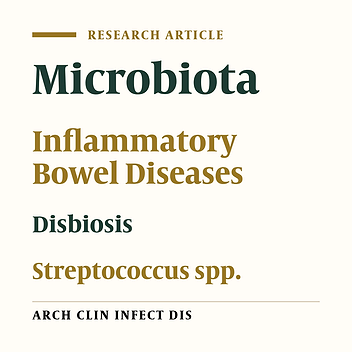
Heidarian F, Noormohammadi Z, Asadzadeh Aghdaei H, Alebouyeh M. Relative Abundance of Streptococcus spp. and its Association with Disease Activity in Inflammatory Bowel Disease Patients Compared with Controls. Arch Clin Infect Dis. 2017;12(2):e57291. doi: https://doi.org/10.5812/archcid.57291
Shadnoush M, Nazari M, Hajianfar H, faghfoori Z. Effects of probiotic yogurt consumption on intestinal permeability in inflammatory bowel disease: A double-blind randomized clinical Trial. koomesh. 2021;23(2):e153258. doi:
Vahid F, Rahmani G, Jafari Naeini A, Falahnejad H, Davoodi SH. The Association Between Index of Nutritional Quality (INQ) and Gastric Cancer and Evaluation of Nutrient Intakes of Gastric Cancer Patients: A Case-Control Study. Int J Cancer Manag. 2018;11(1):e9747. doi: https://doi.org/10.5812/ijcm.9747
Last Update: 3 weeks ago
Last Update: 3 weeks ago
Last Update: 3 weeks ago
Last Update: 9 hours ago
Last Update: 1 day ago
Last Update: 4 days ago
