Full Text
Full text is available in PDF
International Journal of Endocrinology and Metabolism
Research Institute for Endocrine Sciences
Authors
Many studies have been performed to compare WHO and ADA criteria for detection of diabetic patients. This study aims to compare these two criteria in a community-based epidemiological survey in an urban population of Tehran, Iran. Materials and Methods: Subjects were chosen from among 15005 urban individuals, 3 years old and over, selected by cluster random sampling in the cross-sectional phase of a longitudinal study conducted in the east of Tehran; there were 3870 men and 5359 women aged 20 years and over. Those with known diabetes were excluded. Blood samples were taken after 12-14 hours overnight fast and 2 hours post 75gr glucose taken orally. Prevalence of glucose tolerance categories and the level of agreement (? statistic) were obtained using WHO and ADA criteria. Results: Based on WHO criteria 6.0% (0.95 CI, 5.5-6.5) had type-2 diabetes and 13.0% (12.3-13.7) had IGT (Impaired glucose tolerance). Using ADA, 3.3% (2.9-3.7) had type-2 diabetes and 4.8% (4.4-5.2) had IFG (Impaired fasting glucose); p<0.05 and <0.001 for diabetes and IGT, respectively and 7355 (84%) had concordance with both criteria. Among 7105 normal subjects classified according to WHO criteria, 153 (2.2%) had IFG or diabetes by ADA, whereas from 8068 normal subjects according to ADA criteria, 1116 (13.8%) had IGT or diabetes based on WHO criteria. The level of agreement (? statistic) between the two criteria was 35% (p<0.001). Sensitivity and specificity of ADA criteria were 45.5 and 100%, respectively, considering WHO as the gold standard. Conclusion: Our data shows a low level of agreement between WHO and ADA diagnostic criteria for detection of diabetes. Patients with unknown diabetes, glucose disorders are detected more frequently using WHO criteria.
© 2006, Author(s). This open-access article is available under the Creative Commons Attribution 4.0 (CC BY 4.0) International License (https://creativecommons.org/licenses/by/4.0/), which allows for unrestricted use, distribution, and reproduction in any medium, provided that the original work is properly cited.
Hosseinpanah F, Hajiabdolrassouli L, Sarvghadi F, Azizahari S, Azizi F. Comparison between Diabetes Incidence Using Different Cut Points of IFG in Tehran. Int J Endocrinol Metab. 2009;7(4):. doi:
Larijani B, Pajoohi M, Javadi A, Maleckzadeh H, Samavat T, et al. Prevalence of diabetes mellitus impaired glucose tolerance of. J Inflamm Dis. 2024;7(2):e154936. doi:
Saadat N, Salehi P, Emami H, Azizi F. The Relationship Between Glucose Intolerance and Blood Pressure,Body Mass Index, and Waist to Hip Ratio in Tehran Urban Population: "Tehran Lipid and Glucose Study". Int J Endocrinol Metab. 2005;3(1):. doi:
Iranparvar Alamdari M, Habibi Moini A, Ebady A, Azizi F. Clinical and Laboratory Features of Patients with Impaired Glucose Tolerance (IGT) in Adults of District 13 of Eastern Tehran. Int J Endocrinol Metab. 2008;6(3):. doi:
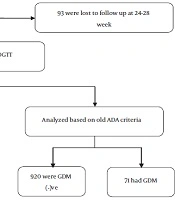
Niroomand M, Afsar J, Hosseinpanah F, Afrakhteh M, Farzaneh F, et al. Comparison of the International Association of Diabetes in Pregnancy Study Group Criteria with the Old American Diabetes Association Criteria for Diagnosis of Gestational Diabetes Mellitus. Int J Endocrinol Metab. 2019;17(4):e88343. doi: https://doi.org/10.5812/ijem.88343
Last Update: 3 weeks ago
Last Update: 3 weeks ago
Last Update: 3 weeks ago
Last Update: 5 hours ago
Last Update: 2 days ago
Last Update: 4 days ago
