Full Text
Full text is available in PDF
International Journal of Endocrinology and Metabolism
Research Institute for Endocrine Sciences
Authors
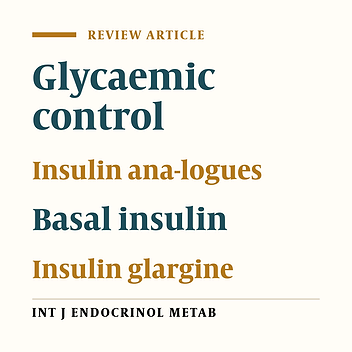
This review examines the role of the basal insu-lin analogue, insulin glargine in the treatment of type 2 diabetes, focusing on how research evi-dence can inform its use in clinical practice. The importance of achieving optimal glycaemic con-trol has been emphasised by bodies such as the IDF who have set strict targets for HbA1c levels. We know that FPG plays an important role in helping to achieve optimal glycaemic control and basal insulin therapy can play a role in this area. Insulin glargine is a once-daily, peakless basal insulin which has been shown to achieve the same degree of glycaemic control as NPH insulin but with significantly reduced rates of hypogly-caemia. This allows patients to improve self management of their diabetes by optimising treatment without the risk of hypoglycaemia. Research has shown that patients can safely op-timise therapy with a patient-led titration algo-rithm based on an insulin dose adjustment of 2 units every 3 days. Initiation of insulin glargine has been shown to be effective within a group as well as individually, allowing health care pro-fessionals to manage their time more effectively between the growing numbers of people requir-ing insulin therapy. Conclusions: This basal insulin analogue is a welcome addition to the plethora of treatments available to treat type 2 diabetes and efficacy data can now be converted into practical meth-ods of optimising insulin therapy for the type of patients healthcare professionals routinely en-counter in their practice.
© 2008, Author(s). This open-access article is available under the Creative Commons Attribution 4.0 (CC BY 4.0) International License (https://creativecommons.org/licenses/by/4.0/), which allows for unrestricted use, distribution, and reproduction in any medium, provided that the original work is properly cited.
Maria Rotella C, Pala L, Mannucci E. Role of Insulin in the Type 2 Diabetes Therapy: Past, Present and Future. Int J Endocrinol Metab. 2013;11(3):137-144. doi: https://doi.org/10.5812/ijem.7551
Abhay A, Ravichand D, Seshayamma V, Satish chandran P. Pharmacotherapy Of Type 2 Diabetes – The Future. Int J Endocrinol Metab. 2006;4(3):e94594. doi:

Abdi H, Azizi F, Amouzegar A. Insulin Monotherapy Versus Insulin Combined with Other Glucose-Lowering Agents in Type 2 Diabetes: A Narrative Review. Int J Endocrinol Metab. 2018;16(2):e65600. doi: https://doi.org/10.5812/ijem.65600
Afkhami-ardekani M, Jafaryzadeh H. Outcome of reinitiation of combination anti diabetic oral therapy in insulin treated patients with Type 2 Diabetes Mellitus. Zahedan J Res Med Sci. 2005;7(1):e94976. doi:

Otto-Buczkowska E, Jainta N. Pharmacological Treatment in Diabetes Mellitus Type 1 – Insulin and What Else?. Int J Endocrinol Metab. 2018;16(1):e13008. doi: https://doi.org/10.5812/ijem.13008
Last Update: 3 weeks ago
Last Update: 3 weeks ago
Last Update: 3 weeks ago
Last Update: 10 hours ago
Last Update: 1 day ago
Last Update: 4 days ago
