Full Text
Full text is available in PDF
International Journal of Endocrinology and Metabolism
Research Institute for Endocrine Sciences
Authors
Isoflavones are a group of phytoestrogens found mainly in soy bean and its products. Their actions on various tissues have motivated researchers to assess the possible related mechanisms and functions. The main objective of this study is to determine the metabolic effects of purified alcohol-extracted soy protein isoflavones (SFI) on serum lipoproteins and hormones of mild to moderate hypercholesterolemic male subjects. The effects of SFI on this type of patients and on the serum hormone levels have not been evaluated previously.
Materials and methods: 30 male volunteers were randomly divided into two groups in a doubleblind parallel randomized placebo-controlled trial (n=15). Group 1 received 50mg purified alcohol- extracted soy isoflavones solution and group 2 received placebo in a similarly colored solution for an 8-week period. Both groups were matched for age, duration of illness, medications, and diet. Data on other variables of each subject i.e. body mass index, smoking habits, blood pressure, and past medical history were also collected.
Results:LDL-, VLDL-, and HDL-cholesterol, Tg and thyroxine, triiodothyronine, FSH, testosterone and fasting blood sugar levels did not change significantly compared to their baseline levels. Total cholesterol decreased by 10 percent, (p=0.055). TSH levels in SPI group showed a significant rise after intervention (p<0.05), remaining, however, within normal range.
Conclusion: These results indicate that alcoholextracted SPI without soy protein does not affect serum lipid profiles and hormones in hypercholesterolemic men. More trials with larger number of subjects conducted over a longer period of study are needed to confirm these findings.
© 2004, Author(s). This open-access article is available under the Creative Commons Attribution 4.0 (CC BY 4.0) International License (https://creativecommons.org/licenses/by/4.0/), which allows for unrestricted use, distribution, and reproduction in any medium, provided that the original work is properly cited.
Amani R, Baghdadchi J, Moghaddam A. Effects of Soy Protein Isoflavones on Serum Lipids, Lipoprotein Profile and Serum Glucose of Hypercholesterolemic Rabbits. Int J Endocrinol Metab. 2005;3(2):. doi:
Shahbazian H, Amani R, Siadatan J, Shahbazian H, Latifi M, et al. BENEFICIAL EFFECTS OF SOYPROTEIN ISOFLAVONES ON LIPID AND BLOOD GLUCOSE CONCENTRATIONS IN TYPE 2 DIABETIC SUBJECTS. Jundishapur J Nat Pharm Prod. 2006;1(1):. doi:
Sharifi Zahabi E, Entezari MH, Maracy MR, Yaran M. Effect of soy flour enriched bread consumption on anthropometric indices and blood pressure and its association with ApoE genotype in overweight and obese women. J Kermanshah Univ Med Sci. 2015;18(12):e70726. doi: https://doi.org/10.22110/jkums.v18i12.2203
Azadbakht L, Atabak S, Rajaie S, Zahedi M, Tehrani M, et al. Soy Protein Intake, Cardiovascular Risks, CRP-Level and Kidney Function Among Type 2 Diabetic Patients with Nephropathy. Zahedan J Res Med Sci. 2012;14(2):e93577. doi:
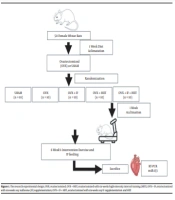
Mirheidari L, Soori R, Ravasi AA, Jourkesh M. The Combined Effect of High-intensity Interval Training and Soy Isoflavone Diet on MicroRNA-133 Gene in Ovariectomized Rats. J Kermanshah Univ Med Sci. 2022;26(3):e122938. doi: https://doi.org/10.5812/jkums-122938
Last Update: 3 weeks ago
Last Update: 3 weeks ago
Last Update: 3 weeks ago
Last Update: 8 hours ago
Last Update: 10 hours ago
Last Update: 4 days ago