Innovative Journal of Pediatrics
The Scientific Journal of Growth & Development Research Center
e-ISSN 3117-5341
Image Credit:Inn J Pediatr
Outline
Cardiac Repolarization Changes in the Children with Breath-Holding Spells
Authors
Hamid Amoozgar1,*, Fazl Saleh2, Nahal Farhani3, Mohammad Rafiei4, Soroor Inaloo5, Ali-Akbar Asadipooya6
Published online:Nov 22, 2013
Article type:Research Article
Received:Mar 30, 2013
Accepted:Jul 06, 2013
How to Cite:Amoozgar H, Saleh F, Farhani N, Rafiei M, Inaloo S, et al. Cardiac Repolarization Changes in the Children with Breath-Holding Spells. Inn J Pediatr. 2013;23(6):. doi:
Abstract
Objective: Breath-holding spells are known as benign attacks, frequencies of which decrease by the development of the autonomic nervous system. The present study aims to compare the electrocardiographic repolarization in children with breath-holding spells. Methods: In this study, QT dispersion, QTc dispersion, T peak to T end dispersion, and P wave dispersion of the twelve-lead surface electrocardiography of fifty children who had breath-holding spells were measured and compared with normal children from April 2011 to August 2012. Findings: Forty-four (88%) patients had cyanotic spells, while 6 (12%) had pallid spells. QTc dispersion was increased in the patients with breath-holding spells (148.2±33.1) compared to the healthy children (132±27.3) and the difference was statically significant (P=0.01). Meanwhile, no statistically significant differences were observed between the patients and the control subjects regarding the other parameters (P>0.05). Conclusion: QTc dispersion was significantly increased in the patients with breath-holding spells compared to normal children and this is a sign of cardiac repolarization abnormality as well as the increased risk of cardiac arrhythmia in patients with breath-holding spells.
Highlights
References
- 1.References are available on the PDF.
Copyright
© 2013, Author(s). This open-access article is available under the Creative Commons Attribution 4.0 (CC BY 4.0) International License (https://creativecommons.org/licenses/by/4.0/), which allows for unrestricted use, distribution, and reproduction in any medium, provided that the original work is properly cited.
Similar Articles
15
Mar
2022
Electrocardiography Changes in Children with Epileptic and Non-epileptic Seizures Compared to Controls
Noormohammad Noori,
Alireza Teimouri,
Ali Khajeh,
elham shafighi shahri
Noori N, Teimouri A, Khajeh A, shafighi shahri E. Electrocardiography Changes in Children with Epileptic and Non-epileptic Seizures Compared to Controls. Int Cardiovasc Res J. 2022;16(1):e120859. doi:
30
Sep
2012
T-Peak to T-End Abnormality in Pediatric Patients with Syncope
Mohammad Hosseiniasl,
Hamid Amoozgar
Hosseiniasl M, Amoozgar H. T-Peak to T-End Abnormality in Pediatric Patients with Syncope. Inn J Pediatr. 2015;22(3):. doi:
19
Aug
2026
Electrocardiographic Findings in Children with Beta-Thalassemia Major: A Case-Control Study of the Impact of Age, Sex, and Body Mass Index
Noor Mohammad Noori,
Alireza Teimouri,
Shima Groohi-Sardou
Noori NM, Teimouri A, Groohi-Sardou S. Electrocardiographic Findings in Children with Beta-Thalassemia Major: A Case-Control Study of the Impact of Age, Sex, and Body Mass Index. J Compr Ped. 2026;17(3):e173200. doi: https://doi.org/10.5812/jcp-173200
6
Jun
2022
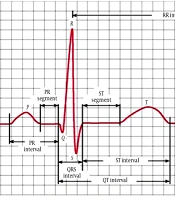
Comparison of Tp-e Interval Between Obese and Healthy Children in Adolescence and its Correlation with Insulin Resistance in Obese Children
Dogan Cagri Tanriverdi,
Canan Yolcu,
Seniha Kiremitci Yilmaz,
Bagdagul Aksu,
Murat Elevli,
Kamil Sahin
Tanriverdi DC, Yolcu C, Yilmaz SK, Aksu B, Elevli M, et al. Comparison of Tp-e Interval Between Obese and Healthy Children in Adolescence and its Correlation with Insulin Resistance in Obese Children. Inn J Pediatr. 2022;32(3):e115018. doi: https://doi.org/10.5812/ijp-115018
15
May
2016
NT-proBNP in Children With Left to Right Shunt and Dilated Cardiomyopathy
Hala Mahmoud Koura,
Neamat M. Abdalla,
Mona Hamed Ibrahim,
Maha M. A. Abo Hashish,
Sherif Mohamed Zaki
Koura HM, Abdalla NM, Hamed Ibrahim M, Abo Hashish MMA, Zaki SM. NT-proBNP in Children With Left to Right Shunt and Dilated Cardiomyopathy. Inn J Pediatr. 2016;26(3):e4485. doi: https://doi.org/10.5812/ijp.4485
Cited by
- Scopus by DOI: 0
Last Update: 1 week ago
- Scopus by Title: 14
Last Update: 1 week ago
- Scopus by Title (Ref): 14
Last Update: 1 week ago
- CrossRef: 0
Last Update: 3 hours ago
- OpenAlex: 0
Last Update: 6 hours ago
- OpenCitations: 0
Last Update: 5 days ago
Comments
Number of Comments:0