Fulltext
Phocomelia, ie the absence or severe hypoplasia of the long tubular bones with more or less intact hands and or feet, is widely known to be the most spectacular finding of thalidomide embryopathy[1]. It may be complete in the form that proximal and distal bones of limb are absent or may be incomplete when either proximal or distal bones are missing. It is known to occur in some familial syndromes such as Roberts syndrome[10], the DK Phocomelia syndrome[8] and in a few other extremely rare syndromes. Phocomelia syndromes are multiple malforma¬tions syndrome that includes skeletal, genitourinary such as renal agenesis, gastro¬intestinal system, eye abnormalties eg cloudy corneas, craniofacial abnormalities including silvery blonde hair, extensive hemangiomas and hypoplastic nasal cartilage[11]. These syndromes include autosomal recessive form of VACTERL-hydrocephaly syndrome (David-O’Callaghan syndrome), X-linked recessive form (Hunter MacMurray) syndrome, DK-phocomelia (von Voss-Cherstvoy) syndrome and Laurin-Sandrow Syndrome (LSS).
The present report represents an instance of isolated lower limb phocomelia without other defects which is very rare. A 3 month, male child presented with complaints of malformed left lower limb since birth. Baby was normal vaginally delivered, full term with birth weight being 2.7 kg. Antenatal and perinatal history was uneventful, no history of any drug intake, radiation exposure or infections during pregnancy. First born baby died at the age of 10 postnatal day, cause is unknown, but he was apparently not having any congenital malformation. Physical examination revealed weight 4.8 kg, length 54.5 cm, head circumference 36.5 cm, no facial dysmorphism, spine normal. Only deformity was phocomelia of left lower limb (Fig. 1). Systemic examination was normal. X ray pelvis with both lower limbs showed left lower limb showed absent femur, tibia and fibula, a single tarsal bone visualized, distal foot appears grossly normal. Right hip and femur do not reveal any abnormality. Chest X ray was absolutely normal and abdominal sonography abdomen and cranianl showed no abnormality. 2-dimensional echocardiography was done to rule out congenital heart defect, which was also normal.
Phocomelia[2] in the complete form, the arm and forearm are absent in the upper limb and the thigh and leg are absent in the lower limb (the hands and feet sprout directly from the trunk). The deficiency may be proximal (arms and thighs missing) or distal (forearms and legs missing). This malformation was seen with thalidomide embryopathy or could be a part of some pseudo–thalidomide syndromes, which could be familial. Certain syndromes are reported where phocomelia is one of the features along with other congenital malformations ie Roberts syndrome[3], DK Phocomelia syndrome[4] Odontotrichomelic tetramelic ectodermal dysplasia[5], congenital hemidysplasia with ichthyosiform erythroderma and limb defects (CHILD) syndrome[6], Syndrome of spleno-gonadal fusion[7].
The Robert SC syndrome is associated with phocomelia and craniofacial abnormality including hyper¬telorism, hypoplastic nasal alae, cleft lip and palate and chromosomal abnormality in about half of the cases. Autosomal recessive inherited DK phocomelia syndrome is associated with phocomelia, oligodactyly, thrombocytopenia and heart, brain
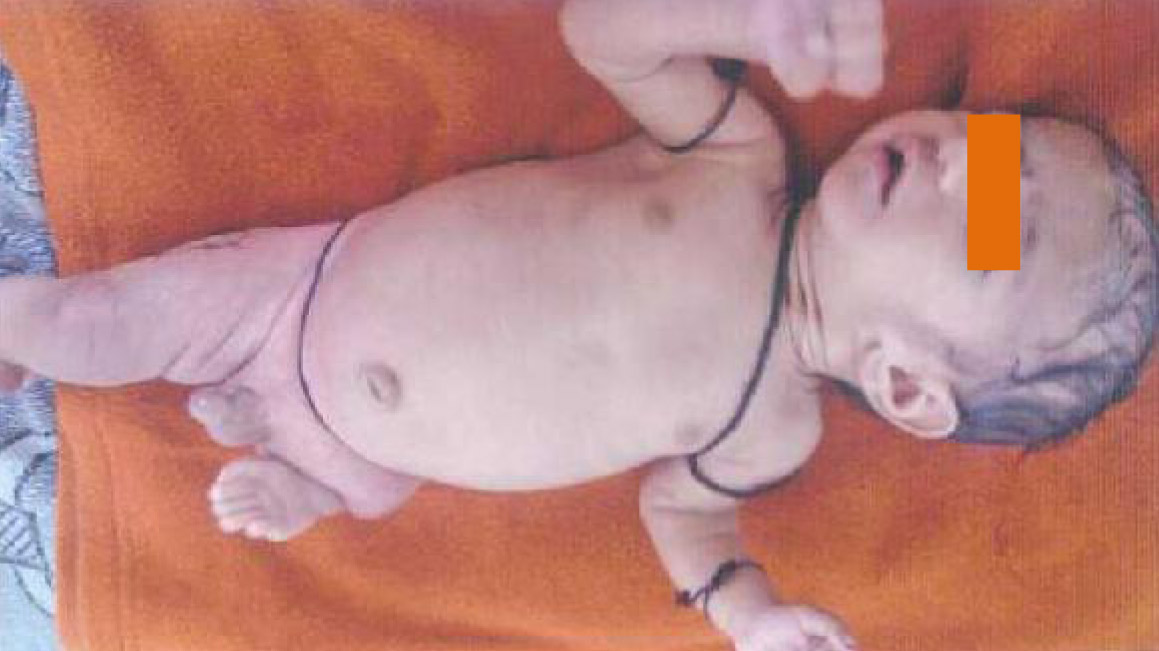
Fig. 1: Phocomelia of left lower limb in a case with isolated malformation
and kidney malformations; CHILD syndrome consists of phocomelia, icthyosis, brain and heart malformations. Another syndrome in this domain is limb/pelvis-hypoplasia/aplasia syndrome which is associated with unusual facies, thoracic dystrophy and deficiencies in upper and lower extremities[8,9]. The case described in this report had only isolated lower limb phocomelia and no other malformations as described in above mentioned syndromes which makes this case rare and academically important.
In this case phocomelia is confined to only one lower limb with no other congenital defect. It does not seem to be familial. With proper prosthesis and other orthopedic rehabilitation, baby may live normal life. Isolated one limb phocomelia has better prognosis compared to other variety, needs attention in this report.
The present report represents an instance of isolated lower limb phocomelia without other defects which is very rare. A 3 month, male child presented with complaints of malformed left lower limb since birth. Baby was normal vaginally delivered, full term with birth weight being 2.7 kg. Antenatal and perinatal history was uneventful, no history of any drug intake, radiation exposure or infections during pregnancy. First born baby died at the age of 10 postnatal day, cause is unknown, but he was apparently not having any congenital malformation. Physical examination revealed weight 4.8 kg, length 54.5 cm, head circumference 36.5 cm, no facial dysmorphism, spine normal. Only deformity was phocomelia of left lower limb (Fig. 1). Systemic examination was normal. X ray pelvis with both lower limbs showed left lower limb showed absent femur, tibia and fibula, a single tarsal bone visualized, distal foot appears grossly normal. Right hip and femur do not reveal any abnormality. Chest X ray was absolutely normal and abdominal sonography abdomen and cranianl showed no abnormality. 2-dimensional echocardiography was done to rule out congenital heart defect, which was also normal.
Phocomelia[2] in the complete form, the arm and forearm are absent in the upper limb and the thigh and leg are absent in the lower limb (the hands and feet sprout directly from the trunk). The deficiency may be proximal (arms and thighs missing) or distal (forearms and legs missing). This malformation was seen with thalidomide embryopathy or could be a part of some pseudo–thalidomide syndromes, which could be familial. Certain syndromes are reported where phocomelia is one of the features along with other congenital malformations ie Roberts syndrome[3], DK Phocomelia syndrome[4] Odontotrichomelic tetramelic ectodermal dysplasia[5], congenital hemidysplasia with ichthyosiform erythroderma and limb defects (CHILD) syndrome[6], Syndrome of spleno-gonadal fusion[7].
The Robert SC syndrome is associated with phocomelia and craniofacial abnormality including hyper¬telorism, hypoplastic nasal alae, cleft lip and palate and chromosomal abnormality in about half of the cases. Autosomal recessive inherited DK phocomelia syndrome is associated with phocomelia, oligodactyly, thrombocytopenia and heart, brain
Fig. 1: Phocomelia of left lower limb in a case with isolated malformation
and kidney malformations; CHILD syndrome consists of phocomelia, icthyosis, brain and heart malformations. Another syndrome in this domain is limb/pelvis-hypoplasia/aplasia syndrome which is associated with unusual facies, thoracic dystrophy and deficiencies in upper and lower extremities[8,9]. The case described in this report had only isolated lower limb phocomelia and no other malformations as described in above mentioned syndromes which makes this case rare and academically important.
In this case phocomelia is confined to only one lower limb with no other congenital defect. It does not seem to be familial. With proper prosthesis and other orthopedic rehabilitation, baby may live normal life. Isolated one limb phocomelia has better prognosis compared to other variety, needs attention in this report.