Innovative Journal of Pediatrics
The Scientific Journal of Growth & Development Research Center
e-ISSN 3117-5341
Image Credit:Inn J Pediatr
Outline
The Role of IL-6 for Predicting Neonatal Sepsis: A Systematic Review and Meta-Analysis
Authors
1Digestive Research Center, Tehran University of Medical Sciences, Tehran, Iran
2Department of Pediatrics, Golestan University of Medical Sciences, Gorgan, Iran
3Golestan Research Center of Gastroenterology and Hepatology, Golestan University of Medical Sciences, Gorgan Department of Pediatrics, Golestan University of Medical Sciences, Gorgan, Iran
Published online:Dec 31, 2010
Article type:Review Article
Received:Jun 28, 2010
Accepted:Nov 13, 2010
How to Cite:Roshandel G, Ahani A, Mirfazeli A, Shahkar L, Keshtkar A. The Role of IL-6 for Predicting Neonatal Sepsis: A Systematic Review and Meta-Analysis. Inn J Pediatr. 2011;21(4):. doi:
Abstract
Objective: Neonatal sepsis (NS) is a common and life-threatening disorder in infants. Previous studies showed that interleukin-6 (IL-6) may be a valid non-invasive and rapid method for diagnosis of NS. We conducted this review to assess the validity of IL-6 for predicting NS.
Methods: This was a systematic review with meta-analysis. Embase, Medline and Web of Science databases were searched between January 1990 and December 2009. The search terms used were “cytokine”, “neonate”, “sepsis” and “interleukin-6". We used standard methods recommended for meta analyses of diagnostic test evaluations. The analysis was based on a summary ROC (SROC) curve. Meta-regression analysis was used to assess the effects of some confounding factors on the results of meta-analysis. Potential presence of publication bias was tested using funnel plots and the Egger test.
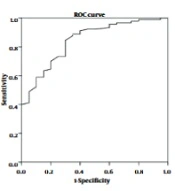
Findings: Meta-analysis was performed on 13 publications including 353 infants with sepsis and 691 control infants. The pooled sensitivity and specificity of IL-6 was 0.79 and 0.84, respectively. The maximum joint sensitivity and specificity (i.e., the Q value) in SROC curve was 0.82 and the area under curve (AUC) was 0.89 (95% CI: 0.84-0.94). Meta-regression analysis showed that the diagnostic accuracy of IL-6 was not affected by confounding variables. The evaluation of publication bias showed that the Egger test was not significant (P=0.07).
Conclusion: IL-6 seems to be a valid marker for predicting NS. It may be considered for early diagnosis of sepsis in neonatal care units.
Highlights
References
- 1.References are available in PDF.
Copyright
© 2011, Author(s). This open-access article is available under the Creative Commons Attribution 4.0 (CC BY 4.0) International License (https://creativecommons.org/licenses/by/4.0/), which allows for unrestricted use, distribution, and reproduction in any medium, provided that the original work is properly cited.
Similar Articles
1
Dec
2013

Predictive Value of Interleukin-6 (IL6) in Term Neonates With Early Sepsis During 2010-2011
Marzie Heidarzadeh Arani,
Amirhosein Movahedian,
Mohammad Ghannaee Arani,
Mojtaba Adinah,
Ziba Mosayebi
Heidarzadeh Arani M, Movahedian A, Ghannaee Arani M, Adinah M, Mosayebi Z. Predictive Value of Interleukin-6 (IL6) in Term Neonates With Early Sepsis During 2010-2011. Jundishapur J Microbiol. 2013;6(10):e8580. doi: https://doi.org/10.5812/jjm.8580
8
Jul
2025
Comparison of Serum Procalcitonin and C-reactive Protein Levels in Late Onset Neonatal Sepsis
Reza Saeidi,
Mohammad Kazemian,
Shamsollah Noripour,
Minoo Fallahi,
Parinaz Alizadeh,
Mohammad Kordkatouli
Saeidi R, Kazemian M, Noripour S, Fallahi M, Alizadeh P, et al. Comparison of Serum Procalcitonin and C-reactive Protein Levels in Late Onset Neonatal Sepsis. Zahedan J Res Med Sci. 2025;27(3):e163585. doi: https://doi.org/10.5812/zjrms-163585
31
Dec
2007
The role of C-reactive protein in diagnosis of neonatal early-onset sepsis
Z Eslami,
L Borjian
Eslami Z, Borjian L. The role of C-reactive protein in diagnosis of neonatal early-onset sepsis. J Inflamm Dis. 2024;11(3):e155423. doi:
18
Oct
2016
Assessing the Role of Clinical Manifestations and Laboratory Findings in Neonatal Sepsis
Masoumeh Hematyar,
Reza Najibpour,
Seyedehsara Bayesh,
Asal Hojjat,
Ali Farshad
Hematyar M, Najibpour R, Bayesh S, Hojjat A, Farshad A. Assessing the Role of Clinical Manifestations and Laboratory Findings in Neonatal Sepsis. Arch Pediatr Infect Dis. 2017;5(1):e29985. doi: https://doi.org/10.5812/pedinfect.29985
4
Dec
2023
Establishment and Validation of Models Based on Clinical Parameters/Symptoms for Diagnostic and Prognostic Assessment of Neonatal Sepsis
Ying Zhang,
Cheng Zhang,
Jianbo Shu,
Fang Zhang
Zhang Y, Zhang C, Shu J, Zhang F. Establishment and Validation of Models Based on Clinical Parameters/Symptoms for Diagnostic and Prognostic Assessment of Neonatal Sepsis. Inn J Pediatr. 2023;33(6):e138660. doi: https://doi.org/10.5812/ijp-138660
Cited by
- Scopus by DOI: 0
Last Update: 3 weeks ago
- Scopus by Title: 50
Last Update: 3 weeks ago
- Scopus by Title (Ref): 0
Last Update: 3 weeks ago
- CrossRef: 0
Last Update: 4 hours ago
- OpenAlex: 0
Last Update: 1 day ago
- OpenCitations: 0
Last Update: 4 days ago
Comments
Number of Comments:0