Fulltext
Full text is available in the PDF.
IJ Psychiatry and Behavioral Sciences
IJPBS is the Official Journal of Mazandaran University of Medical Sciences
Image Credit:Iran J Psychiatry Behav Sci
Authors
Objective: Studies have identified high prevalence of depression among people living with HIV/AIDS, but only few studies have looked into this association in this environment. The objectives were to determine the prevalence of major depressive disorder, associated socio-demographic and psychosocial variables in people living with HIV/AIDS attending an out-patient clinic at the Olabisi Onabanjo Teaching Hospital (OOUTH), Sagamu, Nigeria.
Methods: A cross-sectional survey was carried out on one-hundred and thirty subjects living with HIV/AIDS attending out-patient clinic at the OOUTH, Sagamu. They were assessed with a socio-demographic questionnaire designed by the researchers, and they also had a clinical interview with the depression module of the Structured Clinical Interview Schedule for Axis 1 DSM-IV disorders (SCID). The diagnosis was made according to the DSM- IV criteria and severity assessed with the Hamilton Rating Scale for depression.
Results: The prevalence of depression was 23.1% and was higher than figures reported in the general population studies in Nigeria. Of this proportion 46.7%, 50%, 3.3% were mildly, moderately and severely depressed. Majority (40%) were within the 30-39 years range. Women accounted for 69.2% of the study population and 46.9% of the subjects were either divorced/separated or widowed. Depression was significantly associated with being female and having suicidal thoughts or attempt. There was no association between marital status, disclosure of status and duration of HIV diagnosis.
Conclusion: The prevalence of depression is high among people living with HIV/AIDS in Nigeria. An appropriate mental health intervention programme would be necessary as part of national programme for people living with HIV/AIDS to reduce the negative impact of depression on them.
Declaration of interest: None.
Citation: Obadeji A, Ogunlesi AO, Adebowale TO. Prevalence and predictors of depression in people living with HIV/AIDS attending an outpatient clinic in Nigeria. Iran Psychiatry Behave Sci 2014; 8(1): 26-31
© 2014, Author(s). This open-access article is available under the Creative Commons Attribution 4.0 (CC BY 4.0) International License (https://creativecommons.org/licenses/by/4.0/), which allows for unrestricted use, distribution, and reproduction in any medium, provided that the original work is properly cited.
Hamzeh B, Pasdar Y, Darbandi M, Morvaridzadeh M, Izadi N. Prevalence of depression and its relationship with quality of life and physical activity in patients with HIV/AIDS. J Health Rep Technol. 2017;3(1):e74181. doi:
Moayedi F, Jashoonia Hormozi S, Tahamtan I. Mental Health Status of Patients With HIV/AIDS in the South of Iran. Health Scope. 2015;4(2):e25796. doi: https://doi.org/10.17795/jhealthscope-25796
Shakeri J, Parvizifard A, Aminzadeh S. Mental Status of HIV+ patients, referred to Counselling Center of Kermanshah Health Care Center (2002). J Kermanshah Univ Med Sci. 2006;10(1):e81707. doi:
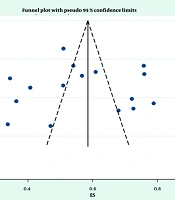
Abbasian L, Hemmatian M, Ghaderi H, Piroozi B, Rahmati S. Prevalence of Depression in HIV/AIDS in Iran: A Systematic Review and Meta-analysis. J Nurs Midwifery Sci. 2025;12(2):e161342. doi: https://doi.org/10.5812/jnms-161342
Fite RO, Chichiabellu TY, Demissie BW, Hanfore LK. Tuberculosis and HIV Co-infection and associated factors among HIV reactive patients in Ethiopia. J Nurs Midwifery Sci. 2019;6(1):e141150. doi: https://doi.org/10.4103/jnms.jnms_50_18
More by these authors
Last Update: 1 week ago
Last Update: 1 week ago
Last Update: 1 week ago
Last Update: 5 hours ago
Last Update: 8 hours ago
Last Update: 5 days ago