Dear Editor,
In December 2019, unknown pneumonia cases were reported in Wuhan with primary symptoms of severe respiratory infection. Also, some patients, due to severe respiratory distress, experienced acute respiratory failure and other complications (1). Severe and advanced cases of coronavirus disease are accompanied by intense lung involvement that is not controllable by mechanical ventilation. Different therapeutic, protective, and mechanical approaches have been considered in this pandemic and the involvement of people who need special care is not predictable yet (2). Therefore, physicians and people involved in this area should consider all protective and therapeutic approaches such as extracorporeal membrane oxygenation (ECMO).
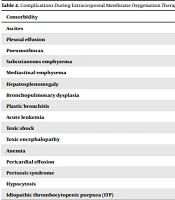
Presenting complex treatments such as ECMO during emerging and reemerging infections is a big challenge and needs extensive studies on their effectiveness. ECMO is an important therapeutic method in caring for patients with cardiac and pulmonary dysfunction and it has not taken advantage of conventional treatments. Indeed, it is a protective method until patients receive appropriate treatment (a bridge to recovery). But the role and outcome of employing ECMO in managing COVID-19 are still not clear (3, 4). The World Health Organization (WHO), according to a temporary guideline, recommends the use of ECMO for patients with severe respiratory dysfunction in the COVID-19 epidemic. The available evidence for a similar population showed that the use of venovenous ECMO can be effective in the most severe forms of acute respiratory failure, hypoxemia. Moreover, since COVID-19 causes severe cardiac myocarditis following heart failure, ECMO prediction in this epidemic is emphasized (2). On the other hand, the use of this therapeutic method is accompanied by complications such as infection, bleeding, and high costs and it needs accurate planning and allocation of resources and accurate personnel training. Some evidence shows that the use of ECMO in acute respiratory distress can lead to a significant improvement and reduces the risk of patient death. Also, in 2009, it was proposed for immediate H1N1 treatment but never became an absolute treatment.
On the other hand, there is other evidence that indicates the use of ECMO in specialized centers for COVID-19 patients can improve the patients’ conditions (1, 4). Although the WHO has recommended ECMO for COVID-19 patients (5), some experts do not recommend it. They believe that instead of using ECMO that is a costly method and needs skilled people in this epidemic, more studies should be conducted on the virus and its functioning and consider the cost-effectiveness of the method because it is still not clear that how the virus influences the body organs or what is the main reason for death after lung infection (a disorder in respiratory muscles, oxygen exchange, alveoli, upper or lower airways, etc.) (4). ECMO does not influence all of these disorders. Finally, instead of spending time and money, it is proposed to focus on conventional treatments such as oxygen therapy, anti-viral medications, and mechanical ventilation because the use of ECMO needs more information about COVID-19 obtained by extensive studies. This idea that the use of ECMO can control the COVID-19 epidemic is not true. But, if all the necessary arrangements have been made and no positive response has been achieved in the recovery process, ECMO can be taken into consideration (6). However, very different death rates (35.7% in Japan to 100% in Sweden) have been presented concerning the effect of ECMO in H1NI influenza. In Shanghai, of eight COVID-19 patients on ECMO, 50% (four patients) died, three patients recovered from 21 to 47 days, and one patient has not used the wean machine yet (25, March 2020) (3).
Moreover, in a pooled analysis of early reports with the use of ECMO in COVID-19 patients who had progressive ARDS, no positive or negative outcomes were reported. They suggested several limitations such as high mortality of patients on ECMO (70.9%) with a small sample of patients on this treatment and a lack of demographic characteristics of patients on ECMO (1). On the other hand, an important point that needs to be examined carefully is that in COVID-19 patients, as the disease progresses, the lymphocyte count decreases significantly while evidence shows decreased lymphocytes in patients on ECMO. Moreover, the interleukin-6 (IL-6) concentration was higher in patients who died of COVID-19 than in recovered patients and during ECMO, there is evidence that shows higher IL-6 levels are followed by higher mortality rates in adults and children (7). Now, the question is that how should we address challenges in using ECMO such as the need for a skilled workforce, and high machinery and equipment costs, high numbers of patients, 24-hour on-call expert treatment teams, transfer of patients who need ECMO to medical centers, and ethical decision-making, as well as challenges about using ECMO. Regarding the lack of hospital space due to high COVID-19 patient referrals and more importantly, the lack of sufficient evidence about the effectiveness of this approach in managing COVID-19 patients, is it a reasonable action by some countries to order this machine and use it for COVID-19 patients?