1. Background
Health and health care supply methods take the highest priorities in the current situation in all societies and cultures. Providing health as a social right and demand is one of the administrations responsibilities and international obligations. The lack of training and regular planned physical activities exert many negative effects on human health, which leads to psychological and physical symptoms (1). Exercise is one of the core elements of a healthy life and plays a significant role in maintaining the general health (2). When defining the health, three aspects should be considered. These aspects include physical, psychological, and social aspects which could influence each other and be influenced by the others. For instance, unpleasant mental states such as anger, depression, sadness, and grief harm health and tranquility. Likewise, unpleasant social relationships harm both physical and mental health. Physical health is the most common dimension of health that can be easily evaluated compared to other health dimensions. Physical health is the result of the organs functioning properly. Maintaining physical health is not possible without maintaining mobility. Hence, citizens should exercise regularly to meet the requirements of mobility and enjoy its benefits (3). Mental health is considered a core element of an individual's health in any situation, and is also a requirement for a healthy and satisfying life. The mental health of individuals in a society, especially in effective and constructive strata, is a prerequisite for the mobility, eloquence, and exaltation of the given society. Physical and mental conditions become more vulnerable at an older age. Aging is not a disease but an inevitable reality in the natural path of growth and life. Psychologists are now well-aware of the fact that the mind and body are interrelated in one’s old age as in other periods of life (4).
Exercise is usually recommended for old people to improve their physical and mental conditions. It has beneficial effects on the human body, mind, and emotional states (5). Cardiovascular health is one of the indicators of people's health. Several studies have indicated that the inactivity among individuals causes cardiovascular disorders at older ages. The effects of urban living, limited living space, and inactivity lead to an increase in cardiovascular disease. Therefore, developing methods to solve these problems is vital (6).
In most cases, physical activity decreases among seniors, even in individuals who have a history of exercise. No-training disorders and lack of proper physical activity can be more common among retired athletes with a history of regular exercise. In addition, they may exert more physical, mental, psychological, and social effects on them (7). Therefore, it is important to evaluate and compare the physical and mental health of the former experienced active and inactive athletes in order to develop a program capable of keeping them active. By so doing, their physical, mental, and social health are always considered because they are exemplary in society and they can encourage other people in the community, both young and old, to exercise more to stay healthy. Obviously, a healthy society facilitates the development of the society in all aspects.
2. Objectives
The present study mainly aimed to investigate the physical and mental health status of active and inactive individuals with a history of sporting activities, as well as to explore the difference(s) between active and inactive groups with a similar history of sporting activities.
3. Methods
This was an applied study in terms of objectives and a descriptive one (retrospective study) regarding the research method. A descriptive research method was used to collect the data in the field research. The study population included former experienced athletes aged 60 - 70 from Fars province, Iran in 1399 with a history of sporting activities. The sample was categorized into two groups of active and inactive individuals regarding their sporting activities. The participants were requested to express their content and their level of sporting participation before study entry. Then, its accuracy was confirmed by the examiner. Former experienced active athletes included some seniors with at least one year of continued participation in sporting activities before this study and having at least five years of experience in doing regular sports activities in the last 10 years.
Former experienced inactive athletes included some seniors with no continued participation in sporting activities in the past year and having at least five years of experience in doing regular sporting activities in the past 10 years. The sporting activities performed by the active group were mountaineering and walking. In addition, the sporting activities performed by both groups were mountaineering, hiking, wrestling, football, swimming, and basketball.
The reasons given by inactive group for stopping sporting activities were lack of sufficient motivation and lack of proper facilities or physical problems, although the latter reason was offered by only 10 participants. In this study, a stratified sampling method was used. The total sample size was 395 people who were collected based on Morgan’s table and Cochran's formula. Former athletes participating in this study were categorized based on the population of cities and availability of experienced seniors as follows: Shiraz (170 athletes), Jahrom (63 ones), Lar (32 ones), Fasa (35 ones), Darab (24 ones), Farashband (14 ones), and Marvdasht (57 ones). Table 1 indicates the characteristics of the subjects in the two study groups in terms of frequency in the age groups. According to the chi-square test, their frequency in age groups was not significantly different.
Table 1.
Absolute Frequency and Relative Frequency Distribution in Participants
| Seniors | Frequency | Age by Year | Frequency |
|---|---|---|---|
| Inactive | 179 | 60 - 65 | 27 |
| 65 - 70 | 60 | ||
| 70 - 75 | 92 | ||
| Active | 216 | 60 - 65 | 43 |
| 65 - 70 | 78 | ||
| 70 -75 | 95 |
Questionnaires and measurement of physical health variables were used as the standards to collect the data. The questionnaire was used to obtain the participants personal information including information about their age and condition. Snyder's Life Expectancy Questionnaire (1991) was used to measure the life expectancy variable. This questionnaire has 12 items, 4 of which are lie detectors not considered in scoring; therefore, only 8 items out of 12 ones are scored in it. The reliability of this questionnaire is reported as 0.824 (8). Beck Depression Inventory by Aaron Becks was used for assessing depression variable. This tool is a 21-question multiple-choice and self-assessment questionnaire, and is one of the most common psychometric tests to measure the severity of one’s depression. The reliability of this questionnaire has been found to be 0.809 (9). McGill Pain Questionnaire was used for measuring the pain perception variable. The McGill Pain Questionnaire was developed by Melzack in 1997 and consists of 20 sets of phrases aiming to measure pain perception in individuals regarding different dimensions of pain (four dimensions of sensory pain perception, emotional pain perception, pain assessment perception, and various pains). The reliability of this questionnaire has been reported as 0.802 (10). In this study, descriptive and inferential statistics were used to analyze the data.
Methods of measuring variables: Body mass index (BMI) by = (weight in kilograms) divided by (height in meters squared), plus waist and hip-to-thigh ratio (WHR): It was measured by a tape measure and in the form of calculating the waist circumference and the last gear that can be touched. The widest part of the pelvis was considered to measure the pelvic circumference, and the two measurements were divided; Rockport Walking Test was used to measure cardiovascular fitness. OMRON digital sphygmomanometer was used to measure the blood pressure. Moreover, the seniors’ balance was measured using the Berg balance scale.
The statistical analysis was performed using SPSS software version 19. T-test and coefficient of correlation test were used for statistical analysis.
4. Results
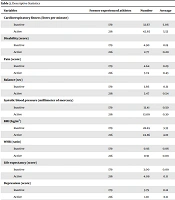
Table 2 shows the comparison of descriptions and the comparison of studied variables in active and inactive groups.
Table 2.
Descriptive Statistics
| Variables | Former Experienced Athletes | Number | Average | Standard Deviation | Statistic |
|---|---|---|---|---|---|
| Cardiorespiratory fitness (liters per minute) | -35.544 | 0.0001 a | |||
| Inactive | 179 | 32.67 | 5.06 | ||
| Active | 216 | 42.65 | 5.53 | ||
| Disability (score) | 10.818 | 0.0001 a | |||
| Inactive | 179 | 4.90 | 0.19 | ||
| Active | 216 | 2.77 | 0.20 | ||
| Pain (score) | 23.876 | 0.0001 a | |||
| Inactive | 179 | 4.64 | 0.29 | ||
| Active | 216 | 3.74 | 0.43 | ||
| Balance (sec) | 0.789 | 0.546 | |||
| Inactive | 179 | 3.66 | 0.31 | ||
| Active | 216 | 3.47 | 0.54 | ||
| Systolic blood pressure (millimeter of mercury) | 0.766 | 0.544 | |||
| Inactive | 179 | 13.41 | 0.50 | ||
| Active | 216 | 13.09 | 0.30 | ||
| BMI (kg/m2) | 26.626 | 0.0001 a | |||
| Inactive | 179 | 28.65 | 3.33 | ||
| Active | 216 | 24.86 | 4.01 | ||
| WHR (ratio) | 5.553 | 0.0001 a | |||
| Inactive | 179 | 0.95 | 0.06 | ||
| Active | 216 | 0.91 | 0.08 | ||
| Life expectancy (score) | -10.440 | 0.0001 a | |||
| Inactive | 179 | 3.00 | 0.09 | ||
| Active | 216 | 4.09 | 0.11 | ||
| Depression (score) | 8.623 | 0.0001 a | |||
| Inactive | 179 | 3.79 | 0.12 | ||
| Active | 216 | 1.10 | 0.11 |
a Significant at the 5% level.
According to Table 3, there was a significant difference between inactive and active seniors in terms of the cardiovascular fitness, disability, pain, BMI, and WHR; however, the variable of balance was not significantly different. According to the above table, moreover, the difference among the variables of mental health, life expectancy, and depression was significant.
Table 3.
Active Seniors’ Correlation Test
| Variables | Life Expectancy | Results | Depression | Results | |
|---|---|---|---|---|---|
| Cardiorespiratory fitness | Correlation coefficient | 0.561 | There is a direct and significant relationship between cardiovascular fitness and life expectancy. | -0.657 | The inverse relationship between cardiovascular fitness and depression is significant. |
| P-value | 0.0001 b | 0.0001 b | |||
| Disability | Correlation coefficient | -0.678 | The inverse relationship between disability and life expectancy is significant. | 0.776 | There is a direct and significant relationship between disability and depression. |
| P-value | 0.0001 b | 0.0001 b | |||
| Pain | Correlation coefficient | -0.554 | The inverse relationship between pain and life expectancy is significant. | -0.870 | There is a direct and significant relationship between pain and depression. |
| P-value | 0.0001 b | 0.0001 b | |||
| Balance | Correlation coefficient | 0.098 | There is a direct and significant relationship between balance and life expectancy. | -0.209 | The inverse relationship between balance and depression is significant. |
| P-value | 0.546 | 0.043 b | |||
| Blood pressure | Correlation coefficient | 0.120 | There is a significant relationship between Blood pressure and life expectancy. | -0.089 | There is a significant relationship between Blood pressure and depression. |
| P-value | 0.098 | 0.566 | |||
| BMI | Correlation coefficient | -0.324 | The inverse relationship between BMI and life expectancy is significant. | 0.321 | There is a direct and significant relationship between BMI and depression. |
| P-value | 0.012 b | 0.017 b | |||
| WHR | Correlation coefficient | -0.344 | The inverse relationship between WHR and life expectancy is significant. | 0.290 | There is a direct and significant relationship between WHR and depression. |
| P-value | 0.009 b | 0.023 b | |||
a Reference: Research calculations.
b Significant at the 5% level.
A correlation coefficient was used to investigate the relationship between fitness and physical health indicators with mental indicators. The results are presented in Table 4.
Table 4.
Inactive Seniors’ Correlation Test
| Variables | Life Expectancy | Results | Depression | Results | |
|---|---|---|---|---|---|
| Cardiorespiratory fitness | Correlation coefficient | 0.554 | There is a direct and significant relationship between cardiovascular fitness and life expectancy. | -0.434 | There is a direct and significant relationship between cardiovascular fitness and life expectancy. |
| P-value | 0.0001 a | 0.0001 a | |||
| Disability | Correlation coefficient | -0.323 | The inverse relationship between disability and life expectancy is significant. | 0.444 | The inverse relationship between disability and life expectancy is significant. |
| P-value | 0.009 a | 0.0001 a | |||
| Pain | Correlation coefficient | -0.212 | The inverse relationship between pain and life expectancy is significant. | -0.545 | The inverse relationship between pain and life expectancy is significant. |
| P-value | 0.043 a | 0.0001 a | |||
| Balance | Correlation coefficient | 0.123 | There is a direct and significant relationship between balance and life expectancy. | -0.134 | There is a direct and significant relationship between balance and life expectancy. |
| P-value | 0.433 | 0.049 a | |||
| Blood pressure | Correlation coefficient | 0.109 | There is a significant relationship between Blood pressure and life expectancy. | -0.054 | There is a significant relationship between Blood pressure and life expectancy. |
| P-value | 0.101 | 0.665 | |||
| BMI | Correlation coefficient | -0.221 | The inverse relationship between BMI and life expectancy is significant. | 0.320 | The inverse relationship between BMI and life expectancy is significant. |
| P-value | 0.034 a | 0.017 a | |||
| WHR | Correlation coefficient | -0.221 | The inverse relationship between WHR and life expectancy is significant. | 0.233 | The inverse relationship between WHR and life expectancy is significant. |
| P-value | 0.014 a | 0.034 a | |||
a Significant at the 5% level.
The results of the correlation coefficient test showed that the relationship between cardiovascular fitness and life expectancy was positive and significant, but the relationship between cardiovascular fitness and depression was inverse and significant (i.e., the greater the cardiovascular fitness from exercise, the greater the life expectancy and the lower the depression).
The relationship between disability, pain, BMI and WHR, and life expectancy was inverse and significant, but the relationship between these variables and depression was positive and significant (i.e., the improvement in body mass index was associated with an increase in life expectancy and with a decrease in depression in the active seniors). No significant relationship was detected between balance and blood pressure variables with these two variables. As for inactive seniors, the results were almost the same, but they were less than those of the active seniors.
5. Discussion
According to the results from the investigation of the physical health among former experienced athletes with a history of active and inactive exercise, the cardiovascular fitness variable was significantly higher in active seniors. In addition, the disability and pain variables in active seniors were lower. However, the balance and blood pressure variables in these two groups of seniors were not significantly different, which may have been due to other contributing factors such as inheritance or nutrition. BMI was normal for active, but it was extremely higher for inactive seniors. The same was true for the WHR index. According to sports physiology studies, oxygen transfer from the lungs to different parts of the body is facilitated by regular exercise; therefore, it has a positive effect on cardiovascular function (11-13). Physiologists and physicians oftentimes treat some cardiovascular diseases by regular exercise because such exercise programs have been found to improve the work of the cardiovascular system (14), strengthen the muscles and arteries of the heart physiologically (15), and increase blood flow through extremely strong contractions (16). By performing regular exercise, the heart rate drops to the normal range required for a healthy body, which is between 64 and 68 beats per minute (17). Regular exercise is also effective in reducing hemoconcentration. Since the maximum heart rate in both groups was reduced by the same amount due to the decreased sensitivity of the heart muscle to catecholamines, which was probably due to aging (18), the most important reason for this function may be better in addition to decreased peripheral vascular resistance. It is related to the increased amount of oxygen uptake in tissues – muscle tissue, in particular – which is a result of the positive effects of regular exercise. Generally, regular exercise leads to an increase in muscle capillaries and oxidative enzyme activity among seniors and produces a significant improvement in their vo2max (18), which is directly associated with general health as well as physical and total well-being. According to our results from the examination of mental health among former experienced active and inactive athletes, the life expectancy variable was significantly higher while the depression was significantly lower in active seniors, which was completely predictable. Exercise is necessary to protect seniors from psychological damage. Previous studies have shown that regular exercise quickly reduces the stress-related hormones (13). This could be due to an increase in metabolism caused by regular exercise or unknown hormones involved in this complex event. Pyle et al. reported that regular moderate physical activity was associated with depression, anxiety, psychotic disorders, obsession, and psychosis reduction (11). The seniors’ higher scores in terms of life expectancy can be attributed to the fact that regular exercise at older ages is fun and away from false emotions, and that it is a method for focusing on the senior individuals. It brings peace of mind. Weinberg (2003) as cited in Weinberg and Gould highlighted the significant relationship between regular exercise and increased life expectancy (13). Previous studies have shown that regular exercise has a potential effect on improving mood, reducing anxiety, and increasing self-confidence (16). Some other earlier studies have also demonstrated that the close relationships with friends are also associated with high mental health and well-being among seniors. Due to the nature of regular sports activities, the necessary interaction and social communication of the seniors are facilitated and the establishment of close relationships with the seniors having a history of exercising is much easier compared to that of others. Thus, sports activities can probably lead to improved social support for the seniors. Our examination of the relationship between physical health and mental health variables showed that cardiovascular fitness was directly associated with life expectancy; that is, the greater the cardiovascular fitness, the higher the life expectancy, both of which were attributable to the activity of the seniors. In addition, disability and pain variables had an inverse relationship with life expectancy; in other words, when activity increased, disability and pain decreased and, therefore, life expectancy increased. Similar results were achieved for the depression variable, but only with the opposite signs. The ranking of physical health indicators of active sports among seniors showed that exercise had the greatest effect on body mass index, and disability had the least effect on balance and blood pressure index. Similar results were achieved for the disabled seniors, but with a much lower impact rate. Furthermore, exercise has the greatest effect on depression and life expectancy. The results showed that active seniors had a higher quality of life in terms of physical activity compared to inactive seniors. Active seniors were significantly different from inactive seniors in terms of physical and mental health, energy and vitality, life expectancy, and pain. According to the findings, doing exercise in younger age may not guarantee the health in older age regarding some indicators, and performing physical activities is often recommended as an appropriate means to promote the health of the old people.
Previous studies have also determined that close relationships with friends are associated with high mental health and well-being among seniors. Due to the nature of regular sports activities, the necessary interaction and social communication of the seniors are facilitated and the establishment of close relationships with the seniors having a history of exercising is much easier compared to that of others. For this reason, regular exercise can improve social support in seniors. According to several studies over the past 20 years, physical activity has been necessary for permanent independence in older ages (15). Any physical activity or change in physical condition is followed by a change or psychological experience, since participation in sports activities brings people together and creates plenty of opportunities to become proficient in society. In general, it creates an educational flow in cultural and social dimensions for the individuals.
5.1. Conclusions
It was concluded that the regular exercise had a significant, beneficial effect on physical and mental health factors. One of the most important limitations of the present study was the lack of comparison of results with the seniors without former experienced athletes. Therefore, it was suggested that further studies should be conducted to investigate this issue. It was also recommended that seniors with a history of sporting activities should participate in physical activities and sports regularly in order to increase their physical and mental health.