Journal of Inflammatory Diseases
The Official Journal of Qazvin University of Medical Sciences
Comparison of blood cultures and endotoxin measurements in diagnosis of gram negative bacterial infections
Authors
Abstract
Background: Gram negative bacterial infections continue to cause mortality due to unavailability of new methods for rapid diagnosis and appropriate treatment. Objective: To evaluate and compare blood culture results with endotoxin measurements in diagnosis of gram negative bacterial infections. Methods: This research was conducted on 100 hospitalized patients with clinical signs and symptoms compatible with septicemia. Blood cultures and endotoxin measurements (limulus amebocyte lysate, LAL test) were carried out on blood samples of all patients. Findings: Blood cultures were positive in 16(16%) patients. Sensitivity and specificity of blood cultures were 18% and 100%, respectively. LAL tests were positive in 20(20%) patients. Sensitivity and specificity of LAL test were 100% and 96% respectively. Conclusion: LAL test as a diagnostic assay for gram negative bacterial infections is more sensitive than blood culture. In addition, it takes only a few minutes to be performed, comparing blood culture that takes days.
Highlights
Copyright
© 2024, Journal of Inflammatory Diseases. This open-access article is available under the Creative Commons Attribution-NonCommercial 4.0 (CC BY-NC 4.0) International License (https://creativecommons.org/licenses/by-nc/4.0/), which allows for the copying and redistribution of the material only for noncommercial purposes, provided that the original work is properly cited.
Similar Articles
Study of frequency of bacteria isolated from blood culture and their antibiotic susceptibility pattern in Taleghani Hospital, Kermanshah, 2011
Akya A, Khodadoost M, Mohebi F, Alimoradi S. Study of frequency of bacteria isolated from blood culture and their antibiotic susceptibility pattern in Taleghani Hospital, Kermanshah, 2011. J Clin Res Paramed Sci. 2014;2(4):e82270. doi:
Neonatal septicemia caused by aerobic bacteria in newborn infants
Khosravi A, Najafabadi Farahani M. Neonatal septicemia caused by aerobic bacteria in newborn infants. J Inflamm Dis. 2024;8(2):e155045. doi:
Comparison of Serum Procalcitonin and C-reactive Protein Levels in Late Onset Neonatal Sepsis
Saeidi R, Kazemian M, Noripour S, Fallahi M, Alizadeh P, et al. Comparison of Serum Procalcitonin and C-reactive Protein Levels in Late Onset Neonatal Sepsis. Zahedan J Res Med Sci. 2025;27(3):e163585. doi: https://doi.org/10.5812/zjrms-163585
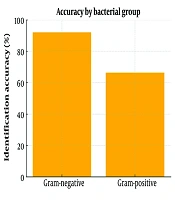
Rapid Identification of Microorganisms Directly from Blood Culture Using an In-house Method by MALDI-TOF-MS
Can B, Altinkanat Gelmez G, Dogan H, Soyletir G. Rapid Identification of Microorganisms Directly from Blood Culture Using an In-house Method by MALDI-TOF-MS. Jundishapur J Microbiol. 2025;18(7):e161075. doi: https://doi.org/10.5812/jjm-161075
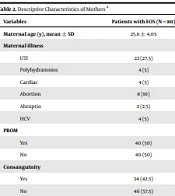
Validity of Platelet to Lymphocyte Ratio and Neutrophil to Lymphocyte Ratio in Diagnosing Early-onset Neonatal Sepsis in Full-term Newborns
Mahmoud NMS, Abdelhakeem M, Mohamed HHA, Baheeg G. Validity of Platelet to Lymphocyte Ratio and Neutrophil to Lymphocyte Ratio in Diagnosing Early-onset Neonatal Sepsis in Full-term Newborns. J Compr Ped. 2022;13(1):e115378. doi: https://doi.org/10.5812/compreped.115378
- Scopus by DOI: 0
Last Update: 1 month ago
- Scopus by Title: 0
Last Update: 1 month ago
- Scopus by Title (Ref): 0
Last Update: 1 month ago
- CrossRef: 0
Last Update: 5 days ago
- OpenAlex: 0
Last Update: 2 hours ago
- OpenCitations: 0
Last Update: 2 days ago