Journal of Inflammatory Diseases
The Official Journal of Qazvin University of Medical Sciences
Prevalence of awareness during anesthesia induced by three different techniques for cesarean section
Authors
Abstract
¯Abstract Background: Aawareness during anesthesia causes many psychological problems for the patients and the society. Objective: To compare the prevalence rate of awareness during cesarean section with three anesthetic techniques. Methods: Through a prospective clinical trial, 178 patients were randomly divided into three sets as group A (101), group B (50), and group C (27) based on the type of drug received. The induction of anesthesia was carried out using thiopental 5 mg/kg in group A and propofol 2-2.5mg/kg in groups B and C. Maintenance of anesthesia was accomplished using halotan and N2O in groups A and B and propofol infusion and N2O in Group C. Following the extraction of neonate, only fentanyl (1.5mg/kg) was administered for groups A and B while in Group C fentanyl (1.5mg/kg) plus midazolan (2mg) was used. Muscle relaxant used in three Groups was the same. During the time between induction of anesthesia to extubation of tracheal tube, a tape containing part of Quran was played. Eight hours after wakefulness and using a questionnaire, the patients were asked about feeling of pain during surgery, remembering of Quran voice or accidents during surgery. The data were analyzed using chi-square test. Findings: Among 178 patients under the study, 7 cases (3.9%) had awareness of grade I during anesthesia in which 2 patients were the members of group A (2%), 3 patients of group B (6%) and 2 patients of Group C (7.4%). The differences found in the study were not significant from a statistical point of view (p>0.05). There was no direct relationship between the age, educational status and indication of CS with the prevalence of awareness during anesthesia. Conclusion:The prevalence of awareness during anesthesia in CS by three different anesthetic techniques (Thiopental-halotan, propofol-halotan, and propofol-midazolam) was almost equal.
Highlights
Copyright
© 2024, Journal of Inflammatory Diseases. This open-access article is available under the Creative Commons Attribution-NonCommercial 4.0 (CC BY-NC 4.0) International License (https://creativecommons.org/licenses/by-nc/4.0/), which allows for the copying and redistribution of the material only for noncommercial purposes, provided that the original work is properly cited.
Similar Articles
The Efficacy and Safety of Pre-operative Bolus Intravenous Lidocaine for Intraoperative Awareness in Cesarean Section: A Randomized Clinical Trial
Farzadi S, Hosseinzadeh F, Soltanipour S, Isanazar A, Montazeri F, et al. The Efficacy and Safety of Pre-operative Bolus Intravenous Lidocaine for Intraoperative Awareness in Cesarean Section: A Randomized Clinical Trial. J Clin Res Paramed Sci. 2025;14(1):e161408. doi: https://doi.org/10.5812/jcrps-161408
Effect of Anesthesia Type on Pain and Hemodynamic Parameters in Cesarean Section Surgery: Randomized Controlled Trial
Mohammadi S, Imani B, Ghasemi S, Shalmashi B. Effect of Anesthesia Type on Pain and Hemodynamic Parameters in Cesarean Section Surgery: Randomized Controlled Trial. Zahedan J Res Med Sci. 2024;26(4):e148490. doi: https://doi.org/10.5812/zjrms-148490
The comparsion of propofol with thiopental as induction drug on neonatal apgar during elective cesarean section
Mahjoobifard M, Dadras MM, Panahipoor A, Dadras MA. The comparsion of propofol with thiopental as induction drug on neonatal apgar during elective cesarean section. Zahedan J Res Med Sci. 2011;13(4):e94000. doi:
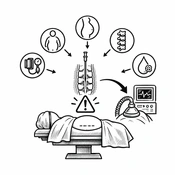
Factors Associated with Inadequate Spinal Anesthesia and Conversion to General Anesthesia During Elective Cesarean Delivery: A Retrospective Observational Study from Southwestern Iran
Kiaei M, Afra A, Jeyhoni M. Factors Associated with Inadequate Spinal Anesthesia and Conversion to General Anesthesia During Elective Cesarean Delivery: A Retrospective Observational Study from Southwestern Iran. J Cell Mol Anesth. 2026;11(3):e174356. doi: https://doi.org/10.5812/jcma-174356
Pre-operation and post-operation anxiety in cesarean candidates
Niazvand F, Asadi M, Kashefi M, Maghsoodi F. Pre-operation and post-operation anxiety in cesarean candidates. Compr Health Biomed Stud. 2022;1(1):e142855. doi: https://doi.org/10.22034/hmrj.2021.139749
- Scopus by DOI: 0
Last Update: 1 month ago
- Scopus by Title: 0
Last Update: 1 month ago
- Scopus by Title (Ref): 0
Last Update: 1 month ago
- CrossRef: 0
Last Update: 5 days ago
- OpenAlex: 0
Last Update: 1 hour ago
- OpenCitations: 0
Last Update: 2 days ago