Journal of Inflammatory Diseases
The Official Journal of Qazvin University of Medical Sciences
Preparation and optimization of chitosan nanoparticles as carrier of anti-Alzheimer tacrine drug and size estimation of nanoparticles by chemometrics
Authors
Abstract
Abstract Background: Several drug delivery systems were developed during the 1980s and 1990s to improve the efficiency of drugs and minimize toxic side effects. Nanoparticles have the ability to deliver a wide range of drugs to varying areas of the body for sustained periods of time. Objective: The aim of study was to preparation and optimization of chitosan nanoparticles carrier systems of Anti-Alzheimer tacrine drug and estimation of particle size by Chemometrics. Methods: This was an experimental study conducted at Chemistry school of Imam Khomeini International University (Qazvin, Iran) in 2011-2012. Chitosan nanoparticles were prepared by spontaneous emulsification method. In order to optimize the method of chitosan nanoparticles preparation, Design of Experiment (DOE) was employed using Box–Behnken response surface methodology. Also, chitosan nanoparticles containing tacrine were prepared using the optimal synthesis method provided by the experimental design. Forty two different chitosan nanoparticles samples with different particle size were analyzed by DRIFT spectrometry and the obtained data were processed by PLS. Nano-sized particles and their morphological state were determined by field emission scanning electron microscopy (FE-SEM). Findings: In accordance with Box–Behnken experimental design, optimum amount of NaCl as an electrolyte (0.52 %), Span 80 as a surfactant (10 %) and Glutaraldehyde Saturated Toluene )GST( as a chemical cross-linking agent (4.86 mL) were used for the synthesis method. The designed nanoparticles have average particle size from 33.64 to 74.87 nm. Yield percentage and drug loading percentage of chitosan nanoparticles that were synthesized according to the optimum method were 90 % and 13.4 ± 0.51 %, respectively. The estimated sizes of chitosan nanoparticles give promise to a robust and reliable calibration that confirms correlation coefficient )R2 (and Root Mean Square Error (RMSE) of 0.98 and 3.59. Conclusion: Based on findings of the present study, Preparation of chitosan nanoparticles as delivery systems for the anti-Alzheimer drug tacrine with minimum particle size and spherical morphology was the goals of this study. Also, the findings suggest that the analysis of nano particle samples by DRIFT and data processing by PLS-NAS would provide a novel method for average nano particle size estimation. PLS-NAS model established is characterized by high linearity, precision and speed of analysis.
Highlights
Copyright
© 2024, Journal of Inflammatory Diseases. This open-access article is available under the Creative Commons Attribution-NonCommercial 4.0 (CC BY-NC 4.0) International License (https://creativecommons.org/licenses/by-nc/4.0/), which allows for the copying and redistribution of the material only for noncommercial purposes, provided that the original work is properly cited.
Similar Articles
Investigation of Size and Morphology of Chitosan Nanoparticles Used in Drug Delivery System Employing Chemometric Technique
Khanmohammadi M, Elmizadeh H, Ghasemi K. Investigation of Size and Morphology of Chitosan Nanoparticles Used in Drug Delivery System Employing Chemometric Technique. Iran J Pharm Res. 2015;14(3):e125312. doi: https://doi.org/10.22037/ijpr.2015.1761
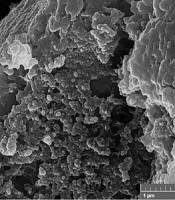
Preparation and Characterization of a Chitosan-Based Nanoformulation Containing Prangos acaulis Extract and Evaluation of Its Effect on the Viability of HT-29 and MCF-7 Cancer Cells
Dhahir Latif A, Jawad A, Hashim Al-Isawi MH, Kareem Abbood H, Al-Karagoly H, et al. Preparation and Characterization of a Chitosan-Based Nanoformulation Containing Prangos acaulis Extract and Evaluation of Its Effect on the Viability of HT-29 and MCF-7 Cancer Cells. Jundishapur J Nat Pharm Prod. 2025;20(3):e161899. doi: https://doi.org/10.5812/jjnpp-161899
Production of protein nanoparticles as drug delivery vehicle and up to down optimization
Rahimnejad M, Najafpour G, Jahanshahi M. Production of protein nanoparticles as drug delivery vehicle and up to down optimization. J Inflamm Dis. 2024;17(6):e155801. doi:
Study of the Copolymer Structure Effect on Physicochemical Characteristics and In Vitro Stability of PLGA–PEG Nanoparticles Loaded 9-Nitrocamptothecin
Derakhashandeh K, Haghkhah M, Amiri M. Study of the Copolymer Structure Effect on Physicochemical Characteristics and In Vitro Stability of PLGA–PEG Nanoparticles Loaded 9-Nitrocamptothecin. J Rep Pharm Sci. 2012;1(2):e147771. doi:
Preparation and In Vitro Evaluation of Chitosan Nanoparticles Containing Diclofenac Using the Ion-Gelation Method
Kouchak M, Azarpanah A. Preparation and In Vitro Evaluation of Chitosan Nanoparticles Containing Diclofenac Using the Ion-Gelation Method. Jundishapur J Nat Pharm Prod. 2015;10(2):e23082. doi: https://doi.org/10.17795/jjnpp-23082
- Scopus by DOI: 0
Last Update: 2 weeks ago
- Scopus by Title: 0
Last Update: 2 weeks ago
- Scopus by Title (Ref): 0
Last Update: 2 weeks ago
- CrossRef: 0
Last Update: 5 days ago
- OpenAlex: 0
Last Update: 1 day ago
- OpenCitations: 0
Last Update: 3 days ago