Journal of Inflammatory Diseases
The Official Journal of Qazvin University of Medical Sciences
Epidemiology of vitamin D deficiency among 10-18 years old population of Minoodar district, Qazvin (2010)
Authors
Abstract
Background: Vitamin D deficiency has become an unknown epidemic worldwide. Vitamin D status is quite different between different communities due to variations in factors associated with vitamin D level including sun exposure and different amounts of the vitamin D intake from food and air pollution. Objective: The aim of this study was to determine the epidemiology of vitamin D deficiency in 10-18 years old population of Minoodar district in Qazvin. Methods: This cross sectional study was conducted in Minoodar district of Qazvin during 2010. A questionnaire was completed for all participants including demographic characteristics, medical history, family history, medication, coverage status and exposure to the sunlight. Serum samples were taken to assess vitamin D levels. Vitamin D deficiency was defined as vitamin D levels<20 ng/dL and vitamin D insufficiency was defined as vitamin D levels between 20 to 30 ng/dL, respectively. Data were analyzed using Chi-square test, T-test, Mann Whitney U test and Pearson’s correlation coefficient. Findings: Of 124 study population, 59 (48%) were male. Mean vitamin D level was 12.15±7.20 ng/dL. The minimum vitamin D level was 1.08 ng/dL and the maximum level was 26.80 ng/dL. Vitamin D levels in females were significantly lower than males. None of the study subjects had vitamin D sufficiency. All females and 81% of males had vitamin D deficiency. The remaining males had vitamin D insufficiency. Vitamin D deficiency in females was significantly higher than males. Daily sun exposure was less than an hour in 61% of the study population. Daily sun exposure in females was less than males. There was no statistically significant difference between both genders in terms of coverage. The association of obesity on the basis of body mass index and waist circumference with vitamin D status was not statistically significant. Conclusion: With regards to the high prevalence of vitamin D deficiency in the study population, particularly females, it seems that preventive interventions and treatments are necessary. Citation: Ghanei L, Jalilolghadr SH, Javadi M, Ghorbani A, Khoeini ha MH. Epidemiology of vitamin D deficiency among 10-18 years old population of Minoodar district, Qazvin (2010). J Qazvin Univ Med Sci. 2015 18 (6): 24-32.
Highlights
Copyright
© 2024, Journal of Inflammatory Diseases. This open-access article is available under the Creative Commons Attribution-NonCommercial 4.0 (CC BY-NC 4.0) International License (https://creativecommons.org/licenses/by-nc/4.0/), which allows for the copying and redistribution of the material only for noncommercial purposes, provided that the original work is properly cited.
Similar Articles
The Prevalence of Vitamin D Deficiency Among One to Six Year Old Children of Tehran, Iran
Babaniamansour S, Hematyar M, Babaniamansour P, Babaniamansour A, Aliniagerdroudbari E. The Prevalence of Vitamin D Deficiency Among One to Six Year Old Children of Tehran, Iran. J Kermanshah Univ Med Sci. 2019;23(4):e95185. doi: https://doi.org/10.5812/jkums.95185
Relationship Between Vitamin D and Nutritional Status in Healthy Reproductive Age Women
Ostad Rahimi A, Zarghami N, Sadighi A. Relationship Between Vitamin D and Nutritional Status in Healthy Reproductive Age Women. Int J Endocrinol Metab. 2006;4(1):. doi:
Prevalence of Vitamin D Deficiency Among Women of Reproductive Age: A Multi Centric Study in Tehran
Emdadi R, Chaichian S, Mahboubi M, Moradi Y, Akhlaghdoust M, et al. Prevalence of Vitamin D Deficiency Among Women of Reproductive Age: A Multi Centric Study in Tehran. Shiraz E-Med J. 2016;17(11):e40745. doi: https://doi.org/10.17795/semj40745
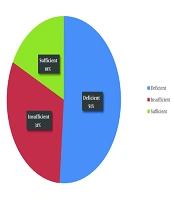
Status of Vitamin D3 Deficiency/Insufficiency in the Children of Southern
Sadeghi E, Amirhakimi A. Status of Vitamin D3 Deficiency/Insufficiency in the Children of Southern. J Compr Ped. 2025;16(3):e158637. doi: https://doi.org/10.5812/jcp-158637
Determination of Serum 25-Hydroxyvitamin D Concentration Level in Lactating Women and Factors affecting it in Islam Abad Gharb (2004)
Sahargahi B, Jazayeri A, Jalali M, Keshavarz A, Shahrokhi M. Determination of Serum 25-Hydroxyvitamin D Concentration Level in Lactating Women and Factors affecting it in Islam Abad Gharb (2004). J Kermanshah Univ Med Sci. 2007;11(2):e80666. doi:
- Scopus by DOI: 0
Last Update: 1 week ago
- Scopus by Title: 0
Last Update: 1 week ago
- Scopus by Title (Ref): 1
Last Update: 1 week ago
- CrossRef: 0
Last Update: 6 hours ago
- OpenAlex: 0
Last Update: 10 hours ago
- OpenCitations: 0
Last Update: 5 days ago