Journal of Inflammatory Diseases
The Official Journal of Qazvin University of Medical Sciences
The Difference in Immunoglobulin G Levels Between Outpatients and Inpatients With COVID-19
Authors

Abstract
Background: Coronavirus disease 2019 (COVID-19) has rapidly become a pandemic since it was first reported in late December 2019. Serological reports are of great value to medical specialists in developing health policies. The detection of Immunoglobulin G (IgG) level in COVID-19 patients can specify a preclinical infection or previous exposure to the virus. Objective: This study aims to assess the IgG rate in patients with COVID-19. Methods: This is a cross-sectional study on 172 patients with confirmed COVID-19 (having positive PCR test) in Qazvin, Iran in 2020, including 86 inpatients and 86 outpatients. In order to measure the IgG levels, the serum samples were collected 3-5 weeks after onset of their clinical symptoms. Data were statistically analyzed in SPSS software v. 20, considering the significance level of P<0.05. Results: Of 172 patients, 81(94.2%) inpatients and 74(86%) outpatients tested positive for IgG, while 5(5.8%) inpatients and 10(11.6%) outpatients tested negative for IgG. The mean IgG level in inpatients was significantly higher than in outpatients (P<0.001) 3-5 weeks after a positive PCR test. Conclusion: The amounts of IgG in the sera of COVID-19 patients 3-5 weeks after the onset of symptoms can help health care authorities develop policies and control strategies by determining the burden of disease, monitoring the spread of disease, and estimating the epidemiological factors.
Highlights
Copyright
© 2024, Journal of Inflammatory Diseases. This open-access article is available under the Creative Commons Attribution-NonCommercial 4.0 (CC BY-NC 4.0) International License (https://creativecommons.org/licenses/by-nc/4.0/), which allows for the copying and redistribution of the material only for noncommercial purposes, provided that the original work is properly cited.
Similar Articles
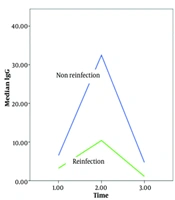
Evaluation of Antibody Response and Reinfection in Improved Hypertensive, Cardiac, and Diabetic Patients with COVID-19 for Six Months in Unvaccinated Outpatients
Fallah Bagher Shaidaei M, Salmani A, Moazen J, Pourmotahari F, Asadmasjedi N. Evaluation of Antibody Response and Reinfection in Improved Hypertensive, Cardiac, and Diabetic Patients with COVID-19 for Six Months in Unvaccinated Outpatients. J Adv Immunopharmacol. 2024;4(2):e143537. doi: https://doi.org/10.5812/jai-143537
SARS-CoV-2 Antibodies in the Public Hospital Staff: The Second Report of a Seroprevalence Cohort Study from Iran
Amanat A, Bagheri Lankarani K, Honarvar B, Asmarian N, Shokripour M, et al. SARS-CoV-2 Antibodies in the Public Hospital Staff: The Second Report of a Seroprevalence Cohort Study from Iran. Shiraz E-Med J. 2022;23(9):e121681. doi: https://doi.org/10.5812/semj-121681
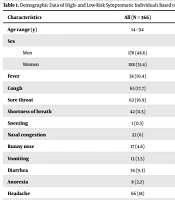
Seroprevalence of Anti-SARS-CoV-2 Antibodies in High-Risk Occupational and Low-Risk Groups in Southwestern Iran
Aliabadi N, Heydari Marandi N, Jamalidoust M, Ashkan Z, Pouladfar G, et al. Seroprevalence of Anti-SARS-CoV-2 Antibodies in High-Risk Occupational and Low-Risk Groups in Southwestern Iran. Jundishapur J Microbiol. 2022;15(7):e126975. doi: https://doi.org/10.5812/jjm-126975
Early Intravenous Immunoglobulin as an Effective Drug for the Treatment of COVID-19: A Case Series and Case Review
Khodashahi R, Sedaghat A, Khodashahi M. Early Intravenous Immunoglobulin as an Effective Drug for the Treatment of COVID-19: A Case Series and Case Review. Arch Clin Infect Dis. 2020;15(5):e103732. doi: https://doi.org/10.5812/archcid.103732
COVID-19 as an Aggravator of Cardiovascular Diseases: Increasing Immunoglobulin G, a Valuable Prognostic Factor for Heart Failure
Tahan A, Saki N, Azizidoost S, Yousefi F, Haybar H. COVID-19 as an Aggravator of Cardiovascular Diseases: Increasing Immunoglobulin G, a Valuable Prognostic Factor for Heart Failure. Jundishapur J Microbiol. 2023;16(8):e139233. doi: https://doi.org/10.5812/jjm-139233
More by these authors
- Scopus by DOI: 0
Last Update: 2 days ago
- Scopus by Title: 0
Last Update: 2 days ago
- Scopus by Title (Ref): 0
Last Update: 2 days ago
- CrossRef: 0
Last Update: 5 days ago
- OpenAlex: 0
Last Update: 2 days ago
- OpenCitations: 0
Last Update: 3 days ago