
1. Background
Staphylococcus aureus is an opportunistic pathogen and the causative agent of the most common healthcare-related infections; the extent of these infections could range from a simple skin lesion to an acute infection (1). S. aureus-related infections are often recurrent and a leading cause of mortality and morbidity in medical facilities. Failure in the treatment of these infections is mainly due to resistance to multiple antibiotics and the diverse range of biofilm-induced virulence factors (2).
Pseudomonas aeruginosa is a Gram-negative opportunistic pathogen that causes various infections in the community, especially in patients with immunodeficiency, cancer, AIDS, cystic fibrosis, and burns. The pathogenicity of P. aeruginosa depends on the production of several virulence factors, including pili, phallus, non-pili adhesins, exotoxins, protease, and biofilm. One of the therapeutic complications of this bacterium is its antibiotic resistance to common antibiotic therapies, which in turn leads to biofilm production (3). The pathogenesis, survival, and colonization of the cells in the biofilm of P. aeruginosa rely on cell communications (4). In addition, three different polysaccharides (mainly alginate) are responsible for the high viscoplasticity of P. aeruginosa biofilm structure and stability (5).
To date, no treatments have effectively targeted microbial biofilms due to the inherent resistance of biofilms to antibiotics (6). Therefore, there is an urgent need for new drugs that are not only active against planktonic bacteria, but also effective against drug-resistant biofilms. Among the potential organisms that are able to produce natural compounds, microorganisms (particularly marine bacteria) are considered as prolific producers of antimicrobials (7). Marine benthic fauna have soft and unprotected bodies, live a sessile lifestyles, and are home to diverse microorganisms. The chemical compounds produced by symbiotic bacteria play a pivotal role in the host immune system (8). Several studies have also demonstrated the antimicrobial potential of these chemical compounds against human pathogens (8-10).
2. Objectives
The present study aimed to evaluate the antibacterial and antibiofilm activities of the extracts derived from sea anemone (Stichodactyla haddoni)-isolated Vibrio and Pseudoalteromonas against S. aureus and P. aeruginosa.
3. Methods
3.1. Isolation and Cultivation of SIB
The procedure was performed in accordance with the method described by (11). Initially, two grams of tissue was separated from sea anemone, washed three times with sterile sea water, homogenized, and serially diluted. Afterwards, 100 microliters of each diluted sample was spread on Marine agar (MA; Difco), and the plates were incubated for five days at the temperature of 25°C. Colonies were cultured multiple times in order to obtain a pure culture. After the initial biochemical tests, Vibrio and Pseudoalteromonas were selected for further analyses.
3.2. Bacterial Strains and Extract Preparation
Four strains of Pseudoalteromonas and Vibrio were identified at the genus level via biochemical assays (5), followed by the species level by the PCR amplification of the 16S rRNA gene (12). The properties of these bacteria are presented in Table 1.
Table 1.
Status of Four Examined Sea Anemone Isolated Bacteria
| Bacterial Extracts | Isolated Bacteria | GenBank Accession Number | Oxidase | Catalase | Triple Sugar Iron | Methyl Red | Voges-Proskauer | Simmons Citrate |
|---|---|---|---|---|---|---|---|---|
| E2 | Vibrio parahaemolyticus | MN563125 | + | + | K/A | + | - | + |
| E12 | Pseudoalteromonas gelatinilytica | MN563128 | + | + | A/A | + | + | + |
| E14 | Vibrio alginolyticus | MN563124 | + | + | K/A | - | - | + |
| E53 | Pseudoalteromonas piscicida | MN563129 | + | + | A/A | - | - | + |
The bacterial extract of each strain was obtained using the method proposed in (9). Briefly, a fresh culture of each purified isolate was grown in Marine broth in a shaker incubator at 180 rpm and the temperature of 25°C for five days. The cell-free supernatant (CFS) was obtained by centrifugation followed by filtration (0.2 µm). Following that, the CFS was mixed with an equal volume of methanol and ethyl acetate (Merck, Germany) and shaken at 220 rpm for one hour. The solvent was removed under reduced pressure at the temperature of 25°C to collect the crude extracts (13), and the test was carried out in triplicate.
3.3. Pathogenic Strains
In this study, we used S. aureus (ATCC 25923) and P. aeruginosa (PTCC1430), which were provided by the Persian Gulf Marine Biotechnology Research Center in Bushehr, Iran. Both strains were grown at the temperature of 37°C in Luria-Bertani medium (LB; Sigma Aldrich) and Müller-Hinton agar (MHA; Difco).
3.4. Antimicrobial Activity
To evaluate the antibacterial activity of the extracts, the well-diffusion method was used in accordance with the protocol of the Clinical and Laboratory Standards Institute (9, 14). Briefly, diluted overnight cultures of S. aureus were prepared (OD600 = 0.1) and spread on the surface of agar plates. After the excess moisture was absorbed, 50 microliters of each extract was loaded into the wells, and the wells containing tetracycline and medium were used as the positive and negative controls, respectively. The process was repeated for P. aeruginosa, the plates were preserved at the temperature of 37°C for 24 hours. The test was carried out in triplicate.
3.5. Minimum Inhibitory Concentration and Minimum Bactericidal Concentration
To determine minimum inhibitory concentration (MIC) and minimum bactericidal concentration (MBC) of each extract, the broth microdilution method was applied using 96-well microtiter plates (MTPs) in accordance with the protocol in (15) with slight modifications. We prepared an overnight culture of each pathogen (20 µL; OD600 = 0.1), 110 microliters of MHB, and 90 microliters of MHB supplemented with different concentrations of the extracts and the final concentrations of 75, 150, 300, 600, and 1,200 µg.mL-1. In addition, tetracycline and medium were used as controls. The plates were preserved at the temperature of 37°C for 24 hours. The lowest concentration of each extract in which the extract inhibited visible growth was considered as the MIC. At the next stage, 100 microliters of the samples were collected from the wells with no turbidity and spread on a plate containing MHA. After 24 hours of incubation at the temperature of 37°C, the lowest concentration of the extract in which no colony appeared was considered as the MBC. The test was carried out in triplicate.
3.6. Growth Curve Analysis
Growth curve analysis was applied to confirm the antibacterial ability of the bacterial extracts against the two examined pathogens in accordance with the protocol in (16). In brief, the fresh culture of each pathogen (OD600 = 0.1), 110 microliters of MHB, and 90 microliters of each extract were dissolved in MHB at MIC and poured into the 96-well MTPs. Absorption values (OD600) were recorded for up to 24 hours at two-hour intervals and compared with the controls. The test was carried out in triplicate.
3.7. Antibiofilm Activity and Biofilm Inhibitory Concentration
For antibiofilm analysis, we used the method described in (17). An overnight culture of each pathogen (OD600 = 0.1), 110 microliters of the LB broth, and 90 microliters of the bacterial extract were prepared at the concentrations of MIC and sub-MICs. Notably, tetracycline and medium were used as controls. After incubation at the temperature of 37°C for 48 hours, the planktonic bacteria were removed by inverting the plate. Following that, the wells were gently washed three times with sterile phosphate-buffered saline (PBS), dried, and stained with 0.1% crystal violet (CV). At the next stage, the plate was inverted to remove the excess CV, rinsed with distilled water, and air-dried. In addition, 20% glacial acetic acid was poured into each well to dissolve the CV. The percentage of the biofilm inhibition of each extract was reported for each pathogen based on the absorbance of the wells at 570 nanometers and using the following formula:
Percentage of Inhibition = (Control OD570 nm - Test OD570 nm)/Control OD570 nm × 100
The biofilm inhibitory concentration (BIC) was obtained as the lowest concentration indicating the significant reduction of the well absorbance compared to the controls. The test was carried out in triplicate.
3.8. Disruption of Preformed Biofilm
The ability of the extracts to disrupt the preformed biofilm was assessed based on the protocol in (18). An overnight culture of each pathogen (OD600 = 0.1) was inoculated into each well of the 96-well MTPs, supplemented with 200 microliters of the LB broth, and allowed to form biofilm at the temperature of 37°C. After 48 hours, the plates were inverted to remove the medium, rinsed with PBS, and dried at room temperature. Afterwards, the preformed biofilm in the wells were inoculated with 200 microliters of the bacterial extracts at their BICs. After incubation at the temperature of 37°C for 24 hours, the medium was discarded, and biofilm formation in each well was evaluated based on the CV staining using the previously described protocol. The wells containing the medium and sodium metaperiodate (40 mM) were considered as the negative and positive controls, respectively. The test was carried out in triplicate.
3.9. Active Compounds of the Extracts
To determine the nature of the extracts, they were exposed to proteinase K (Sigma-Aldrich) as a chemical treatment using the method proposed in (19). Proteinase K (1 mg/mL) was added to each of the 96 well plates containing the extracts (BIC) and incubated for one hour at the temperature of 37°C. Afterwards, the antibiofilm effects of the extracts were evaluated against both pathogens using the 96 MTPs and CV staining and compared to the controls. The samples that were not exposed to proteinase K were used as controls, and the test was carried out in triplicate.
3.10. Statistical Analysis
Data analysis was performed in SPSS version 16 (SPSS, Chicago, Illinois, USA). The tests were carried out in triplicate, and the values were expressed as mean and standard deviation (SD) of the replicates. One-way analysis of variance (ANOVA) and Duncan’s test were applied for the comparison of the tests. In addition, the differences between the tests and controls were evaluated using Dunnett’s test, and t-test was applied to compare the biofilm inhibition between the proteinase treatment and controls. Regarding the differences between the mean values, the significance level was considered less than 0.05.
4. Results
4.1. Antimicrobial Activity and Determination of MIC and MBC
Our findings regarding the antimicrobial activity of the four bacterial extracts indicated their growth inhibitory potential against S. aureus and P. aeruginosa (Table 2). Furthermore, the extracts could effectively inhibit the growth of S. aureus at the concentration of 600 µg/mL (MIC) and kill the bacteria at the concentration of 1,200 µg/mL (MBC) (Figure 1). The extracts also exhibited antibacterial activity against P. aeruginosa growth at the MIC of 300 µg/mL and MBC of 600 µg/mL, while the second extract showed significantly higher antibacterial activity against both pathogens at the lowest concentration (P < 0.05). On the other hand, the results of the growth curve analysis confirmed that at the determined MICs, the extracts could prevent the growth of both pathogens (Figure 2).
Table 2.
Antibacterial Activity of Four Bacterial Extracts against Staphylococcus aureus and Pseudomonas aeruginosa
| Bacterial Extracts | Inhibition Zone Against S. aureus, mm | Inhibition Zone Against P. aeruginosa, mm |
|---|---|---|
| E2 | 12.00 ± 1.40 | 14.20 ± 0.80 |
| E12 | 9.20 ± 1.50 | 11.10 ± 0.80 |
| E14 | 6.20 ± 0.70 | 9.30 ± 1.10 |
| E53 | 8.10 ± 1.10 | 11.80 ± 1.40 |
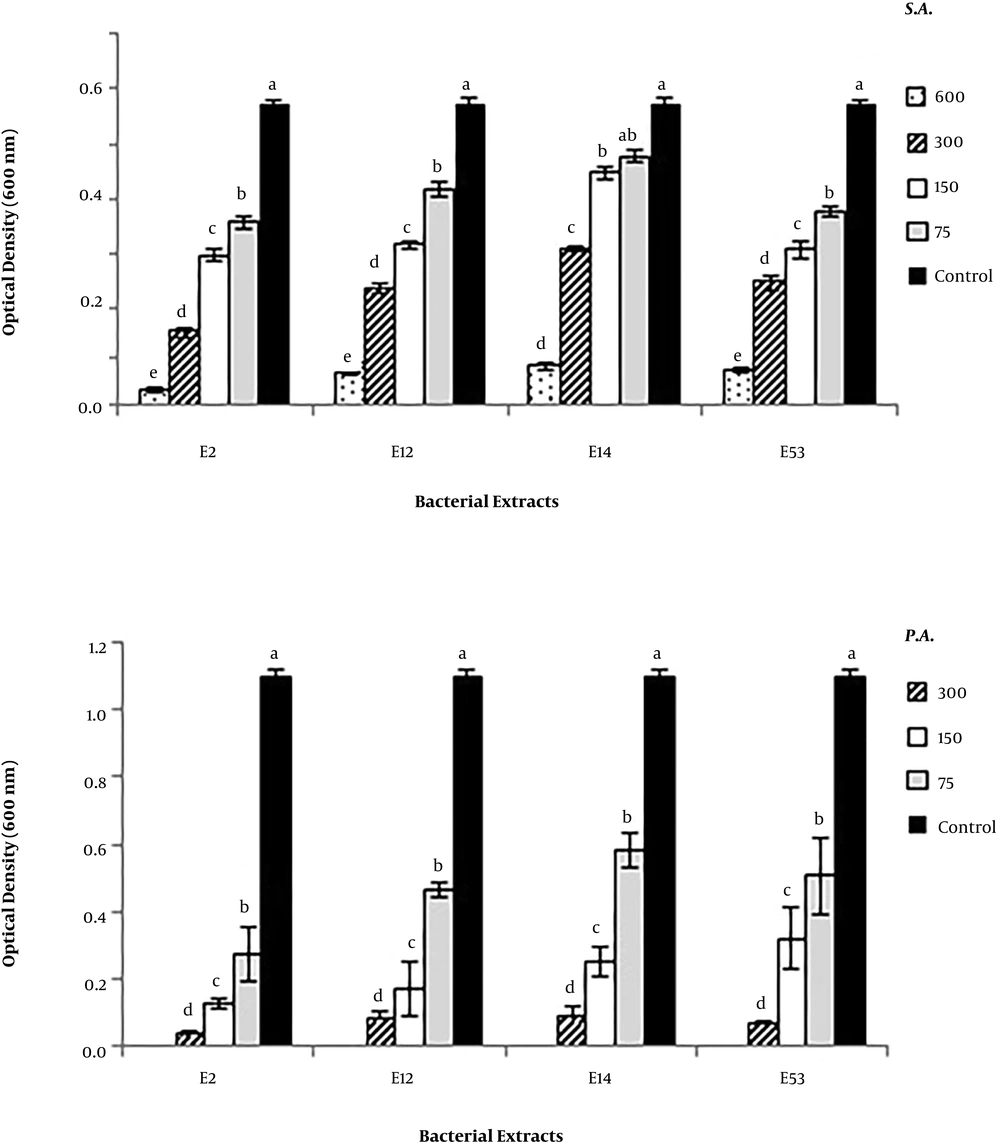
Figure 1.
Antibacterial activity of four selected SIB extracts at varying concentrations (µg.mL-1) against the growth of S. aureus (S.A) and P. aeruginosa (P.A). Different letters shows significant difference (*, P < 0.05).
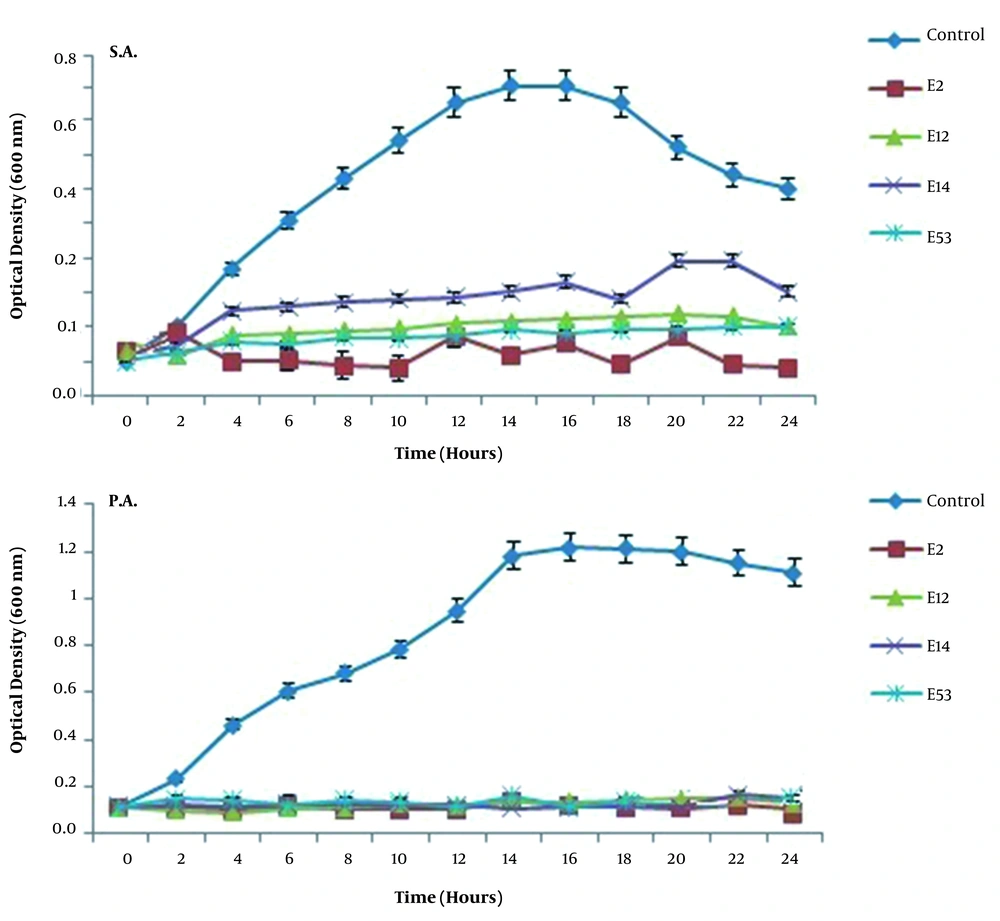
Figure 2.
Growth curve of S. aureus (S.A) and P. aeruginosa (P.A) in the absence and presence of the selected extracts at MIC.
4.2. Antibiofilm Activity and Disruption of the Preformed Biofilm
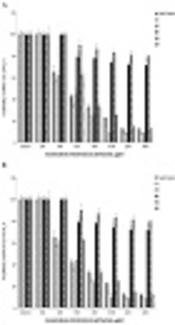
The calculated BIC of the extracts for S. aureus and P. aeruginosa was 600 and 300 µg/mL, respectively (Figure 3). According to the obtained results, the second extract exhibited significantly higher antibiofilm activity (P < 0.05) against both pathogens. In addition, the four examined extracts disrupted the preformed biofilms of S. aureus and P. aeroginusa (Figure 4), while the second extract had the highest activity against the S. aureus biofilm (P < 0.05).
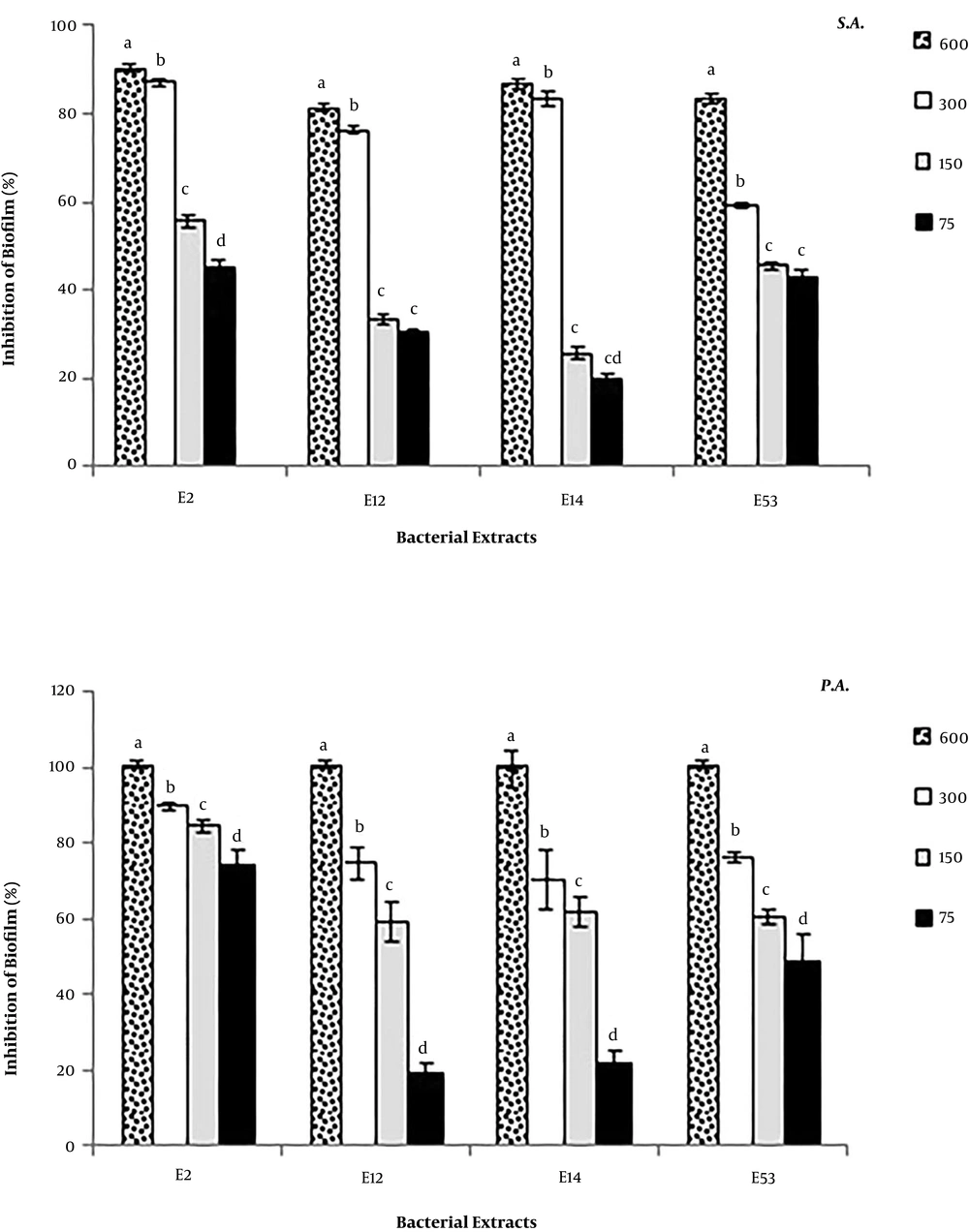
Figure 3.
Antibiofilm activity of four selected SIB extracts at varying concentrations (µg.mL-1) against the biofilm formation of S. aureus (S.A) and P. aeruginosa (P.A). Different letters shows significant difference (*, P < 0.05).
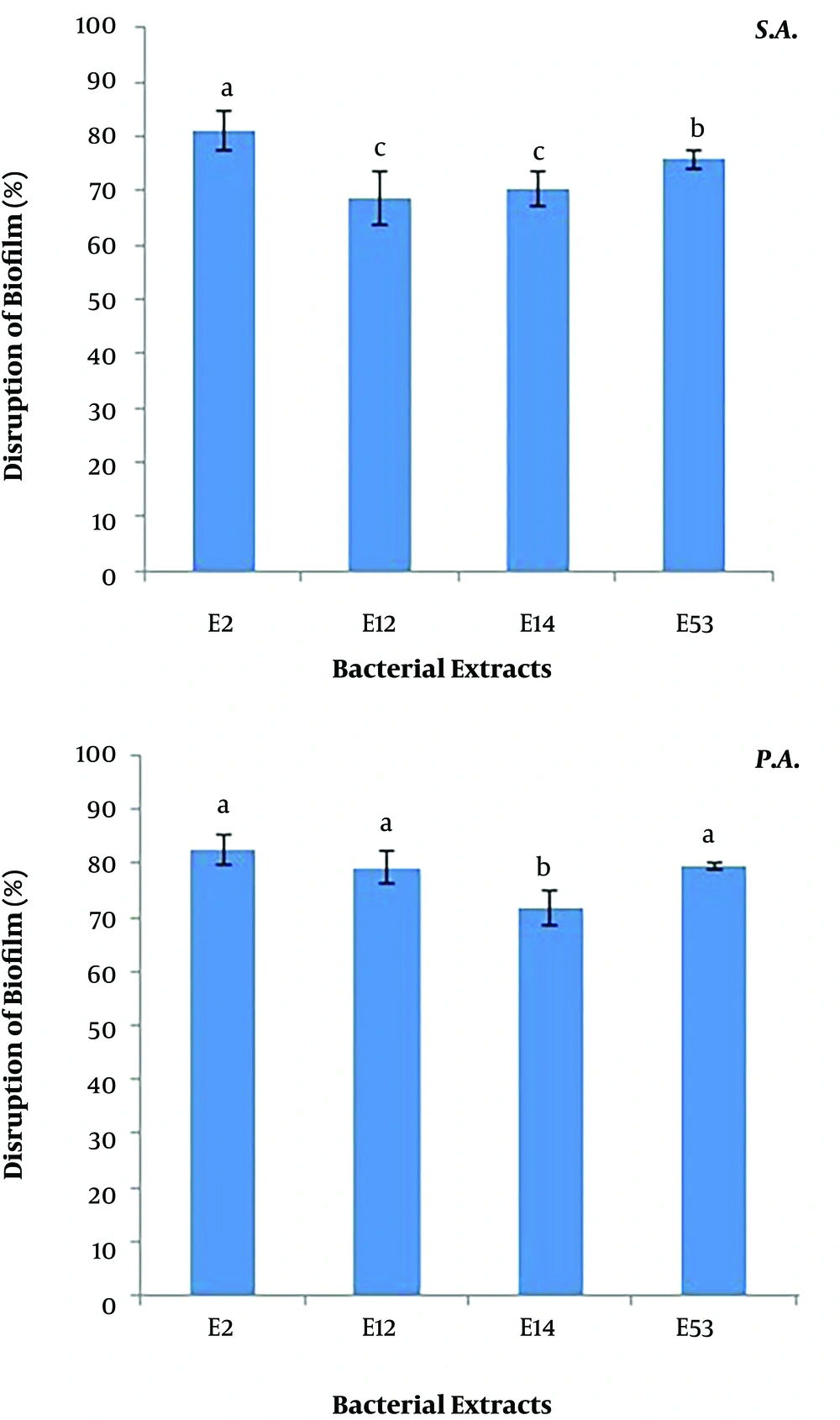
Figure 4.
Biofilm disruption activity of four selected SIB extracts at varying concentrations (µg.mL-1) against the preformed biofilm of S. aureus (S.A) and P. aeruginosa (P.A). Different letters shows significant difference (*, P < 0.05).
4.3. Active Compounds of the Extracts
The evaluation of the nature of the bacterial extracts indicated that the antibiofilm activity of the extracts against both pathogens decreased significantly after exposure to the protease (P < 0.05) (Figure 5). In fact, the test demonstrated that the four extracts had proteolysis activity, which played a key role in their antibiofilm activity.
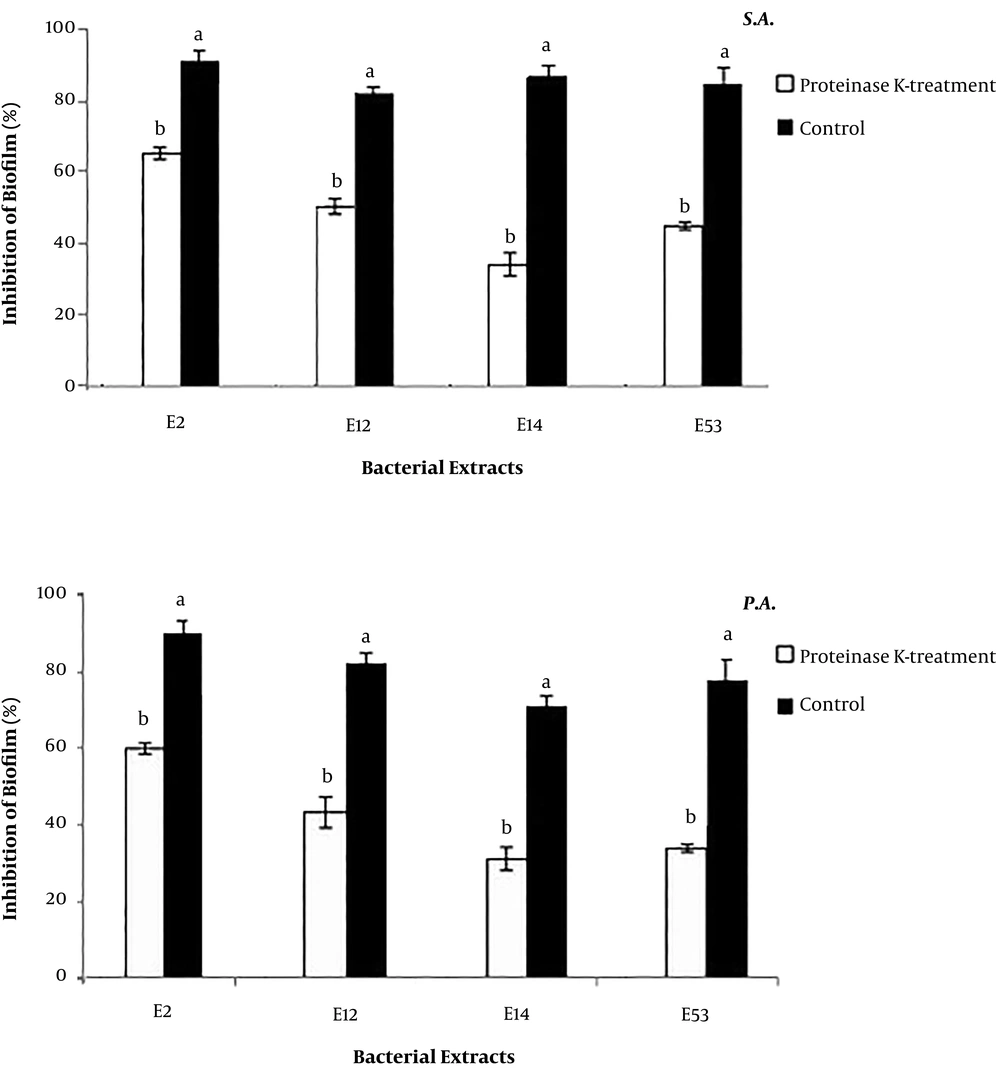
Figure 5.
Effects of proteinase K treatment on the anti biofilm activity of four selected SIB extracts at MIC against the biofilm of S. aureus (S.A) and P. aeruginosa (P.A). Different letters shows significant difference (*, P < 0.05).
5. Discussion
We initially prepared an extract from four examined strains of Pseudoalteromonas and Vibrio, which had metabolites that could inhibit the growth of S. aureus and P. aeruginosa. Pseudoalteromonas and Vibrio are abundant species in the marine habitat, and multiple strains have been isolated using commercially available complex media with the concentration of ions mimicking seawater (20). The genus Pseudoalteromonas currently consists of 41 species, 16 of which are known as the producers of antimicrobials. Various identified products have been reviewed in (21), and the compounds are reported to be alkaloids, polyketides, and peptides. In addition, Pseudoalteromonas have also been reported to produce digestive enzymes, which are capable of killing the surrounding bacteria through penetration into their cell wall (22). These bacteria are mostly detected in healthy animals and plants (23).
Vibrionaceae includes 126 species, and only six are reported to produce antimicrobial compounds (24). In the current research, V. alginolyticus and V. parahaemolyticus were observed to have a high antibacterial potential against S. aureus and P. aeruginosa. Although these strains are known as pathogens, they produce several bioactive compounds (e.g., indole, tetrodotoxin, and organic acids), which have anti-growth activity against various pathogens (25-27). Consistent with our findings, previous studies have confirmed the antibacterial potential of Vibrio and/or Pseudoalteromonas in sea slug (20), sea anemone (S. haddoni) (28), sea anemone (Anemonia sulcata and Actinia equina) (8), and coral (13) against various human pathogens.
The four examined isolates inhibited the biofilm formation of S. aureus and P. aeruginosa. Biofilm formation depends on several factors and their correlations; such examples are growth, adhesions, extracellular matrix-binding proteins, biofilm architecture, and cell communication (quorum sensing [QS]) (29-31). Therefore, antibiofilm agents are expected to affect at least one of these factors. Since the four sea anemone extracts in the current research exhibited antibacterial activity, it was inferred that they also were able to prevent the biofilm formation of the pathogens by inhibiting their growth. However, further investigations are required to clarify the other influential factors in biofilm formation. Our findings in this regard are in line with previous studies indicating the antibiofilm activity of the bacteria isolated from marine corals (9, 19, 32) and sea slugs (20) against various pathogens.
The extracts could also disrupt the preformed biofilm of S. aureus and P. aeruginosa at their BICs. To date, data have been scarce regarding the disruptive effects of marine bacteria or their products on the preformed biofilm of pathogens. Similar to the blockage of biofilm formation, the dispersion of the preformed biofilm could be due to the secretion of matrix-degrading enzymes (33), cellular mortality (34), biofilm-degrading polysaccharides, organic acids (35), and compounds with biosurfactant and bioemulsifier activities (36) produced by marine bacteria.
We also evaluated the nature of the active compounds of the extracts, and a significant reduction was observed in their antibiofilm activity following the enzymatic treatment, in which proteases were destroyed in the extracts. Proteins and peptides play a critical role in the biofilm structure (37). Therefore, the presence of proteolytic activity in an extract could be effective in the destruction of the biofilm network. Our findings in this regard demonstrated that the major active components of the extracts were proteases, which are essentially involved in the lysis of the proteins within the biofilm network. Consistent with our findings, previous studies have shown that proteases are the active compounds of bacterial extracts (19, 38). We could not identify all the active compounds of the extracts. However, it was observed that the antibiofilm potential of the extracts mainly relied on their proteolysis properties. Other effective compounds with fewer roles (e.g., anti-QS compounds) may also be detected, which require further investigation.
5.1. Conclusions
According to the results, the extracts derived from Pseudoalteromonas and Vibrio isolated from sea anemone (S. haddoni) had the potential to effectively control the growth and biofilm formation of S. aureus and P. aeruginosa. Therefore, the extracts should be explored further for the control of biofilm-associated infections.