Fulltext
Full-text is available in PDF format.
Journal of Nursing and Midwifery Sciences
The Official Journal of Mazandaran University of Medical Sciences
Authors
Background and Purpose: Childbirth is a normal physiological process and a family event. Women in various societies with different cultural backgrounds have diverse reasons for childbearing. Understanding the reasons behind childbearing might help overcome some issues associated with early/late reproduction, or lack of desire to give birth. This study was an attempt to develop, validate, and standardize a scale for measuring the childbearing orientations.
Methods: To this purpose, 30 items related to the childbearing orientations were collected based on the related theories and literature. The reliability of the developed scale was confirmed, showing Cronbach’s alpha reliability index of 0.95. In addition, the validity was approved by three correlated components. The content and face validities of the scale were confirmed for all the 30 items using the opinions of five experts in the fields of psychology, nursing, and midwifery. The developed questionnaire was distributed among 215 participants to be filled out. The participants were selected out of the students studying five different majors, including human sciences (n=123), engineering (n=48), medical sciences (n=18), agriculture (n=8), and basic sciences (n=18) using the quota sampling technique. The participants were categorized based on their age, educational level, and marital status.
Results: Based on results of the factor analysis, four items with loading below 0.5 were discarded and the rest 26 items formed three components, including intrinsic motivation (14 items), developmental motivation (7 items), and extrinsic motivation (5 items). The developed instrument proved to be both valid and reliable (r=0.95).
Conclusion: Researchers in the fields of nursery, midwifery, and psychology may find the developed instrument and the related discussion useful.
© 2017, Author(s). This open-access article is available under the Creative Commons Attribution 4.0 (CC BY 4.0) International License (https://creativecommons.org/licenses/by/4.0/), which allows for unrestricted use, distribution, and reproduction in any medium, provided that the original work is properly cited.
Pelit Aksu S, Uzun Aksoy M, Arslan Gurcuoglu E, Senturk Erenel A. Development and psychometric evaluation of the contraceptive attitude questionnaire. J Nurs Midwifery Sci. 2022;9(1):e140680. doi: https://doi.org/10.4103/jnms.jnms_147_20
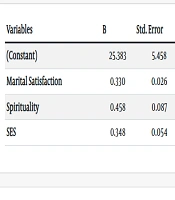
Sarsharbeidokhti P, Bagherzadeh Ledari R, Bagheri M. The Role of Spirituality, Marital Satisfaction and Socio-Economic Status on Attitudes Toward Childbearing Among Married Women Without the Intention and History of Pregnancy: A Cross-Sectional Study. J Nurs Midwifery Sci. 2024;11(4):e154615. doi: https://doi.org/10.5812/jnms-154615
Soleimani S, Sharif-Nia H, Abdollahi F, Khani S. Designing and determining psychometric properties of a questionnaire on assessment of men's attitudes toward male participation in women's sexual and reproductive health issues. J Nurs Midwifery Sci. 2020;7(3):e140791. doi: https://doi.org/10.4103/jnms.jnms_14_20
Abbasi Z, Keshavarz Z, Abbasi- Shavazi MJ, Ebadi A. Factors affecting on fertility behavior from the perspective of professionals: A qualitative study. koomesh. 2019;21(1):e153052. doi:
Ganjali A, Rezvaniamin M, Peyvand M, Ghasemzadeh K, Nezam Doost R. Factors Influencing Childbearing Intentions in Young Couples Attending Premarital Counseling in Southeast Iran: A Conventional Content Analysis. Health Scope. 2026;15(1):e167107. doi: https://doi.org/10.5812/healthscope-167107
Last Update: 3 days ago
Last Update: 3 days ago
Last Update: 3 days ago
Last Update: 6 days ago
Last Update: 2 days ago
Last Update: 4 days ago