Safety Assessment of Hydro-Ethanolic Extract of Falcaria vulgaris in Wistar Rats: Acute and Subchronic Toxicities
Authors
 3, Marzieh Hajialyni4, Leila Hosseinzadeh2,*, Niloufar Amin2, Fereshteh Jalilian2
Abstract
Background: Falcaria vulgaris is a medicinal plant with culinary uses and widespread therapeutic applications. Despite already proven as a very promising dietary supplement, its safety and possible effects on the human body are yet to define. This study was designed to investigate the acute and subchronic toxic effects of hydroethanolic F. vulgaris in male and female Wistar rats.
Experimental: To evaluate the safety of a hydroethanolic extract of F. vulgaris, acute and subchronic toxicity in Wistar rats treated with extract was investigated. For investigation of acute toxicity of F. vulgaris, both genders of rats were treated for 45 days with a single dose of the extract (4000 mg/ kg) via gavage. Also for sub-chronic testing, the extract was administrated orally at the doses of 150, 300, and 450 mg/kg for 45 days. At the end of the study, the animals were sacrificed and the hematological, biochemical, and histopathological parameters were assayed.
Results: After a single oral administration of F. vulgaris (4000 mg/kg), no mortality was observed in both control and groups in either sex. Also, histopathological inspection of vital organs and tissues revealed no obvious alteration in these organs. The obtained results showed a significant reduction in the weight of heart and liver in male rats that received the highest dose of the extract. The level of red blood cell distribution width (dose of 450 mg/kg) from the hematological parameters and the level of serum creatinine (dose of 150 and 450 mg/kg) from the biochemical parameters increased significantly in male rats. On the contrary, during treatment the concentration of all examined minerals remained unchanged. Histopathological inspection indicated that liver, kidney, and testis were found to be affected by subchronic exposure to F. vulgaris extract.
Conclusion: The results of the acute study revealed that F. vulgaris may be nontoxic even at doses less than 4000 mg/kg body weight. However, the result of subchronic study confirmed the liver dysfunctions in Wistar rats and also suggested the significant effect of F. vulgaris on testicular tissue, which may cause serious male infertility. The ability to impair male fertility by such a medicinal plant has not been reported yet. It can be concluded that the no observed adverse effect level (NOAEL) of F. vulgaris are 150 and 450 mg/kg for male and female rats, respectively.
Highlights
Copyright
© 2022, Author(s). This open-access article is available under the Creative Commons Attribution 4.0 (CC BY 4.0) International License (https://creativecommons.org/licenses/by/4.0/), which allows for unrestricted use, distribution, and reproduction in any medium, provided that the original work is properly cited.
Similar Articles
Effect of Falcaria Vulgaris Hydro-Alcoholic Extract on Isolated Rat Heart
Shakebaei D, Gowdini A. Effect of Falcaria Vulgaris Hydro-Alcoholic Extract on Isolated Rat Heart. J Kermanshah Univ Med Sci. 2007;11(3):e80502. doi:
Potential Therapeutic Effects of Falcaria vulgaris Bernh: A Systematic Review
Jafari Z, Farzaei MH, Morovati MR, Foroughinia A. Potential Therapeutic Effects of Falcaria vulgaris Bernh: A Systematic Review. J Rep Pharm Sci. 2022;11(1):e146141. doi: https://doi.org/10.4103/jrptps.JRPTPS_160_21
In Vitro Antileishmanial Activity of Falcaria vulgaris Fractions on Leishmania major
Eskandarian AA, Jafari H, Asghari G, Mohaghegh MA, Ghanadian M, et al. In Vitro Antileishmanial Activity of Falcaria vulgaris Fractions on Leishmania major. Jundishapur J Nat Pharm Prod. 2017;12(3):e63754. doi: https://doi.org/10.5812/jjnpp.63754
Wound Healing Effect of Falcaria Vulgaris’ Leaves on Aspirin Induced Gastric Ulcer in Rats
Yadegari M, Khazaei M, Ghorbani R, Rezae M, Izadi B, et al. Wound Healing Effect of Falcaria Vulgaris’ Leaves on Aspirin Induced Gastric Ulcer in Rats. J Kermanshah Univ Med Sci. 2006;10(3):e81803. doi:
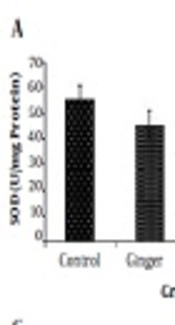
Ameliorating Potential of Ginger (Zingiber officinale Roscoe) Extract on Liver Function and Oxidative Stress Induced by Ethanol in Male Rats
Akbari A, Nasiri K, Heydari M, Nimrouzi M, Afsar T. Ameliorating Potential of Ginger (Zingiber officinale Roscoe) Extract on Liver Function and Oxidative Stress Induced by Ethanol in Male Rats. Zahedan J Res Med Sci. 2019;21(2):e86464. doi: https://doi.org/10.5812/zjrms.86464
More by these authors
- Scopus by DOI: 2
Last Update: 3 weeks ago
- Scopus by Title: 0
Last Update: 3 weeks ago
- Scopus by Title (Ref): 2
Last Update: 3 weeks ago
- CrossRef: 0
Last Update: 6 days ago
- OpenAlex: 3
Last Update: 8 hours ago
- OpenCitations: 2
Last Update: 4 days ago
