Design and Development of Transdermal Drug Delivery of Nonsteroidal Anti-inflammatory Drugs: Lornoxicam
Authors
Abstract
Background: Conventional route, the most common route of administration, has drawbacks such as hepatic first-pass metabolism, poor bioavailability, and ability to alter drug concentrations in the blood. These problems can be overcome by a controlled-release drug delivery system, which can be accomplished with the development of transdermal drug delivery system.
Objective: The objective of this study was to design and develop a lornoxicam-loaded matrix-type transdermal films with different permeation enhancers and determine their physicochemical characteristics.
Materials and Methods: Lornoxicam-loaded transdermal films were prepared by the solvent evaporation technique. The Fourier transform infrared spectroscopic studies were performed to determine the drug–excipient interactions. Six formulations were prepared with different permeation enhancers such as propylene glycol, dimethylformamide, dimethyl sulfoxide (DMSO), sodium lauryl sulfate, Span 20, and TWEEN 80 by using 500 mg of sodium alginate as the polymer and 60% w/w glycerin as the plasticizer. The prepared formulations were evaluated for thickness, uniformity of weight, moisture loss, moisture uptake, drug content, and tensile strength. The effect of different permeation enhancers on diffusion was determined through a shed snakeskin by using Franz diffusion cells.
Results: The preformulation studies conducted were fulfilled to design a matrix-type transdermal film. In vitro diffusion 24 h indicated that the steady state flux were in the order of F3 > F2 > F1 > F6 > F5 > F4. It was observed that the film prepared with DMSO showed higher diffusion than the formulations with other permeation enhancers.
Conclusion: It was concluded that permeation enhancer to prepare lornoxicam-loaded matrix-type transdermal film to improve patient compliance.
Highlights
Copyright
© 2019, Author(s). This open-access article is available under the Creative Commons Attribution 4.0 (CC BY 4.0) International License (https://creativecommons.org/licenses/by/4.0/), which allows for unrestricted use, distribution, and reproduction in any medium, provided that the original work is properly cited.
Similar Articles
Formulation and Evaluation of Liposomes for Transdermal Delivery of Celecoxib
Moghimipour E, Salami A, Monjezi M. Formulation and Evaluation of Liposomes for Transdermal Delivery of Celecoxib. Jundishapur J Nat Pharm Prod. 2015;10(1):e17653. doi: https://doi.org/10.17795/jjnpp-17653
Preparation and Evaluation of Matrix Containing Lidocaine and Prilocaine for Using in Transdermal Films
Kouchak M, Rezaee S, Moshabeh N, Handali S. Preparation and Evaluation of Matrix Containing Lidocaine and Prilocaine for Using in Transdermal Films. J Rep Pharm Sci. 2019;8(2):e147412. doi: https://doi.org/10.4103/jrptps.JRPTPS_71_18
Design and Evaluation of Losartan Transdermal Patch by Using Solid Microneedles as A Physical Permeation Enhancer
Almazan EA, Castañeda PS, Torres RD, Escobar-Chavez JJ. Design and Evaluation of Losartan Transdermal Patch by Using Solid Microneedles as A Physical Permeation Enhancer. Iran J Pharm Res. 2020;19(1):e124558. doi: https://doi.org/10.22037/ijpr.2019.1100912
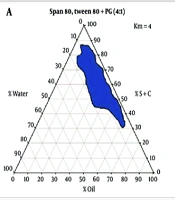
Preparation, Characterization, and Skin Permeation Evaluation of Naproxen Microemulsions for Transdermal Delivery
Jamali N, Moghimipour E, Hedayatipour N, Salimi A. Preparation, Characterization, and Skin Permeation Evaluation of Naproxen Microemulsions for Transdermal Delivery. Jundishapur J Nat Pharm Prod. 2024;19(3):e145137. doi: https://doi.org/10.5812/jjnpp-145137
Fabrication and In-vitro Evaluation of Buccal Mucoadhesive Tablet of Meloxicam
Arabi M, Mortazavi SA, Jafariazar Z, Farhadnejad H, Alipour Harisa G, et al. Fabrication and In-vitro Evaluation of Buccal Mucoadhesive Tablet of Meloxicam. Iran J Pharm Res. 2020;19(3):e124392. doi: https://doi.org/10.22037/ijpr.2019.111820.13378
- Scopus by DOI: 3
Last Update: 1 month ago
- Scopus by Title: 2
Last Update: 1 month ago
- Scopus by Title (Ref): 0
Last Update: 1 month ago
- CrossRef: 0
Last Update: 6 days ago
- OpenAlex: 6
Last Update: 6 hours ago
- OpenCitations: 5
Last Update: 4 days ago
