Targeting Gastric Cancer Stem Cells through Developmental Pathways: Hypothesis
Authors
Abstract
Cancer stem cells (CSCs) have been defined as a unique subpopulation in tumors, endowed with the capacity to initiate tumor progression, and maintain self‐renewal as well as metastatic potential. Recently, more evidences strongly indicate the existence of CSCs in solid tumors of wide variety of organs such as breast, brain and stomach. Recent studies suggest that a special subpopulation of gastric cancer cells with specific marker namely CD44, shows spheroid colony formation in serum free media in vitro, as well as tumorigenic capacity in immunodeficient animal model in vivo. In addition, current evidences indicate that one of the major reasons for failure of chemotherapy and radiotherapy is the existence of CSCs with resistant mechanisms against current therapeutic strategies. Growing evidence recommended that pathways which are responsible for regulation of normal stem cell self‐renewal and differentiation may also represent regulatory roles in maintenance of cancer cells and CSCs. Two major therapeutic approaches for elimination of CSCs are differentiation therapy and inhibition of important pathways involved in maintenance of CSCs such as notch signaling.It is hypothesized that with inhibition of notch signaling by means of DAPT(gamma‐secretase‐inhibitor), silencing Ral pathway as well as inducing differentiation by means of all‐trance retinoic acid (ATRA) in CD44+ gastric cancer stem cells, we can target this small population and eventually eliminate them by sensitizing these cells to chemotherapy and radiotherapy as well as induction of apoptosis in them.
Highlights
Copyright
© 2014, Author(s). This open-access article is available under the Creative Commons Attribution 4.0 (CC BY 4.0) International License (https://creativecommons.org/licenses/by/4.0/), which allows for unrestricted use, distribution, and reproduction in any medium, provided that the original work is properly cited.
Similar Articles
Review on the molecular signaling pathways involved in controlling cancer stem cells and treatment
Forouzesh F, Agharezaee N. Review on the molecular signaling pathways involved in controlling cancer stem cells and treatment. J Inflamm Dis. 2024;22(3):e156096. doi:
Effects of all trans retinoic acid on apoptosis induction and notch1, hes1 genes expression in gastric cancer cell line MKN-45
niapour N, shokri gara geshlagi S, amani M, sharifi pasandi M, salehi H, et al. Effects of all trans retinoic acid on apoptosis induction and notch1, hes1 genes expression in gastric cancer cell line MKN-45. koomesh. 2016;17(4):e151198. doi:
Differential MicroRNA Expression Profile of Colon Cancer Stem Cells Derived from Primary Tumor and HT-29 Cell line
Khorrami S, Zavaran Hosseini A, Mowla SJ, Ghanbari R. Differential MicroRNA Expression Profile of Colon Cancer Stem Cells Derived from Primary Tumor and HT-29 Cell line. Int J Cancer Manag. 2017;10(8):e8182. doi: https://doi.org/10.5812/ijcm.8182
The Effect of Plant-Derived Compounds in Targeting Cancer Stem Cells
soltanian S. The Effect of Plant-Derived Compounds in Targeting Cancer Stem Cells. J Inflamm Dis. 2024;23(2):e156154. doi:
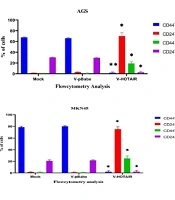
Overexpression and Downregulation of HOTAIR Influence the Stemness Markers in Gastric Cancer Cell Lines
Ghanadpour M, Bossaghzadeh F, Galehdari H, Kazemi Nezhad SR, Tahmasebi-Birgani M, et al. Overexpression and Downregulation of HOTAIR Influence the Stemness Markers in Gastric Cancer Cell Lines. Gene Cell Tissue. 2024;11(2):e144068. doi: https://doi.org/10.5812/gct-144068
- Scopus by DOI: 0
Last Update: 1 week ago
- Scopus by Title: 0
Last Update: 1 week ago
- Scopus by Title (Ref): 0
Last Update: 1 week ago
- CrossRef: 0
Last Update: 7 hours ago
- OpenAlex: 0
Last Update: 9 hours ago
- OpenCitations: 0
Last Update: 5 days ago