Koomesh
Journal of Semnan University of Medical Sciences
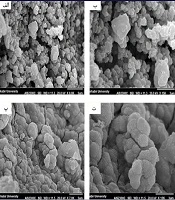
Image Credit:Koomesh
Outlines
Fabrication and Characterization of Fibrin/Bioactive Glass Nanoparticles Composite for Bone Tissue Engineering
Abstract
Introduction:
Bone tissue engineering is one of the emerging strategies that has been developed to restore the bone of the damaged area without provoking an adverse immune reaction. In this context, the tissue engineering scaffold must be as similar as possible to the natural bone tissue. Bone is a nanocomposite material composed of hydroxyapatite and collagen; hence, the development of nanocomposite scaffolds has been viewed as an appropriate choice for bone tissue restoration. In many situations, these composite materials combine a bioactive mineral phase with a biodegradable polymer phase. The current study aimed to create and analyze a new composite scaffold for bone tissue engineering applications employing bioactive glass nanoparticles (nBG) and fibrin.
Methods:
The nBG used in this study was based on the 70:30: SiO2-CaO system, which was synthesized using the sol-gel method. Scanning electron microscopy (SEM), X-ray crystallography (XRD), and Fourier transform infrared (FTIR) spectroscopy were used to characterize the fabricated nanoparticles. On the other hand, the whole blood was centrifuged twice at 3000×g to separate the plasma from the blood, and during the next steps, fibrinogen and thrombin were separated from the platelet-free plasma. These components were then mixed with nBG to create an injectable composite scaffold. The composites were subjected to physicochemical characterization, such as degradability and clot formation rate, while human osteoblast-like cells (G-292 cell line) were used to assess the scaffold's biocompatibility as well as cell proliferation and differentiation using the MTT and alkaline phosphatase activity tests, respectively.
Results:
In the case of bioactive glass nanoparticles, SEM analysis verified the formation of spherical nanoparticles with a diameter of 50 to 110 nm. XRD analysis showed its non-crystalline nature, and the FTIR spectrum demonstrated the presence of Si-O-Si and O-H functional groups. Investigations on the composite of fibrin and bioactive glass nanoparticles (nBG) revealed that incorporating nBG into the fibrin hydrogel enhances its stability and reduces the degradation rate of the scaffold by approximately 40%. In vitro investigations on G-292 cells revealed that including nBG in the fibrin hydrogel improves cell viability, cell proliferation by approximately 150%, and alkaline phosphatase activity by around 45%.
Conclusion:
Fibrin gel is widely used in bone tissue engineering applications. However, our studies show that when combined with bioactive glass nanoparticles, it is more effective at repairing damaged bones.
References
- 1.Collaborators GBDMD. Global, regional, and national burden of 12 mental disorders in 204 countries and territories, 1990-2019: a systematic analysis for the Global Burden of Disease Study 2019. Lancet Psychiatry. 2022;9(2):137-50. [PubMed ID:35026139]. [PubMed Central ID:PMC8776563]. https://doi.org/10.1016/S2215-0366(21)00395-3.
- 2.Sahlabadi AS, Bidel H, Rabie H, Moosavi_Kordmiri SH, Balochkhaneh FA. [Relationship between the prevalence of musculoskeletal disorders and postural status and ergonomic risk factors in the workplace]. Koomesh. 2021. Persian. https://doi.org/10.52547/koomesh.23.4.494.
- 3.Blokhuis TJ, Arts JJ. Bioactive and osteoinductive bone graft substitutes: definitions, facts and myths. Injury. 2011;42 Suppl 2:S26-9. [PubMed ID:21714968]. https://doi.org/10.1016/j.injury.2011.06.010.
- 4.Zimmermann G, Moghaddam A. Allograft bone matrix versus synthetic bone graft substitutes. Injury. 2011;42 Suppl 2:S16-21. [PubMed ID:21889142]. https://doi.org/10.1016/j.injury.2011.06.199.
- 5.Zhu G, Zhang T, Chen M, Yao K, Huang X, Zhang B, et al. Bone physiological microenvironment and healing mechanism: Basis for future bone-tissue engineering scaffolds. Bioact Mater. 2021;6(11):4110-40. [PubMed ID:33997497]. [PubMed Central ID:PMC8091181]. https://doi.org/10.1016/j.bioactmat.2021.03.043.
- 6.Eslami M, Yazdi HM, Hariri K, Rouhollah F, Nayernia K. [Precision medicine, technologies, and molecular diagnostics]. Koomesh. 2022. Persian.
- 7.Chinnasami H, Dey MK, Devireddy R. Three-Dimensional Scaffolds for Bone Tissue Engineering. Bioengineering (Basel). 2023;10(7). [PubMed ID:37508786]. [PubMed Central ID:PMC10376773]. https://doi.org/10.3390/bioengineering10070759.
- 8.Qu H, Fu H, Han Z, Sun Y. Biomaterials for bone tissue engineering scaffolds: a review. RSC Adv. 2019;9(45):26252-62. [PubMed ID:35531040]. [PubMed Central ID:PMC9070423]. https://doi.org/10.1039/c9ra05214c.
- 9.Al-Harbi N, Mohammed H, Al-Hadeethi Y, Bakry AS, Umar A, Hussein MA, et al. Silica-Based Bioactive Glasses and Their Applications in Hard Tissue Regeneration: A Review. Pharmaceuticals (Basel). 2021;14(2). [PubMed ID:33498229]. [PubMed Central ID:PMC7909272]. https://doi.org/10.3390/ph14020075.
- 10.Pereira MM, Jones JR, Hench LL. Bioactive glass and hybrid scaffolds prepared by sol–gel method for bone tissue engineering. J Advances In Applied Ceramics. 2005;104(1):35-42. https://doi.org/10.1179/174367605225011034.
- 11.Abodunrin OD, El Mabrouk K, Bricha M. A review on borate bioactive glasses (BBG): effect of doping elements, degradation, and applications. J Materials Chemistry B. 2023;11(5):955-73.
- 12.Shearer A, Montazerian M, Sly JJ, Hill RG, Mauro JC. Trends and perspectives on the commercialization of bioactive glasses. Acta Biomater. 2023;160:14-31. [PubMed ID:36804821]. https://doi.org/10.1016/j.actbio.2023.02.020.
- 13.Boccaccini AR, Erol M, Stark WJ, Mohn D, Hong Z, Mano JF. Polymer/bioactive glass nanocomposites for biomedical applications: a review. J Composites Sci Technol. 2010;70(13):1764-76. https://doi.org/10.1016/j.compscitech.2010.06.002.
- 14.Misra SK, Mohn D, Brunner TJ, Stark WJ, Philip SE, Roy I, et al. Comparison of nanoscale and microscale bioactive glass on the properties of P(3HB)/Bioglass composites. Biomaterials. 2008;29(12):1750-61. [PubMed ID:18255139]. https://doi.org/10.1016/j.biomaterials.2007.12.040.
- 15.Noori A, Ashrafi SJ, Vaez-Ghaemi R, Hatamian-Zaremi A, Webster TJ. A review of fibrin and fibrin composites for bone tissue engineering. Int J Nanomedicine. 2017;12:4937-61. [PubMed ID:28761338]. [PubMed Central ID:PMC5516781]. https://doi.org/10.2147/IJN.S124671.
- 16.Sanz-Horta R, Matesanz A, Gallardo A, Reinecke H, Jorcano JL, Acedo P, et al. Technological advances in fibrin for tissue engineering. J Tissue Eng. 2023;14:20417314231190288. [PubMed ID:37588339]. [PubMed Central ID:PMC10426312]. https://doi.org/10.1177/20417314231190288.
- 17.Weisel JW. Fibrinogen and fibrin. Adv Protein Chem. 2005;70:247-99. [PubMed ID:15837518]. https://doi.org/10.1016/S0065-3233(05)70008-5.
- 18.Davis HE, Binder BY, Schaecher P, Yakoobinsky DD, Bhat A, Leach JK. Enhancing osteoconductivity of fibrin gels with apatite-coated polymer microspheres. Tissue Eng Part A. 2013;19(15-16):1773-82. [PubMed ID:23560390]. [PubMed Central ID:PMC3700018]. https://doi.org/10.1089/ten.TEA.2012.0288.
- 19.Ito K, Yamada Y, Naiki T, Ueda M. Simultaneous implant placement and bone regeneration around dental implants using tissue-engineered bone with fibrin glue, mesenchymal stem cells and platelet-rich plasma. Clin Oral Implants Res. 2006;17(5):579-86. [PubMed ID:16958700]. https://doi.org/10.1111/j.1600-0501.2006.01246.x.
- 20.Zhao H, Ma L, Gao C, Wang J, Shen J. Fabrication and properties of injectable β-tricalcium phosphate particles/fibrin gel composite scaffolds for bone tissue engineering. J Materials Sci Engineering: C. 2009;29(3):836-42. https://doi.org/10.1016/j.msec.2008.07.033.
- 21.Osathanon T, Linnes ML, Rajachar RM, Ratner BD, Somerman MJ, Giachelli CM. Microporous nanofibrous fibrin-based scaffolds for bone tissue engineering. Biomaterials. 2008;29(30):4091-9. [PubMed ID:18640716]. [PubMed Central ID:PMC2610368]. https://doi.org/10.1016/j.biomaterials.2008.06.030.
- 22.Xia W, Chang J. Preparation and characterization of nano-bioactive-glasses (NBG) by a quick alkali-mediated sol–gel method. J Materials Letters. 2007;61(14-15):3251-3. https://doi.org/10.1016/j.matlet.2006.11.048.
- 23.Kesse X, Vichery C, Nedelec JM. Deeper Insights into a Bioactive Glass Nanoparticle Synthesis Protocol To Control Its Morphology, Dispersibility, and Composition. ACS Omega. 2019;4(3):5768-75. [PubMed ID:31459729]. [PubMed Central ID:PMC6648633]. https://doi.org/10.1021/acsomega.8b03598.
- 24.Lee JT, Leng Y, Chow KL, Ren F, Ge X, Wang K, et al. Cell culture medium as an alternative to conventional simulated body fluid. Acta Biomater. 2011;7(6):2615-22. [PubMed ID:21356333]. https://doi.org/10.1016/j.actbio.2011.02.034.
- 25.Thorn JJ, Sorensen H, Weis-Fogh U, Andersen M. Autologous fibrin glue with growth factors in reconstructive maxillofacial surgery. Int J Oral Maxillofac Surg. 2004;33(1):95-100. [PubMed ID:14690664]. https://doi.org/10.1054/ijom.2003.0461.
- 26.Franco D, Franco T, Schettino AM, Filho JM, Vendramin FS. Protocol for obtaining platelet-rich plasma (PRP), platelet-poor plasma (PPP), and thrombin for autologous use. Aesthetic Plast Surg. 2012;36(5):1254-9. [PubMed ID:22936376]. https://doi.org/10.1007/s00266-012-9957-3.
- 27.Zhao H, Ma L, Zhou J, Mao Z, Gao C, Shen J. Fabrication and physical and biological properties of fibrin gel derived from human plasma. Biomed Mater. 2008;3(1):015001. [PubMed ID:18458488]. https://doi.org/10.1088/1748-6041/3/1/015001.
- 28.Mačković M, Hoppe A, Detsch R, Mohn D, Stark WJ, Spiecker E, et al. Bioactive glass (type 45S5) nanoparticles: in vitro reactivity on nanoscale and biocompatibility. J Nanoparticle Res. 2012;14:1-22. https://doi.org/10.1007/s11051-012-0966-6.
- 29.Goh YF, Alshemary AZ, Akram M, Abdul Kadir MR, Hussain R. Bioactive glass: an in‐vitro comparative study of doping with nanoscale copper and silver particles. J Inter Applied Glass Sci. 2014;5(3):255-66. https://doi.org/10.1111/ijag.12061.
- 30.Kokubo T, Ito S, Shigematsu M, Sanka S, Yamamuro T. Fatigue and life-time of bioactive glass-ceramic AW containing apatite and wollastonite. J Materials Sci. 1987;22:4067-70. https://doi.org/10.1007/BF01133359.
- 31.Tawil B. Fibrin and its applications. J An Introduction Biomate. 2006:105-20.
- 32.Park JJ, Cintron JR, Siedentop KH, Orsay CP, Pearl RK, Nelson RL, et al. Technical manual for manufacturing autologous fibrin tissue adhesive. Dis Colon Rectum. 1999;42(10):1334-8. [PubMed ID:10528774]. https://doi.org/10.1007/BF02234225.
- 33.Ostomel TA, Shi Q, Tsung CK, Liang H, Stucky GD. Spherical bioactive glass with enhanced rates of hydroxyapatite deposition and hemostatic activity. Small. 2006;2(11):1261-5. [PubMed ID:17192971]. https://doi.org/10.1002/smll.200600177.
- 34.El-Fiqi A, Lee JH, Lee EJ, Kim HW. Collagen hydrogels incorporated with surface-aminated mesoporous nanobioactive glass: Improvement of physicochemical stability and mechanical properties is effective for hard tissue engineering. Acta Biomater. 2013;9(12):9508-21. [PubMed ID:23928332]. https://doi.org/10.1016/j.actbio.2013.07.036.
- 35.Wu C, Chang J, Fan W. Bioactive mesoporous calcium–silicate nanoparticles with excellent mineralization ability, osteostimulation, drug-delivery and antibacterial properties for filling apex roots of teeth. J Materials Chem. 2012;22(33):16801-9. https://doi.org/10.1039/c2jm33387b.
- 36.Misra SK, Ansari T, Mohn D, Valappil SP, Brunner TJ, Stark WJ, et al. Effect of nanoparticulate bioactive glass particles on bioactivity and cytocompatibility of poly(3-hydroxybutyrate) composites. J R Soc Interface. 2010;7(44):453-65. [PubMed ID:19640877]. [PubMed Central ID:PMC2842795]. https://doi.org/10.1098/rsif.2009.0255.
- 37.Zhu H, Liu N, Feng X, Chen J. Fabrication and characterization of silk fibroin/bioactive glass composite films. J Materials Sci Engineering: C. 2012;32(4):822-9. https://doi.org/10.1016/j.msec.2012.01.033.
Copyright
© 2024, Author(s). This open-access article is available under the Creative Commons Attribution 4.0 (CC BY 4.0) International License (https://creativecommons.org/licenses/by/4.0/), which allows for unrestricted use, distribution, and reproduction in any medium, provided that the original work is properly cited.
Similar Articles
Antibacterial effect of bioactive glass nanoparticles prepared via sol gel method
Nazemi Z, Mehdikhani-Nahrkhalaji M, Haghbin Nazarpak M, Staji H. Antibacterial effect of bioactive glass nanoparticles prepared via sol gel method. J Kermanshah Univ Med Sci. 2014;18(7):e74077. doi: https://doi.org/10.22110/jkums.v18i7.1869
Design and Fabrication of a Novel Transplant Combined with Human Bone Marrow Mesenchymal Stem Cells and Platelet-rich Fibrin: New Horizons for Periodontal Tissue Regeneration after Dental Trauma
Moradian H, Rafiee A, Ayatollahi M. Design and Fabrication of a Novel Transplant Combined with Human Bone Marrow Mesenchymal Stem Cells and Platelet-rich Fibrin: New Horizons for Periodontal Tissue Regeneration after Dental Trauma. Iran J Pharm Res. 2017;16(4):e125050. doi: https://doi.org/10.22037/ijpr.2017.2136
Fabrication of Poly (Vinyl Alcohol)/Gelatin Biomimetic Electrospun Nanofibrous Composites and Its Bioactivity Assessment for Bone Tissue Engineering
Rashidi S, Asadi A, Latifi-Navid S, Zahri S, Khodayari A, et al. Fabrication of Poly (Vinyl Alcohol)/Gelatin Biomimetic Electrospun Nanofibrous Composites and Its Bioactivity Assessment for Bone Tissue Engineering. Gene Cell Tissue. 2021;8(4):e115569. doi: https://doi.org/10.5812/gct.115569
Comparative Evaluation of Conventional and Nanosilver-Containing Leucocyte and Platelet-Rich Fibrin/Biomaterial in the Anti-Biofilm Formation of Standard Species of Candida and Streptococcus
Haddadi P, Khorshidi H, Raoofi S, Dehghani Nazhvani A, Badiee P. Comparative Evaluation of Conventional and Nanosilver-Containing Leucocyte and Platelet-Rich Fibrin/Biomaterial in the Anti-Biofilm Formation of Standard Species of Candida and Streptococcus. Jundishapur J Microbiol. 2018;11(8):e68423. doi: https://doi.org/10.5812/jjm.68423
Investigating the Viability of Human Gingival Fibroblast Cells in a Polyhydroxybutyrate/Chitosan/Bioglass Nanoparticles Scaffold
Heidary F, Karbasi S, Khoroushi M, Moradi Gharibvand N, Mohammadrezaforough M, et al. Investigating the Viability of Human Gingival Fibroblast Cells in a Polyhydroxybutyrate/Chitosan/Bioglass Nanoparticles Scaffold. Compr Health Biomed Stud. 2023;1(4):e143990. doi: https://doi.org/10.5812/chbs-143990
Crossmark
Checking
- Scopus by DOI: 1
Last Update: 2 weeks ago
- Scopus by Title: 1
Last Update: 2 weeks ago
- Scopus by Title (Ref): 1
Last Update: 2 weeks ago
- CrossRef: 0
Last Update: 5 days ago
Ordering Reprints
Articles are published under the Creative Commons license stated on each article. No permission or royalty fee is required for uses permitted by that license. CCC handles optional bulk and customized reprint orders. Any quotation covers production and delivery services only, not copyright permission. > Request Reprints from CCC
Author(s):
