Journal of Semnan University of Medical Sciences
Image Credit:Koomesh
Outline
Predictive factors of glycosylated hemoglobin using additive regression model
Authors

Abstract
Introduction: Diabetes is a chronic disease, non-epidemic disease that costs a lot of money in each year. One of the diagnostic criteria for diabetes is Glycosylated Hemoglobin (HBA1C), which in this study the effective factors on it examined by additive regression model. Materials and Methods: In this cross-sectional study, 130 patients with diabetes type-2 were selected based on simple random sampling in Ilam city (Iran). Several variables were examined such as gender, age, weight, height, systolic and diastolic blood pressure, hypertension, smoking, family history of diabetes, daily walking for at least 30 minutes, waist and hip circumferences, HbA1c, fasting blood sugar (FBS), RBC mean corpuscular volume (MCV) and BMI. The data were collected based on Canadian diabetes checklist questionnaire. Results: In simple linear regression, waist and hip circumferences and in multiple regression, hip circumference and BMI had a significant effect on HBA1C (P
Highlights
References
- 1.[1] Hazavehei MM, Khani Jyhouni A, Hasanzade A, and Rashidi M. The effect of educational program based on BASNEF model on diabetic (Type II) eyes care in Kazemi's clinic, (Shiraz). Iran J Endocrinol Metab 2008; 10: 145-154 (Persian).
- 2.[2] Trasoff D, Delizo J, Du B, Purnajo C, and Morales J. Diabetes in the Middle East. Epinex Diagnostics, Inc. Corporate Information Series -4, 2008. Available from: URL: http://www.epinex.com/pdf/Epinex_Diabetes_ MidEast.pdf. [Accessed date: 2009/04/20].
- 3.[3] World Health Organization: Definition and diagnosis of diabetes mellitus and intermediate hyperglycemia: report of a WHO/IDF consultation. Issue 5: What diagnostic tests should be used to define glycaemic status. Geneva World Health Org 2006.
- 4.[4] Mohammedi K, Woodward M, Hirakawa Y, Zoungas S, Colagiuri S, Hamet P, et al. Microvascular and macrovascular disease and risk for major peripheral arterial disease in patients with type 2 diabetes. Diabetes Care 2016; 39: 1796-1803.
- 5.https://doi.org/10.2337/dc16-1594.
- 6.https://doi.org/10.2337/dc16-0588.
- 7.PMid:27456835.
- 8.[5] Ghafari M, Rakhshanderou S, Heidarnia A, Rajab A. The effectiveness of educational interventions on metabolic control in diabetic patients referred to Iranian Diabetes Association. Iran J Diabet Lipid 2009; 57-64. (Persian).
- 9.[6] International Diabetes Federation. IDF Diabetes Atlas. Online International Diabetes Federation. 2015. Available from: URL: https://www.idf.org/e-library/epidemiology-research/diabetes-atlas/13-diabetes-atlasseventh-edition.html.
- 10.[7] Jafari-Shobeiri M, Ghojazadeh M, Azami-Aghdash S, Naghavi-Behzad M, Piri R, Pourali-Akbar Y, et al. Prevalence and risk factors of gestational diabetes in Iran: a systematic review and meta-analysis. Iran J Public Health 2015; 44: 1036-1044.
- 11.[8] Peters KE, Chubb SA, Davis WA, Davis TM. The relationship between hypomagnesemia, metformin therapy and cardiovascular disease complicating type 2 diabetes: the fremantle diabetes study. PLoS One 2013; 8: e74355.
- 12.https://doi.org/10.1371/journal.pone.0074355.
- 13.PMid:24019966 PMCid:PMC3760872.
- 14.[9] Friedman JH, Stuetzle W. Projection pursuit regression. J Am Statis Assoc 1981; 76: 817-823.
- 15.https://doi.org/10.1080/01621459.1981.10477729.
- 16.[10] Vazirinasab H, Salehi M, Khoshgam M, Rafati N. Comparison of generalized additive models and generalized linear models for estimating the retinopathy risk factors for diabetic patients in Tehran. JNKUMS. 2014; 5: 849-858. (Persian).
- 17.https://doi.org/10.29252/jnkums.5.4.849.
- 18.[11] Mohammadi B, Hassanzadeh A. Analysis of risk factors for type 2 diabetes mellitus using response surface methodology. JSSU 2011; 19: 655-666 (Persian).
- 19.[12] Esmailnasab N, Afkhamzadeh A, Ebrahimi A. Effective factors on diabetes control in Sanandaj diabetes center. IRJE 2010; 6: 39-45 (Persian).
- 20.[13] Danaei N, Tamadon M, Monsan M. Evaluation of diabetes control and some related factors in patients of diabetes clinic of semnan fatemieh hospital. Koomesh 2004; 6: 31-36. (Persian).
- 21.[14] Mahdavi M, mehrabi Y, khalili D, baghestani A R, bagherzadeh khiabani F, mansoori S. Factors associated with incidence of type II diabetes in pre-diabetic women using Bayesian Model Averaging. Koomesh 2017; 19: 591-602: (Persian).
- 22.[15] Ghadiri-Anari A, Kheirollahi K, Hazar N, Mohiti Ardekani A, kharazmi S, Namiranian N, et al. Prevalence of risk factors in diabetic patients with oral complications. Koomesh 2019; 21: 477-485: (Persian).
- 23.[16] Brooks Gordon P, Barcikowski Robert S. The PEAR method for sample sizes in multiple linear regression. Multiple Linear Regression Viewpoints 2012; 38.
- 24.[17] Mohammadi B, Hassanzadeh A. Analysis of risk factors for type 2 diabetes mellitus using response surface methodology. JSSU 2011; 19: 655-666 (Persian0.
- 25.[18] Hastie TR. Tibshirani. Generalized Additive Model. Stat Science 1986; 1: 297-318.
- 26.https://doi.org/10.1214/ss/1177013604.
- 27.[19] Hastie TR. Tibshirani. Non-parametric logistic and proportional odds regression. Appl Stat 1990; 260-276.
- 28.https://doi.org/10.2307/2347785.
- 29.[20] Khatri namani Z, Bakhshi E, Naghipour A, Hossein Zadeh S. Assessment of hemoglobin A1C in patients with type 2 diabetes in the first three years of care and its related factors. JHPM 2017; 6: 34-42 (Persian).
- 30.https://doi.org/10.21859/jhpm-07035.
- 31.[21] Oscar Lado Baleato, Bivariate copular regression models in diabetes research, Master Thesis, univeside. De Santiago 2016-2017.
- 32.[1] Hazavehei MM, Khani Jyhouni A, Hasanzade A, and Rashidi M. The effect of educational program based on BASNEF model on diabetic (Type II) eyes care in Kazemi's clinic, (Shiraz). Iran J Endocrinol Metab 2008; 10: 145-154 (Persian).
- 33.[2] Trasoff D, Delizo J, Du B, Purnajo C, and Morales J. Diabetes in the Middle East. Epinex Diagnostics, Inc. Corporate Information Series -4, 2008. Available from: URL: http://www.epinex.com/pdf/Epinex_Diabetes_ MidEast.pdf. [Accessed date: 2009/04/20].
- 34.[3] World Health Organization: Definition and diagnosis of diabetes mellitus and intermediate hyperglycemia: report of a WHO/IDF consultation. Issue 5: What diagnostic tests should be used to define glycaemic status. Geneva World Health Org 2006.
- 35.[4] Mohammedi K, Woodward M, Hirakawa Y, Zoungas S, Colagiuri S, Hamet P, et al. Microvascular and macrovascular disease and risk for major peripheral arterial disease in patients with type 2 diabetes. Diabetes Care 2016; 39: 1796-1803.
- 36.https://doi.org/10.2337/dc16-1594.
- 37.https://doi.org/10.2337/dc16-0588.
- 38.PMid:27456835.
- 39.[5] Ghafari M, Rakhshanderou S, Heidarnia A, Rajab A. The effectiveness of educational interventions on metabolic control in diabetic patients referred to Iranian Diabetes Association. Iran J Diabet Lipid 2009; 57-64. (Persian).
- 40.[6] International Diabetes Federation. IDF Diabetes Atlas. Online International Diabetes Federation. 2015. Available from: URL: https://www.idf.org/e-library/epidemiology-research/diabetes-atlas/13-diabetes-atlasseventh-edition.html.
- 41.[7] Jafari-Shobeiri M, Ghojazadeh M, Azami-Aghdash S, Naghavi-Behzad M, Piri R, Pourali-Akbar Y, et al. Prevalence and risk factors of gestational diabetes in Iran: a systematic review and meta-analysis. Iran J Public Health 2015; 44: 1036-1044.
- 42.[8] Peters KE, Chubb SA, Davis WA, Davis TM. The relationship between hypomagnesemia, metformin therapy and cardiovascular disease complicating type 2 diabetes: the fremantle diabetes study. PLoS One 2013; 8: e74355.
- 43.https://doi.org/10.1371/journal.pone.0074355.
- 44.PMid:24019966 PMCid:PMC3760872.
- 45.[9] Friedman JH, Stuetzle W. Projection pursuit regression. J Am Statis Assoc 1981; 76: 817-823.
- 46.https://doi.org/10.1080/01621459.1981.10477729.
- 47.[10] Vazirinasab H, Salehi M, Khoshgam M, Rafati N. Comparison of generalized additive models and generalized linear models for estimating the retinopathy risk factors for diabetic patients in Tehran. JNKUMS. 2014; 5: 849-858. (Persian).
- 48.https://doi.org/10.29252/jnkums.5.4.849.
- 49.[11] Mohammadi B, Hassanzadeh A. Analysis of risk factors for type 2 diabetes mellitus using response surface methodology. JSSU 2011; 19: 655-666 (Persian).
- 50.[12] Esmailnasab N, Afkhamzadeh A, Ebrahimi A. Effective factors on diabetes control in Sanandaj diabetes center. IRJE 2010; 6: 39-45 (Persian).
- 51.[13] Danaei N, Tamadon M, Monsan M. Evaluation of diabetes control and some related factors in patients of diabetes clinic of semnan fatemieh hospital. Koomesh 2004; 6: 31-36. (Persian).
- 52.[14] Mahdavi M, mehrabi Y, khalili D, baghestani A R, bagherzadeh khiabani F, mansoori S. Factors associated with incidence of type II diabetes in pre-diabetic women using Bayesian Model Averaging. Koomesh 2017; 19: 591-602: (Persian).
- 53.[15] Ghadiri-Anari A, Kheirollahi K, Hazar N, Mohiti Ardekani A, kharazmi S, Namiranian N, et al. Prevalence of risk factors in diabetic patients with oral complications. Koomesh 2019; 21: 477-485: (Persian).
- 54.[16] Brooks Gordon P, Barcikowski Robert S. The PEAR method for sample sizes in multiple linear regression. Multiple Linear Regression Viewpoints 2012; 38.
- 55.[17] Mohammadi B, Hassanzadeh A. Analysis of risk factors for type 2 diabetes mellitus using response surface methodology. JSSU 2011; 19: 655-666 (Persian0.
- 56.[18] Hastie TR. Tibshirani. Generalized Additive Model. Stat Science 1986; 1: 297-318.
- 57.https://doi.org/10.1214/ss/1177013604.
- 58.[19] Hastie TR. Tibshirani. Non-parametric logistic and proportional odds regression. Appl Stat 1990; 260-276.
- 59.https://doi.org/10.2307/2347785.
- 60.[20] Khatri namani Z, Bakhshi E, Naghipour A, Hossein Zadeh S. Assessment of hemoglobin A1C in patients with type 2 diabetes in the first three years of care and its related factors. JHPM 2017; 6: 34-42 (Persian).
- 61.https://doi.org/10.21859/jhpm-07035.
- 62.[21] Oscar Lado Baleato, Bivariate copular regression models in diabetes research, Master Thesis, univeside. De Santiago 2016-2017.
Copyright
© 2021, Author(s). This open-access article is available under the Creative Commons Attribution 4.0 (CC BY 4.0) International License (https://creativecommons.org/licenses/by/4.0/), which allows for unrestricted use, distribution, and reproduction in any medium, provided that the original work is properly cited.
Similar Articles
Associated factors of poor glycemic control in Iranian diabetic patients
Doustmohamadian S, Kia NS, Fatahi S. Associated factors of poor glycemic control in Iranian diabetic patients. koomesh. 2021;23(3):e149956. doi:
Diabetes control and its relationship with HbA1c and blood sugar
Hajagha Mohammadi A, Esmaeili N. Diabetes control and its relationship with HbA1c and blood sugar. J Inflamm Dis. 2024;4(4):e154790. doi:
Survey of the level of diabetes control and some related to it in patients referred to diabetes clinic (Semnan Fatemieh hospital)
Danaei N, Tammaddon MR, YazdanBakhsh A. Survey of the level of diabetes control and some related to it in patients referred to diabetes clinic (Semnan Fatemieh hospital). koomesh. 2004;6(1):e153734. doi:
Evaluation of metabolic control and its related factors in patients with type 2 diabetes mellitus
Sadeghi M. Evaluation of metabolic control and its related factors in patients with type 2 diabetes mellitus. Med Surg Nurs J. 2014;3(1):e87730. doi:
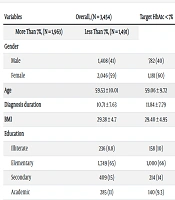
Factors Associated with Achieving HbA1c Targets in Patients with Type 2 Diabetes
Mehrabbeik A, Tofighi D, Khalilzadeh SH, Azizi R, Namiranian N, et al. Factors Associated with Achieving HbA1c Targets in Patients with Type 2 Diabetes. Jundishapur J Chronic Dis Care. 2024;13(4):e147903. doi: https://doi.org/10.5812/jjcdc-147903
- Scopus by DOI: 0
Last Update: 1 month ago
- Scopus by Title: 0
Last Update: 1 month ago
- Scopus by Title (Ref): 1
Last Update: 1 month ago
- CrossRef: 0
Last Update: 9 hours ago
- OpenAlex: 0
Last Update: 11 hours ago
- OpenCitations: 0
Last Update: 4 days ago
