Journal of Semnan University of Medical Sciences
Image Credit:Koomesh
Outline
Effects of treadmill grade and speed on medial gastrocnemius muscle activity in chronic stroke patients
Authors

Abstract
Introduction: Plantarflexor muscles produce propulsive force in the second half of stance phase deficient motor output from these muscles would lead to inadequate propulsion at push off phase of gait following stroke. It is important to develop strategies to improve plantarflexor output. This study examined the effects of walking on a treadmill at varying gradients and speeds on medial gastrocnemius (MG) muscle activation in stroke survivors. Materials and Methods: Nineteen stroke survivors (13M/6F: average age 55.37±7.54 years body mass index 29.10±4.52kg/m2) participated in the study. Participants walked on a standard treadmill at three different positive inclines (0°, 3°, and 6°) and speeds (self-selected, self-selected+20%, self-selected+40%). The electromyographic activity of MG recorded at push off phase of the gait. Results: A linear mixed model regression analysis was used to analysis. The paretic MG muscle activity increased at faster speeds irrespective of incline (p
Highlights
References
- 1.Andrews AW, Bohannon RW. Distribution of muscle strength impairments following stroke. Clin Rehabil 2000; 14: 79-87.
- 2.Knarr BA, Ramsay JW, Buchanan TS, Higginson JS, Binder-Macleod SA. Muscle volume as a predictor of maximum force generating ability in the plantar flexors post-stroke. Muscle Nerve 2013; 48: 971-976.
- 3.Flansbjer UB, Holmback AM, Downham D, Patten C, Lexell J. Reliability of gait performance tests in men and women with hemiparesis after stroke. J Rehabil Med 2005; 37: 75-82.
- 4.von Schroeder HP, Coutts RD, Lyden PD, Billings E, Jr. Nickel VL. Gait parameters following stroke: a practical assessment. J Rehabil Res Dev 1995; 32: 25-31.
- 5.Lay AN, Hass CJ, Gregor RJ. The effects of sloped surfaces on locomotion: a kinematic and kinetic analysis. J Biomech 2006; 39: 1621-1628.
- 6.Werner C, Lindquist AR, Bardeleben A, Hesse S. The influence of treadmill inclination on the gait of ambulatory hemiparetic subjects. Neurorehabil Neural Repair 2007; 21: 76-80.
- 7.Phadke CP. Immediate effects of a single inclined treadmill walking session on level ground walking in individuals after stroke. Am J Phys Med Rehabil 2012; 91: 337-345.
- 8.Leroux A, Fung J, Barbeau H. Adaptation of the walking pattern to uphill walking in normal and spinal-cord injured subjects. Exp Brain Res 1999; 126: 359-368.
- 9.Leroux A, Fung J, Barbeau H. Postural adaptation to walking on inclined surfaces: I. Normal strategies. Gait Posture 2002; 15: 64-74.
- 10.Mohammadi R, Phadke CP. The impact of incline and speed of treadmill on ankle muscle activity in middle- aged adults. J Bodyw Mov Ther 2016; 1-8 , In Press.
- 11.Franz JR, Kram R. The effects of grade and speed on leg muscle activations during walking. Gait Posture 2012; 35: 143-147.
- 12.Kim H, Her J, Ko J, Park D, Woo J, You Y, Choi Y. Reliability, concurrent validity, and responsiveness of the fugl-mayer assesment (FMA) for hemiplegic patients. J Phys Ther Sci 2012; 24: 893-899.
- 13.Singh P, Joshua AM, Ganeshan S, Suresh S. Intra-rater reliability of the modified Tardieu scale to quantify spasticity in elbow flexors and ankle plantar flexors in adult stroke subjects. Ann Indian Acad Neurol 2011; 14: 23-26.
- 14.Abolhasani H, Ansari NN, Naghdi S, Mansouri K, Ghotbi N, Hasson S. Comparing the validity of the modified modified ashworth scale (MMAS) and the modified tardieu scale (MTS) in the assessment of wrist flexor spasticity in patients with stroke: protocol for a neurophysiological study. BMJ Open 2012; 2: e001394.
- 15.Detrembleur C, Willems P, L P. Does walking speed influence the time pattern of muscle activation in normal children? Dev Med Child Neurol 1997; 39: 803-807.
- 16.Hermens HJ, Freriks B, Merletti R, Stegeman D, Blok J, Rau G, et al. SENIAM 8: European Recommendations for Surface Electromyography. 2nd ed. Enschede, The Netherlands: Roessingh Research and Development. 1999; 55-68.
- 17.Hall MJ, Levant S, DeFrances CJ. Hospitalization for stroke in U.S. hospitals, 1989-2009. NCHS data brief, No. 95. Hyattsville: National Center for Health Statistics; 2012.
- 18.Perry J, Garrett M, Gronley JK, Mulroy SJ. Classification of walking handicap in the stroke population. Stroke 1995; 26: 982-989.
- 19.Riemann BL, Myers JB, Lephart SM. Sensorimotor system measurement techniques. J Athl Train 2002; 37: 85-98.
- 20.Mohammadi R, Mohammadzadeh Nanehkaran S. The effect of increasing walking speed on ankle muscle co_contraction in patients post_stroke based on spasticity severity. Koomesh 2016. (Persian).
- 21.Wall-Scheffler CM, Chumanov E, Steudel-Numbers K, Heiderscheit B. Electromyography activity across gait and incline: The impact of muscular activity on human morphology. Am J Phys Anthropol 2010; 143: 601-611.
- 22.Kesar TM, Perumal R, Jancosko A, Reisman DS, Rudolph KS, Higginson JS, Binder-Macleod SA. Novel patterns of functional electrical stimulation have an immediate effect on dorsiflexor muscle function during gait for people poststroke. Phys Ther 2011; 90: 55-66.
- 23.Bohannon RW, Andrews AW, Glenney SS. Minimal clinically important difference for comfortable speed as a measure of gait performance in patients undergoing inpatient rehabilitation after stroke. JPhys Ther Sci 2013; 25: 1223-1225.
- 24.Lamontagne A, Fung J. Faster is better: implications for speed-intensive gait training after stroke. Stroke 2004; 35: 2543-2548##.
Copyright
© 2017, Author(s). This open-access article is available under the Creative Commons Attribution 4.0 (CC BY 4.0) International License (https://creativecommons.org/licenses/by/4.0/), which allows for unrestricted use, distribution, and reproduction in any medium, provided that the original work is properly cited.
Similar Articles
Effects of increasing walking speed on ankle muscle co-contraction based on spasticity severity in chronic stroke patients
Mohammadi R, Mohammadzadeh S. Effects of increasing walking speed on ankle muscle co-contraction based on spasticity severity in chronic stroke patients. koomesh. 2016;18(1):e151155. doi:
Effects of different walking speed on ankle muscle onset timing in middle-aged healthy adults
Mohammadi R, Rahnam L, Safavi-Farokhi Z. Effects of different walking speed on ankle muscle onset timing in middle-aged healthy adults. koomesh. 2016;18(2):e151134. doi:

The effect of strengthening exercises on biomechanical parameters of gait in chronic hemi paresis following stroke
Akbari A, Karimi H, Kazemnegad A, Ghabaii M. The effect of strengthening exercises on biomechanical parameters of gait in chronic hemi paresis following stroke. J Inflamm Dis. 2024;9(3):e155137. doi:
The Activation Pattern of Trunk and Lower Limb Muscles in an Electromyographic Assessment; Comparison Between Ground and Treadmill Walking
Mazaheri R, Sanjari MA, Radmehr G, Halabchi F, Angoorani H. The Activation Pattern of Trunk and Lower Limb Muscles in an Electromyographic Assessment; Comparison Between Ground and Treadmill Walking. Asian J Sports Med. 2016;7(3):e35308. doi: https://doi.org/10.5812/asjsm.35308
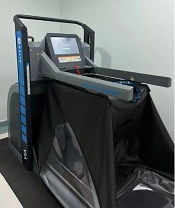
The Effectiveness of Lower-Body Positive Pressure Treadmill Gait Training on Mobility Function and Quality of Life in Individuals with Chronic Stroke: Prospective Cohort Study
Almutairi S. The Effectiveness of Lower-Body Positive Pressure Treadmill Gait Training on Mobility Function and Quality of Life in Individuals with Chronic Stroke: Prospective Cohort Study. Middle East J Rehabil Health Stud. 2023;10(2):e133833. doi: https://doi.org/10.5812/mejrh-133833
- Scopus by DOI: 0
Last Update: 3 days ago
- Scopus by Title: 1
Last Update: 3 days ago
- Scopus by Title (Ref): 1
Last Update: 3 days ago
- CrossRef: 0
Last Update: 7 hours ago
- OpenAlex: 0
Last Update: 9 hours ago
- OpenCitations: 0
Last Update: 4 days ago