Journal of Semnan University of Medical Sciences
Expression of ente rotoxigenic Escherichia coli heat-labile toxin B subunit ge ne in Salmonella typhimurium G30: immunization using an oral live delivery system
Authors
Abstract
Introduction . Attenuated Salmonella strains, such as S. typhimurium G30 have a great potential as live carriers for the de livery of heterologous ant igens to the immune system. Enterotoxigenic Escherichia coli (ETEC) is a major cause of diarrhea among children in developing countries as well as travelers to this area . Heat-l abi le toxin (LT), one of the most important pathogenesis factors of ETEC, is comprised of one A subu nit (LT-A) and five identical B subunit (LT-B). LT-B is responsible for bin ding the toxin to ganglioside GMI-receptor on the surface of int estinal epithelial cells and is a strong immunogen against ETEC mediated diarrhea. The aim of this study was to examine expre ssion of LT-B in S. typhimurium G30 under the control of two various promoter and examina tion of th at as oral live delivery system to elicit antibody resp onse in mice. Materials and Methods. Th e LT-B en coding gene in pTUCLTB and pTRCLTB plasmids were transformed into S. typhimurium G30 and named G30ULTB an d G30TLTB, respectively. Produced level of LT-B by each constructs were measured and structural and immunological characteristics of produced LT-B were studied by GMI ELISA and SDS-PAGE. Finally, ability of these construct s in indu ction of antibody response in C57/BL6 were compared. Results. The results confirmed th at the Salm onell a str ain could produce rLTB with correct conformati on and conserved the main char acteristic including pentameri c form, re ceptor binding ability and interaction with monoclonal antibodies. Our finding also showed an increasing level of antitoxin antibody in mice orally immunized with both G30TLTB and G30ULTB. Conclusion. In conclusion, S. typhimurium G30 could express LT-B in vivo, where the chemical induction is impractical and subsequently induce the antibody response. Modification of this system can result into development of an oral live vaccine against ETEC.
Highlights
Copyright
© 2000, Author(s). This open-access article is available under the Creative Commons Attribution 4.0 (CC BY 4.0) International License (https://creativecommons.org/licenses/by/4.0/), which allows for unrestricted use, distribution, and reproduction in any medium, provided that the original work is properly cited.
Similar Articles
Evaluation of the Effect of Promoter Type on the Immunogenicity of the Live Recombinant Salmonella Vaccines Expressing Escherichia Coli Heat-labile Enterotoxins (LTB)
Mohit E, Nasr R, Ghazvini K, Bandegi AR, Akbari Eidgahi MR. Evaluation of the Effect of Promoter Type on the Immunogenicity of the Live Recombinant Salmonella Vaccines Expressing Escherichia Coli Heat-labile Enterotoxins (LTB). Iran J Pharm Res. 2018;17(Suppl2):e126098. doi: https://doi.org/10.22037/ijpr.2018.2366
Cloning of fliC Gene From Salmonella typhimurium in the Expression Vector pVAX1 and Evaluation of its Expression in Eukaryotic Cells
Taherkhani R, Farshadpour F, Makvandi M, Samarbafzadeh AR. Cloning of fliC Gene From Salmonella typhimurium in the Expression Vector pVAX1 and Evaluation of its Expression in Eukaryotic Cells. Jundishapur J Microbiol. 2014;7(11):e12351. doi: https://doi.org/10.5812/jjm.12351
Production and Purification of Specific IgY Against InvG Protein of Salmonella typhimurium
Jahandar MH, Nassiri M, Nasiri K, Haghparast A. Production and Purification of Specific IgY Against InvG Protein of Salmonella typhimurium. Int J Infect. 2019;6(2):e87683. doi: https://doi.org/10.5812/iji.87683
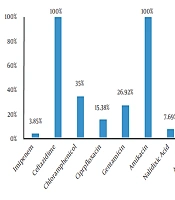
The Antibiotic Resistance Pattern and Prevalence of blaTEM, blaSHV, blaCTX-M, blaPSE-1, sipB/C, and cmlA/tetR Genes in Salmonella typhimurium Isolated from Children with Diarrhea in Tabriz, Iran
Jafari Sales A, Naebi S, Nasiri R, Bannazadeh-Baghi H. The Antibiotic Resistance Pattern and Prevalence of blaTEM, blaSHV, blaCTX-M, blaPSE-1, sipB/C, and cmlA/tetR Genes in Salmonella typhimurium Isolated from Children with Diarrhea in Tabriz, Iran. J Health Rep Technol. 2021;7(4):e118523. doi: https://doi.org/10.5812/ijhls.118523
Nasal immunogenicity induced by STxB and STxB-IpaD antigens in laboratory rats
Baranvand M, Honari H. Nasal immunogenicity induced by STxB and STxB-IpaD antigens in laboratory rats. koomesh. 2015;16(3):e151264. doi:
More by these authors
- Scopus by DOI: 0
Last Update: 3 weeks ago
- Scopus by Title: 0
Last Update: 3 weeks ago
- Scopus by Title (Ref): 0
Last Update: 3 weeks ago
- CrossRef: 0
Last Update: 2 hours ago
- OpenAlex: 0
Last Update: 7 hours ago
- OpenCitations: 0
Last Update: 4 days ago