Journal of Semnan University of Medical Sciences
Incidence and risk factors for wound disruption following cesarean section
Authors

Abstract
Introduction: Cesarean section is one of the most commonly performed surgical procedures in hospitals. The rates of surgical site infection after cesarean section reported in the literature range from 3% to 15 %. The aim of this study was to identify incidence and risk factors of wound disruption following cesarean delivery. Materials and Methods : A retrospective multistage study in two phases (the first stage a historical cohort and the second stage a case control) was carried out over a 6 year period from 21st March 2002 to 20th Feb 2008 in Mahdieh Tertiary Care Hospital. In the first stage, we identified wound disruption cases with using wound complication code in all cesarean sections were performed during this period. In the second phase of the study, risk factors associated with the wound disruption after cesarean section were evaluated and for each case two controls were selected. These controls were non complicated cesarean section patients just before and after each disrupted cesarean wound. Results : A total 10525 women who underwent cesarean section during this period, 48 (0.4%) were complicated by wound disruption. Using a multivariable logistic regression model, the following risk factors were identified: diabetes (P=0.02, OR: 5.46 95%CI: 1.02-49.2), hypertension disorders(P=0.001 OR: 5 95%CI: 1.7-14.3), emergency cesarean delivery (P=0.01 OR: 3.3 95%CI: 1.2-9.4), post cesarean fever (P=0.0001 OR: 16.2 95% CI: 4.4-59), and post cesarean laparatomy (P=0.013, OR: 6.3 95%CI: 6.3-62). Conclusion: Identification of the predictable risk factors for wound disruption and control of these factors may lead to decrease of wound disruption after cesarean section.
Highlights
Copyright
© 2011, Author(s). This open-access article is available under the Creative Commons Attribution 4.0 (CC BY 4.0) International License (https://creativecommons.org/licenses/by/4.0/), which allows for unrestricted use, distribution, and reproduction in any medium, provided that the original work is properly cited.
Similar Articles
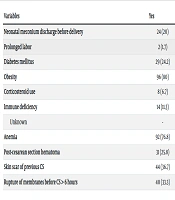
Prevalence and Risk Factors of Surgical Site Infection Following Cesarean Section
Rakhshani Moghaddam F, Razavi M, Delaramifar Z. Prevalence and Risk Factors of Surgical Site Infection Following Cesarean Section. J Kermanshah Univ Med Sci. 2025;29(1):e148572. doi: https://doi.org/10.5812/jkums-148572
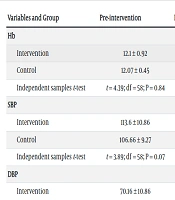
The Impact of a Care Bundle on the Prevention of Post-cesarean Surgical Site Infection
Borhanzehi S, Yaghoubinia F, Ghasemi M, Pishkar Mofrad Z. The Impact of a Care Bundle on the Prevention of Post-cesarean Surgical Site Infection. Med Surg Nurs J. 2023;12(4):e150616. doi: https://doi.org/10.5812/msnj-150616
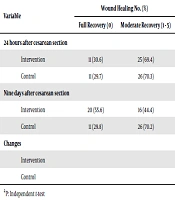
Effect of Self-care Training Program on Surgical Incision Wound Healing in Women Undergoing Cesarean Section: A Quasi-Experimental Study
Zarei MR, Rostami F, Bozorghnejad M, Mohaddes Ardebili F, Mamashli L, et al. Effect of Self-care Training Program on Surgical Incision Wound Healing in Women Undergoing Cesarean Section: A Quasi-Experimental Study. Med Surg Nurs J. 2020;9(4):e108800. doi: https://doi.org/10.5812/msnj.108800
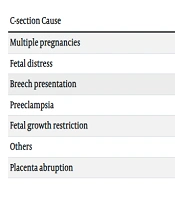
Factors Associated with Cesarean Section in Preterm Births at a Tertiary Hospital in Rasht, Iran
Milani F, Sharami SH, Attari SM, Rafiee Sorouri Z, Farzadi S, et al. Factors Associated with Cesarean Section in Preterm Births at a Tertiary Hospital in Rasht, Iran. J Kermanshah Univ Med Sci. 2024;28(2):e144362. doi: https://doi.org/10.5812/jkums-144362
Influence of placental removal method on the incidence of post-cesarean infections and operation duration
sekhavat L, Zare F, Naghshin N. Influence of placental removal method on the incidence of post-cesarean infections and operation duration. koomesh. 2024;9(4):e152205. doi:
- Scopus by DOI: 0
Last Update: 3 weeks ago
- Scopus by Title: 0
Last Update: 3 weeks ago
- Scopus by Title (Ref): 0
Last Update: 3 weeks ago
- CrossRef: 0
Last Update: 5 hours ago
- OpenAlex: 0
Last Update: 1 day ago
- OpenCitations: 0
Last Update: 4 days ago