Journal of Semnan University of Medical Sciences

Derivation of definitive endoderm from human induced pluripotent stem cells using signaling molecules
Authors

Abstract
Introduction: In recent years, the idea of being able to replace the destruction of insulin-producing beta cells of the pancreas by introducing new cells to repairthe damaged areas has become an accepted potential treatment for Diabetes mellitus. The idea to generate pluripotent stem (iPS) cells specific from diabetic patient and differentiate to insulin-producing cells has opened a new window to using of iPS cells as new source for cell therapy of diabetes without being worried about the immunologica rejection or ethical issues. Materials and Methods: In the present study, iPS cells were directly generated from the human conjunctive-stromal cells and they were subjected to embryoid body formation for 5 days and differntiatied to definitive endoderm cells usingActivin A and Wnt3a. Results: Differentiated cells were subjected to qRT-PCR using primers for FoxA2 and Sox17 genes as marker of definitive endoderm. Conclusion: To confirm the result in the level of protein the immucocytochemistry will be undertaken. In conclusionthe result of this study can clarify the effect of Activein A and Wnt3a in definitve endoderm derivation of iPS and will utilize these cells as precursors for cell therapy for hepatic and diabetics disease
Highlights
Copyright
© 2014, Author(s). This open-access article is available under the Creative Commons Attribution 4.0 (CC BY 4.0) International License (https://creativecommons.org/licenses/by/4.0/), which allows for unrestricted use, distribution, and reproduction in any medium, provided that the original work is properly cited.
Similar Articles
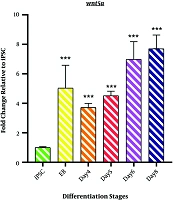
The Expression of Wnt5a Gene Throughout Definitive Endoderm Induction Process in Induced Pluripotent Stem Cells
Lorzadeh S, Azarpira N, Ghavami S, Kohan L. The Expression of Wnt5a Gene Throughout Definitive Endoderm Induction Process in Induced Pluripotent Stem Cells. Gene Cell Tissue. 2020;8(2):e110381. doi: https://doi.org/10.5812/gct.110381
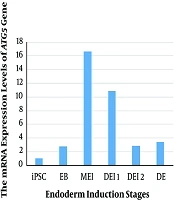
Evaluation of ATG5 Gene Expression in Human Induced Pluripotent Stem Cells During Endoderm Induction
Sabet A, Azarpira N, Ghavami S, Kohan L. Evaluation of ATG5 Gene Expression in Human Induced Pluripotent Stem Cells During Endoderm Induction. Gene Cell Tissue. 2020;8(1):e110361. doi: https://doi.org/10.5812/gct.110361
Effect of Dexamethasone, Insulin and EGF on the Myogenic Potential on Human Endometrial Stem Cell
Jalali Tehrani H, Parivar K, Ai J, Kajbafzadeh A, Rahbarghazi R, et al. Effect of Dexamethasone, Insulin and EGF on the Myogenic Potential on Human Endometrial Stem Cell. Iran J Pharm Res. 2014;13(2):e125517. doi: https://doi.org/10.22037/ijpr.2014.1498
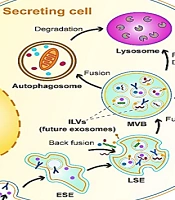
Exosomes as Biochemistry Tools for Stem Cell Differentiation: A Novel Cell-Based Treatment for Diseases
Azandeh S, Bijan Nejad D, Karimi S, Fakhredini F. Exosomes as Biochemistry Tools for Stem Cell Differentiation: A Novel Cell-Based Treatment for Diseases. Jentashapir J Cell Mol Biol. 2022;13(3):e131153. doi: https://doi.org/10.5812/jjcmb-131153
Effects of rat mesenchymal stem cells as a feeder layer in isolation and culture of mouse embryonic stem cells
forghani F, KodPoar M, Yaghmaei P, Kargar S, GhaziZadeh L. Effects of rat mesenchymal stem cells as a feeder layer in isolation and culture of mouse embryonic stem cells. koomesh. 2009;10(3):e152235. doi:
- Scopus by DOI: 0
Last Update: 1 week ago
- Scopus by Title: 1
Last Update: 1 week ago
- Scopus by Title (Ref): 1
Last Update: 1 week ago
- CrossRef: 0
Last Update: 8 hours ago
- OpenAlex: 0
Last Update: 9 hours ago
- OpenCitations: 0
Last Update: 5 days ago