Journal of Semnan University of Medical Sciences
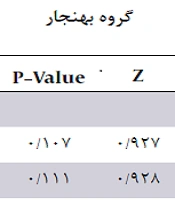
Image Credit:Koomesh
Outline
Executive Functions Profile in Children with Autism Spectrum Disorder, Attention Deficit/ Hyperactivity Disorder, Learning Disability, and Children with Typical Development
Authors

Abstract
Background: The executive functions are cognitive processes that support goal-directed behavior by regulating thoughts and actions through mental control and monitoring actions.
Objectives: This study was conducted to compare executive functions in children with autism spectrum disorder, attention deficit/hyperactivity disorder (ADHD), learning disability (LD) and their peers with typical development (TD).
Methods: This study was cross-sectional. The convenience sampling method was used for the selection of participants. The target population consisted of 98 boys and girls aged 8 to 11 years old with autism spectrum disorder, ADHD, LD, and their TD peers. They were students and were using rehabilitation services. To collect the data, the Tower of London test, Verbal subscale of Binet, and Strop test were used. Analysis was done by using multivariate analysis of variance and the Scheffe follow-up test.
Results: The findings showed that there is a significant difference between the three groups of autism, learning disability, and ADHD, with the TD group (P < 0.01), in executive function. On the other hand, there is a significant difference between the two groups of LD and ADHD with the autism group (P < 0.01). In behavior regulation, there was a significant difference between the ADHD and LD groups (P < 0.01). In cognitive flexibility, working memory, and inhibition, there was no significant difference between the LD and ADHD groups.
Conclusion: The findings indicated that Children with autism, ADHD, and LD have more executive function difficulties than their TD peers. There are differences between autism and ADHD, and also between autism with LD in executive function components. Based on the children’s problems, professionals, clinicians, and teachers can plan, prepare, and apply various interventions and treatment programs.
Highlights
References
- 1.Jones CRG, Simonoff E, Baird G, Pickles A, Marsden AJS, Tregay J, et al. The association between theory of mind, executive function, and the symptoms of autism spectrum disorder. Autism Res. 2018;11(1):95-109. [PubMed ID:28945319]. https://doi.org/10.1002/aur.1873.
- 2.Diamond A. Executive functions. Annu Rev Psychol. 2013;64:135-68. [PubMed ID:23020641]. [PubMed Central ID:PMC4084861]. https://doi.org/10.1146/annurev-psych-113011-143750.
- 3.Germano GD, Brito LB, Capellini SA. Opinião de pais e de professores de escolares com transtornos de aprendizagem quanto às habilidades de funções executivas. Revista CEFAC. 2017;19:674-82.
- 4.Cortes Pascual A, Moyano Munoz N, Quilez Robres A. The Relationship Between Executive Functions and Academic Performance in Primary Education: Review and Meta-Analysis. Front Psychol. 2019;10:1582. [PubMed ID:31354585]. [PubMed Central ID:PMC6638196]. https://doi.org/10.3389/fpsyg.2019.01582.
- 5.Williams R, Andreassi S, Moselli M, Fantini F, Tanzilli A, Lingiardi V, et al. Relationship between Executive Functions, Social Cognition, and Attachment State of Mind in Adolescence: An Explorative Study. Int J Environ Res Public Health. 2023;20(4). [PubMed ID:36833531]. [PubMed Central ID:PMC9957111]. https://doi.org/10.3390/ijerph20042836.
- 6.Chen SF, Chien YL, Wu CT, Shang CY, Wu YY, Gau SS. Deficits in executive functions among youths with autism spectrum disorders: an age-stratified analysis. Psychol Med. 2016;46(8):1625-38. [PubMed ID:26997535]. [PubMed Central ID:PMC4873936]. https://doi.org/10.1017/S0033291715002238.
- 7.Shooshtari MH, Salehi H, Nobakht N, Nazari M, Hamidia A. [The effectiveness of educational help for parents on reading performance of students with learning disorders of reading]. Koomesh. 2017;20(4):786-91. Persian.
- 8.Blume J, Kahathuduwa C, Mastergeorge A. Intrinsic Structural Connectivity of the Default Mode Network and Behavioral Correlates of Executive Function and Social Skills in Youth with Autism Spectrum Disorders. J Autism Dev Disord. 2023;53(5):1930-41. [PubMed ID:35141816]. https://doi.org/10.1007/s10803-022-05460-y.
- 9.Gentil-Gutierrez A, Cuesta-Gomez JL, Rodriguez-Fernandez P, Gonzalez-Bernal JJ. Implication of the Sensory Environment in Children with Autism Spectrum Disorder: Perspectives from School. Int J Environ Res Public Health. 2021;18(14). [PubMed ID:34300120]. [PubMed Central ID:PMC8306690]. https://doi.org/10.3390/ijerph18147670.
- 10.Fossum IN, Andersen PN, Oie MG, Skogli EW. Development of executive functioning from childhood to young adulthood in autism spectrum disorder and attention-deficit/hyperactivity disorder: A 10-year longitudinal study. Neuropsychology. 2021;35(8):809-21. [PubMed ID:34570540]. https://doi.org/10.1037/neu0000768.
- 11.Zendarski N, Mensah F, Hiscock H, Sciberras E. Trajectories of Emotional and Conduct Problems and Their Association With Early High School Achievement and Engagement for Adolescents With ADHD. J Atten Disord. 2021;25(5):623-35. [PubMed ID:30832528]. https://doi.org/10.1177/1087054719833167.
- 12.Dominguez O, Carugno P. Learning Disability. Treasure Island (FL): StatPearls Publishing; 2025.
- 13.Schuchardt K, Maehler C, Hasselhorn M. Working memory deficits in children with specific learning disorders. J Learn Disabil. 2008;41(6):514-23. [PubMed ID:18625783]. https://doi.org/10.1177/0022219408317856.
- 14.Cartwright KB. Insights from cognitive neuroscience: The importance of executive function for early reading development and education. Early Educ Dev. 2012;23(1):24-36.
- 15.Cragg L, Gilmore C. Skills underlying mathematics: The role of executive function in the development of mathematics proficiency. Trends Neuroscience Educ. 2014;3(2):63-8. https://doi.org/10.1016/j.tine.2013.12.001.
- 16.Graham S, Harris KR, Olinghouse N. Addressing executive function problems in writing. New York, USA: The Guilford Press; 2007.
- 17.Bahrami S, Abharian PH, Soureshjani AA. [Examining the effectiveness of improving working memory on reading skill in children with dyslexia]. Koomesh. 2023;25(4):518-26. Persian.
- 18.Kamkari K, Afrooz G, Davaee M, Shokrzadeh S. [Applicable guidance for Tehran Stanford-Binet Test]. Tehran, Iran: University of Tehran Publication; 2012.
- 19.Injoque-Ricle I, Burin DI. Validez y fiabilidad de la prueba de Torre de Londres para niños: Un estudio preliminar. Revista Argentina de Neuropsicología. 2008;11:21-31.
- 20.Nejati V, Sharifian M, Barzegar B, Rabiee F, Shokoufefard S, Fathi E, et al. [Evaluation of the validity of a set of executive functions’ tests in a sample of iranian children]. Quarterly Appl Psychol. 2021;257:2. Persian.
- 21.Gentil-Gutierrez A, Santamaria-Pelaez M, Minguez-Minguez LA, Gonzalez-Santos J, Fernandez-Solana J, Gonzalez-Bernal JJ. Executive Functions in Children and Adolescents with Autism Spectrum Disorder, Grade 1 and 2, vs. Neurotypical Development: A School View. Int J Environ Res Public Health. 2022;19(13). [PubMed ID:35805641]. [PubMed Central ID:PMC9265427]. https://doi.org/10.3390/ijerph19137987.
- 22.Corbett BA, Constantine LJ, Hendren R, Rocke D, Ozonoff S. Examining executive functioning in children with autism spectrum disorder, attention deficit hyperactivity disorder and typical development. Psychiatry Res. 2009;166(2-3):210-22. [PubMed ID:19285351]. [PubMed Central ID:PMC2683039]. https://doi.org/10.1016/j.psychres.2008.02.005.
- 23.Baddeley A. Working memory: theories, models, and controversies. Annu Rev Psychol. 2012;63:1-29. [PubMed ID:21961947]. https://doi.org/10.1146/annurev-psych-120710-100422.
- 24.Rosenthal EN, Riccio CA, Gsanger KM, Jarratt KP. Digit Span components as predictors of attention problems and executive functioning in children. Arch Clin Neuropsychol. 2006;21(2):131-9. [PubMed ID:16198530]. https://doi.org/10.1016/j.acn.2005.08.004.
- 25.Geurts HM, Verte S, Oosterlaan J, Roeyers H, Sergeant JA. How specific are executive functioning deficits in attention deficit hyperactivity disorder and autism? J Child Psychol Psychiatry. 2004;45(4):836-54. [PubMed ID:15056314]. https://doi.org/10.1111/j.1469-7610.2004.00276.x.
- 26.Hinshaw SP, Carte ET, Fan C, Jassy JS, Owens EB. Neuropsychological functioning of girls with attention-deficit/hyperactivity disorder followed prospectively into adolescence: evidence for continuing deficits? Neuropsychology. 2007;21(2):263-73. [PubMed ID:17402826]. [PubMed Central ID:PMC2930979]. https://doi.org/10.1037/0894-4105.21.2.263.
- 27.Heiervang E, Hugdahl K. Impaired visual attention in children with dyslexia. J Learn Disabil. 2003;36(1):68-73. [PubMed ID:15490893]. https://doi.org/10.1177/00222194030360010801.
- 28.Cools R. Neuropsychopharmacology of Cognitive Flexibility. Brain Mapping; 2015. p. 349-53.
- 29.Van Eylen L, Boets B, Steyaert J, Evers K, Wagemans J, Noens I. Cognitive flexibility in autism spectrum disorder: Explaining the inconsistencies? Res Autism Spectrum Disord. 2011;5(4):1390-401. https://doi.org/10.1016/j.rasd.2011.01.025.
- 30.de Sonneville LMJ, Hidding E, van Engeland H, Vorstman JAS, Sijmens-Morcus MEJ, Swaab H. [Formula: see text]Executive functioning and its relation to ASD and ADHD symptomatology in 22q11.2 deletion syndrome. Child Neuropsychol. 2018;24(1):1-19. [PubMed ID:27608887]. https://doi.org/10.1080/09297049.2016.1221064.
- 31.Gur RE, Yi JJ, McDonald-McGinn DM, Tang SX, Calkins ME, Whinna D, et al. Neurocognitive development in 22q11.2 deletion syndrome: comparison with youth having developmental delay and medical comorbidities. Mol Psychiatry. 2014;19(11):1205-11. [PubMed ID:24445907]. [PubMed Central ID:PMC4450860]. https://doi.org/10.1038/mp.2013.189.
- 32.Merchán-Naranjo J, Boada L, del Rey-Mejías Á, Mayoral M, Llorente C, Arango C, et al. Executive function is affected in autism spectrum disorder, but does not correlate with intelligence. Revista de Psiquiatría y Salud Mental (English Edition). 2016;9(1):39-50. https://doi.org/10.1016/j.rpsmen.2016.01.001.
- 33.van Tol MJ, van der Wee NJ, Demenescu LR, Nielen MM, Aleman A, Renken R, et al. Functional MRI correlates of visuospatial planning in out-patient depression and anxiety. Acta Psychiatr Scand. 2011;124(4):273-84. [PubMed ID:21480834]. https://doi.org/10.1111/j.1600-0447.2011.01702.x.
- 34.Hofmann W, Schmeichel BJ, Baddeley AD. Executive functions and self-regulation. Trends Cogn Sci. 2012;16(3):174-80. [PubMed ID:22336729]. https://doi.org/10.1016/j.tics.2012.01.006.
- 35.Leung RC, Vogan VM, Powell TL, Anagnostou E, Taylor MJ. The role of executive functions in social impairment in Autism Spectrum Disorder. Child Neuropsychol. 2016;22(3):336-44. [PubMed ID:25731979]. https://doi.org/10.1080/09297049.2015.1005066.
- 36.van Lier PA, Deater-Deckard K. Children's Elementary School Social Experience and Executive Functions Development: Introduction to a Special Section. J Abnorm Child Psychol. 2016;44(1):1-6. [PubMed ID:26687502]. https://doi.org/10.1007/s10802-015-0113-9.
- 37.Mason LH, Harris KR, Graham S. Self-Regulated Strategy Development for Students With Writing Difficulties. Theory Into Practice. 2011;50(1):20-7. https://doi.org/10.1080/00405841.2011.534922.
- 38.Shimoni M, Engel-Yeger B, Tirosh E. Executive dysfunctions among boys with Attention Deficit Hyperactivity Disorder (ADHD): performance-based test and parents report. Res Dev Disabil. 2012;33(3):858-65. [PubMed ID:22230238]. https://doi.org/10.1016/j.ridd.2011.12.014.
- 39.Pezzica S, Vezzani C, Pinto G. Metacognitive knowledge of attention in children with and without ADHD symptoms. Res Dev Disabil. 2018;83:142-52. [PubMed ID:30205249]. https://doi.org/10.1016/j.ridd.2018.08.005.
- 40.Harris KR, Danoff Friedlander B, Saddler B, Frizzelle R, Graham S. Self-Monitoring of Attention Versus Self-Monitoring of Academic Performance. J Special Educ. 2005;39(3):145-57. https://doi.org/10.1177/00224669050390030201.
- 41.Yon-Hernandez JA, Canal-Bedia R, Wojcik DZ, Garcia-Garcia L, Fernandez-Alvarez C, Palacio-Duque S, et al. Executive functions in daily living skills: A study in adults with autism spectrum disorder. Front Psychol. 2023;14:1109561. [PubMed ID:37113122]. [PubMed Central ID:PMC10127455]. https://doi.org/10.3389/fpsyg.2023.1109561.
- 42.Ghaemi F, Rostami R, Mirkamali SM, Salehi K. [Systematic and analytical review of theories, components and models of executive functions of the brain]. Rooyesh-e-Ravanshenasi J. 2021;10(6):211-26. Persian.
Copyright
© 2025, Author(s). This open-access article is available under the Creative Commons Attribution 4.0 (CC BY 4.0) International License (https://creativecommons.org/licenses/by/4.0/), which allows for unrestricted use, distribution, and reproduction in any medium, provided that the original work is properly cited.
Similar Articles
Comparing Response Inhibition and Flexibility for Two Components of Executive Functioning in Children with Autism Spectrum Disorder and Normal Children
Pooragha F, Kafi S, Sotodeh S. Comparing Response Inhibition and Flexibility for Two Components of Executive Functioning in Children with Autism Spectrum Disorder and Normal Children. Inn J Pediatr. 2013;23(3):. doi:
Relationship Between Sustained, Selective and Shifting Attention and Behavioral Symptoms in Children With High-Functioning Autism
Shiri V, Hosseini AS, Tahmasebi A, Pishyareh E, Shiri E, et al. Relationship Between Sustained, Selective and Shifting Attention and Behavioral Symptoms in Children With High-Functioning Autism. Arch Neurosci. 2015;2(4):e25066. doi: https://doi.org/10.5812/archneurosci.25066
Behavioral Profile of Executive Dysfunction in Children and Adolescents with Autism Spectrum Disorder
Mahdavi H, Shahrivar Z, Tehrani-Doost M, Fatholahi Y, Jahanitabesh A, et al. Behavioral Profile of Executive Dysfunction in Children and Adolescents with Autism Spectrum Disorder. Iran J Psychiatry Behav Sci. 2017;11(3):e6218. doi: https://doi.org/10.5812/ijpbs.6218
Comparing the Executive Functions of Mothers with and Without Autistic Children
Moradi N, Bakhshani N, Sarani Yaztappeh J. Comparing the Executive Functions of Mothers with and Without Autistic Children. Iran J Psychiatry Behav Sci. 2021;15(1):e104092. doi: https://doi.org/10.5812/ijpbs.104092
Effectiveness of working memory training on the executive functions of children with high function autism spectrum disorder
javadhemmati M, Sajedi F, Vahedi M, Haghgoo HA. Effectiveness of working memory training on the executive functions of children with high function autism spectrum disorder. koomesh. 2021;23(2):e153261. doi:
- Scopus by DOI: 1
Last Update: 2 weeks ago
- Scopus by Title: 1
Last Update: 2 weeks ago
- Scopus by Title (Ref): 1
Last Update: 2 weeks ago
- CrossRef: 0
Last Update: 6 days ago
- OpenAlex: 0
Last Update: 1 day ago
- OpenCitations: 0
Last Update: 4 days ago
