Journal of Semnan University of Medical Sciences
Biological properties, therapeutic and diagnostic applications of Samarium and Samarium nanoparticles
Authors
Abstract
Biological properties, therapeutic and diagnostic applications of Samarium and Samarium nanoparticles
Zahra Ghodrati , Adeleh Divsalar
Abstract: (4248 Views)
Lanthanides are a family of elements, commonly known as rare earth elements. Metal samarium as one of the most important member of this family, which plays very important roles in the diagnosis and treatment of various diseases, especially cancer. Several lanthanide complexes, samarium in particular, have shown anticancer effects on tumor cells. This paper is tried to review the biological properties and applications of Samarium salt and Samarium nanoparticles. Samarium is also used for magnetic resonance imaging (MRI) due to its paramagnetic properties. Samarium-containing compounds have also been used in osteoblastic metastases radiotherapy, a causative agent of cancer-induced bone pain, as an effective treatment agent for the treatment of bone marrow cancer, for drug delivery in patients with ulcerative colitis and Crohn's disease, as a tracer in the drug delivery system in colon, as a therapeutic agent in patients with prostate and breast cancers, in radiotherapy of malignant liver cancer, and many other therapeutic and diagnostic applications. Antimicrobial (anti-bacterial and fungal) properties have also been observed in Samarium nanoparticles. According to excellent properties of samarium nanoparticle, it might be suggested that in future, the new drug delivery systems or diagnostic systems will be designed for treatment of various diseases
Highlights
Copyright
© 2021, Author(s). This open-access article is available under the Creative Commons Attribution 4.0 (CC BY 4.0) International License (https://creativecommons.org/licenses/by/4.0/), which allows for unrestricted use, distribution, and reproduction in any medium, provided that the original work is properly cited.
Similar Articles
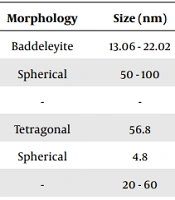
A Review of Toxicity Studies of Zirconium and Its Derivatives
Shirani M, Azadnasab R, Baradaran M, Shariati S. A Review of Toxicity Studies of Zirconium and Its Derivatives. Jundishapur J Nat Pharm Prod. 2023;18(4):e137464. doi: https://doi.org/10.5812/jjnpp-137464
Antifungal Activity of Selenium Nanoparticles Synthesized by Bacillus species Msh-1 Against Aspergillus fumigatus and Candida albicans
Shakibaie M, Salari Mohazab N, Ayatollahi Mousavi SA. Antifungal Activity of Selenium Nanoparticles Synthesized by Bacillus species Msh-1 Against Aspergillus fumigatus and Candida albicans. Jundishapur J Microbiol. 2015;8(9):e26381. doi: https://doi.org/10.5812/jjm.26381
Preparation and Biodistribution Studies of a Radiogallium-Acetylacetonate Bis (Thiosemicarbazone) Complex in Tumor-Bearing Rodents
Jalilian AR, Yousefnia H, Shafaii K, Novinrouz A, Rajamand AA. Preparation and Biodistribution Studies of a Radiogallium-Acetylacetonate Bis (Thiosemicarbazone) Complex in Tumor-Bearing Rodents. Iran J Pharm Res. 2012;11(2):e125870. doi: https://doi.org/10.22037/ijpr.2012.1090
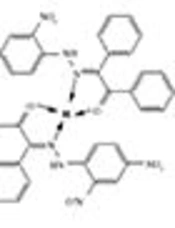
Synthesis, Spectroscopic Characterization, Coordination, and Antimicrobial Activity of Some Metal Complexes Derived From 1, 2-Diphenylethane-1, 2-dione and Dinitrophenyl Hydrazine Schiff Base Ligand
Gull P, Ikbal Ahmad Talukdar M, Ahmad Dar O, Ahmad Malik M, Adil Hashmi A. Synthesis, Spectroscopic Characterization, Coordination, and Antimicrobial Activity of Some Metal Complexes Derived From 1, 2-Diphenylethane-1, 2-dione and Dinitrophenyl Hydrazine Schiff Base Ligand. Jundishapur J Nat Pharm Prod. 2018;13(1):e67179. doi: https://doi.org/10.5812/jjnpp.67179
Nanotechnology application in cancer treatment
shamsi F. Nanotechnology application in cancer treatment. koomesh. 2019;21(4):e153119. doi:
- Scopus by DOI: 0
Last Update: 1 month ago
- Scopus by Title: 1
Last Update: 1 month ago
- Scopus by Title (Ref): 1
Last Update: 1 month ago
- CrossRef: 0
Last Update: 4 hours ago
- OpenAlex: 0
Last Update: 7 hours ago
- OpenCitations: 0
Last Update: 4 days ago
