Fulltext
-
Image Credit:Med Surg Nurs J
Authors
Background: Chlorhexidine is a common and safe antibacterial agent applied for hand hygiene and skin decontamination. Given the fact that the majority of nosocomial infections are observed in the special units of hospitals, this study aimed to assess the effect of daily chlorhexidine bath on skin colonization of the patients in the Intensive Care Unit (ICU).
Methods: This quasi-experimental study was conducted on 80 patients admitted to ICU of a teaching hospital affiliated to Zahedan University of Medical Sciences, Iran, in 2016. Patients were selected through convenience sampling and were non-randomly divided into the two groups of intervention and control, each of which consisting of 40 individuals. Patients of the intervention group were bathed with a sponge soaked with chlorhexidine 2% solution daily for five days, whereas subjects of the control group received no particular skin bath or disinfecting intervention.
Results: The positive results of the first culture were not significantly different (P=0.63). However, 100% of the control subjects and 7.5% of the participants in the intervention group had positive results in the second culture. Fisher’s exact test indicated that the difference between the two groups was significant in this regard (P<0.001).
Conclusion: Given the reducing effect of bathing with chlorhexidine 2% on skin colonization and superficial skin infections, this method could be recommended as an approach for decreasing the risk of nosocomial infections in patients admitted to ICUs. However, further studies are suggested to evaluate these effects more precisely.
© 2030, Author(s). This open-access article is available under the Creative Commons Attribution 4.0 (CC BY 4.0) International License (https://creativecommons.org/licenses/by/4.0/), which allows for unrestricted use, distribution, and reproduction in any medium, provided that the original work is properly cited.
Zandiyeh M. Comparison of disinfectant effect of Decosept and Betadine-ethanol on hand bacterial flora. Med Surg Nurs J. 2014;3(3):e87955. doi:

Sarani H, Moulaei N, Ebrahimi Tabas E, Safarzai E, Jahani S. Comparison of the Effects of Alcohol, Chlorhexidine and Alcohol-Chlorhexidine on Local Catheter-Related Infections Rate: A Double-Blind Clinical Trial Study. Med Surg Nurs J. 2018;7(2):e85962. doi: https://doi.org/10.5812/msnj.85962
Siroosbakht S, Aarabi N, Rezakhaniha B. Bathing or Not Bathing: Which Is Better for Umbilical Cord Separation Time and Bacterial Colonization in Neonates?. Arch Pediatr Infect Dis. 2021;9(2):e104100. doi: https://doi.org/10.5812/pedinfect.104100
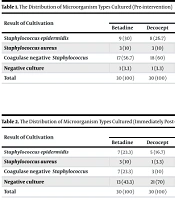
Eslami M, Ahmadpanahi S, Asgari MR, Ghods AA. Hand Scrub Methods and Their Effect on Bacterial Flora. J Microbiota. 2024;1(3):e154352. doi: https://doi.org/10.5812/jmb-154352
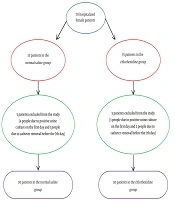
Sarani H, Pishkar Mofrad Z, Faghihi H, Ghabimi M. Comparison of the Effect of Perineal Care with Normal Saline and 2% Chlorhexidine Solution on the Rate of Catheter-Associated Urinary Tract Infection in Women Hospitalized in Intensive Care Units: A Quasi-Experimental Study. Med Surg Nurs J. 2020;9(2):e106739. doi: https://doi.org/10.5812/msnj.106739
Last Update: 2 days ago
Last Update: 2 days ago
Last Update: 2 days ago
Last Update: 4 hours ago
Last Update: 8 hours ago
Last Update: 4 days ago