Fulltext
-
Image Credit:Med Surg Nurs J
Authors
Background: The improvement of the diabetic patients’ quality of life and detection of the associated influential factors are some of the most important goals of the health care system. Self-efficacy is one of the variables that can affect the quality of life; however, there is no sufficient evidence about the componential effect of this variable on the quality of life of the patients, especially adolescents, with diabetes. Regarding this, the present study aimed to predict the quality of life in the adolescents with diabetes mellitus based on their self-efficacy.
Methods: This correlational study was conducted on the diabetic adolescents, who referred to the diabetes clinic of Zahedan, Iran, in 2016. In total, 100 adolescents were selected using the census method. The data were collected using the Diabetes Quality of Life for Youth questionnaire and self-efficacy scale for diabetes management through self-report. The data analysis was performed in the SPSS version 18 using the descriptive statistics, Pearson’s correlation coefficient, and multiple regression.
Results: In this study, the mean scores of the quality of life and self-efficacy were 54.61±5.15 and 45.84±10.53, respectively. According to the results, there was a direct relationship between the total self-efficacy score and the subscale of satisfaction with quality of life (P<0.001, r=0.49). Nevertheless, the total self-efficacy score showed an indirect correlation with other subscales, including the effect of treatment on the quality of life (P<0.001, r=-0.35), disease symptoms (P=0.04, r=-0.20), and the effect of diabetes on patient’s activities (P<0.001, r=-0.33). The results of the regression analysis indicated that all the variables of self-efficacy were able to predict the changes in the quality of life. Moreover, the results of the multiple regression revealed that the medical treatment had a significant impact on the patients’ quality of life (P<0.001)
Conclusion: Given the fact that the medical care component could predict the quality of life in the adolescents with diabetes, it is recommended to pay special attention to various aspects of this component in the health care programs held for this population.
© 2017, Author(s). This open-access article is available under the Creative Commons Attribution 4.0 (CC BY 4.0) International License (https://creativecommons.org/licenses/by/4.0/), which allows for unrestricted use, distribution, and reproduction in any medium, provided that the original work is properly cited.
Bazpour M, Rostampour S, Kamel-Khodabandeh A. Assessment of Quality of Life and Self-care Behaviors in Patients with Type 2 Diabetes Mellitus in Mashhad, Iran. Jundishapur J Chronic Dis Care. 2021;10(1):e105910. doi: https://doi.org/10.5812/jjcdc.105910
Akbari F, Molavynejad S, Rokhafroz D, Sharif Nia H. Effect of Diabetes Distress and Self-care Activities on the Quality of Life of Type 2 Diabetic Patients: A Structural Equation Model. Jundishapur J Chronic Dis Care. 2022;11(1):e119982. doi: https://doi.org/10.5812/jjcdc.119982
Khalooei A, Hasheminejad Z. Association of Diabetes Management Self-efficacy with Adherence to Medication, Glycemic Control, and Disease Outcomes Among Type 2 Diabetes Patients. Shiraz E-Med J. 2023;24(10):e138227. doi: https://doi.org/10.5812/semj-138227
Ghodrati Mirkouhi M, Rahimian-Boogar I. Predicting diabetes management self-efficacy base on hardiness and coping strategies in patients with type 2 diabetes mellitus. J Inflamm Dis. 2024;20(4):e155981. doi:
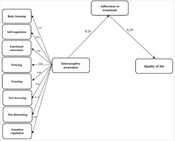
Hosseini SM, Makvandi B, Sevari K, Bakhtiarpour S. The Mediating Role of Adherence to Treatment in the Relationship between Interoceptive Awareness and Quality of Life in Patients with Diabetes. J Health Rep Technol. 2023;9(4):e140210. doi: https://doi.org/10.5812/jhrt-140210
Last Update: 3 days ago
Last Update: 3 days ago
Last Update: 3 days ago
Last Update: 4 hours ago
Last Update: 8 hours ago
Last Update: 4 days ago