


Full Text
Full text is available in PDF
Nephro-Urology Monthly
Background and Aims: Non-calculus presentations of hyperoxaluria (HX) and Hyperuricosuria (HU) are not common. The aim of this study was to investigate the relationship of symptomatic non-calculous idiopathic HX, HU and both of them with dysuria, failure to thrive (FTT), recurrent urinary tract infection (UTI), dysmorphic RBCs, and abdominal pain in children.
Methods: A cross sectional study was done on 58 children who were age less than 14 years with history of persistent microscopic or macroscopic hematuria with HX and/or HU, regardless of having renal calculi, between October 2007 and October 2008. The patients were divided into three groups according to the type of crystalluria (I, 10 HX; II, 20 HU; and III, 28 HX+HU).
Results: The common presenting symptoms were abdominal pain (63%) and dysuria (45%). FTT was frequently occurred in female (68%). No significant relation was seen between the groups in terms of gender, macroscopic hematuria and recurrent UTI. We found that dysuria, positive family history, FTT, abdominal pain and dysmorphic RBCs in patients with HX were higher when compared to HU group. Moreover, logistic regression analysis showed the higher odds ratio of FTT, abdominal pain and dysmorphic RBCs in patients with HX+HU group when compared to individuals with HU.
Conclusion: Although our study showed that non calculus symptoms and signs of crystaluria such as dysmorphic RBCs, FTT, abdominal pain and dysuria are frequently seen in children with HX, but further studies are needed.
© 2009, Author(s). This open-access article is available under the Creative Commons Attribution 4.0 (CC BY 4.0) International License (https://creativecommons.org/licenses/by/4.0/), which allows for unrestricted use, distribution, and reproduction in any medium, provided that the original work is properly cited.
Yazdiha MS, Behshad J, Hoseini SM, Razavi M, Emadi A, et al. Relationship between idiopathic hypercalciuria and urinary tract infection in children of 1-14 years of age. koomesh. 2016;18(1):e151156. doi:
Khoddami M, Esfandiar N, Kazemi Aghdam M. Primary Hyperoxaluria: A Case Report and Review of the Literature. J Compr Ped. 2017;8(1):e44085. doi: https://doi.org/10.5812/compreped.44085
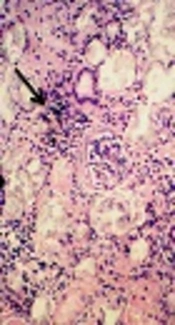
Fathi P, Pourbaktyaran E, Tasdighi E, Esfandiar N, Kazemi Aghdam M. An Unusual Presentation of a Child with Hyperoxaluria. Arch Pediatr Infect Dis. 2019;7(1):e67357. doi: https://doi.org/10.5812/pedinfect.67357
Yousefichaijan P, Sadeghi Sedeh B, Taherahmadi H, Malekee H, Poor Seyedreza P. Assessment of idiopathic Hypercalciuria in Girls kids with Infrequent Voiding (Underactive Bladder). J Compr Ped. 2017;8(3):e62615. doi: https://doi.org/10.5812/compreped.62615
Mohammadjafari H, Barzin M, Salehifar E, Khademi Kord M, Aalaee A, et al. Etiologic and Epidemiologic Pattern of Urolithiasis in North Iran; Review of 10-Year Findings. Inn J Pediatr. 2014;24(1):. doi:
Last Update: 3 weeks ago
Last Update: 3 weeks ago
Last Update: 3 weeks ago
Last Update: 1 day ago
Ordering Reprints
Articles are published under the Creative Commons license stated on each article. No permission or royalty fee is required for uses permitted by that license. CCC handles optional bulk and customized reprint orders. Any quotation covers production and delivery services only, not copyright permission. > Request Reprints from CCC
Author(s):