Fulltext
This part is available in the PDF file.
Authors
A 33 year old man with unknown cause of end stage renal disease received a renal graft from a deceased donor. Triple immunosuppression with cyclosporine A (CyA), mycophenolate mofetil and prednisone was prescribed. Four months after transplantation the patient developed general weakness, fever, diarrhea and bleeding to the intestinal tract leading to severe anemia. Due to the fact that no bleeding site was found during gastroduodenoscopy and colonoscopy, open surgery was performed and revealed bleeding ulcerations in small intestine. Partial resection of small intestine and hemicolectomy was performed and histopathological examination revealed Kaposi’s sarcoma (KS) infiltration in the ulceration. CyA was withdrawn and rapamycine started. After 4 years post surgery the patient has been doing well, without symptoms of KS.
© 2011, Author(s). This open-access article is available under the Creative Commons Attribution 4.0 (CC BY 4.0) International License (https://creativecommons.org/licenses/by/4.0/), which allows for unrestricted use, distribution, and reproduction in any medium, provided that the original work is properly cited.
Razeghi E, Haddadi A. Renal Transplantation and Kaposi’s Sarcoma: Report of Three Cases. J Kermanshah Univ Med Sci. 2007;10(4):e81858. doi:
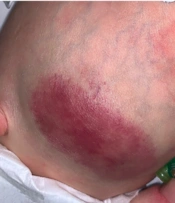
Adams LEH, Wang K, Ryan E. Successful Management of Neonatal Kaposiform Haemangioendothelioma and Kasabach-Merritt Phenomenon Using Sirolimus and Surgical Excision. J Skin Stem Cell. 2023;10(3):e139177. doi: https://doi.org/10.5812/jssc-139177
Aminzadeh Z, Yousefi M, Nasiri S. Aggressive Kaposi Sarcoma in a New Case of HIV; Case Report and Review of the Literature. Arch Clin Infect Dis. 2009;4(3):. doi:
Hosseinzadeh M, Raisjalali G, Daneshyar Z. Gastrointestinal Tuberculosis in a Renal Transplant Recipient Presenting with Intestinal Perforation. Zahedan J Res Med Sci. 2012;14(8):e93246. doi:
Huang L, Yan Hu Y, Zhang R. Multi-Sites Infection Caused by Klebsiella pneumoniae After Hemopoietic Stem Cell Transplantation. Jundishapur J Microbiol. 2017;10(8):e12933. doi: https://doi.org/10.5812/jjm.12933
Last Update: 1 month ago
Last Update: 1 month ago
Last Update: 1 month ago
Last Update: 9 hours ago