Full Text
Full text is available in PDF
Authors
Distal radius fracture represent approximately one-sixth of all fractures treated in emergency departments. According to high incidence rate, different mechanisms of injury and new treatments for this fracture, it is becoming one of the most challenging of all kinds of fractures.
to compare treatment outcome of traditional cast immobilization versus modern percutaneous pinning procedure in patients with distal radius fractures.
In this randomized clinical trial study, 198 patients with "displaced but stable distal radius fracture without joint incongruity", were split into two groups and each group was treated by one of the following standard protocols: A- Closed reduction + Long arm cast; B- Closed reduction and Percutaneous pinning and Short arm cast. The patients were followed up after operation for three months from the point of view of: 1- satisfaction(based on Saito chart) 2-Loss of Reduction 3- Finger stiffness 4- Pin tract infection and 5-The mean of post operation follow up visits. For statistical analysis the Fisher's exact test and chi-square test were used by SPSS software16
In group A, six cases of loss of reduction were detected in the first week who were treated by re-reduction and P.C pinning procedure; But no cases of loss of reduction were diagnosed in group B. Satisfaction percentage for Excellent value was 81.8% in group A and 93.9% in group B (p= 0.131). Finger stiffness incidence rate in group B was meaningfully lower than group A (p=0.039). Pin tract infection incidence rate was 15.1% in group B; all of them were treated by pin removal and oral antibiotic therapy. The mean of post operation visits was 4.4 in group B and 3.6 in group A out of five sessions (p<0.0001).
It seems that closed reduction and P.C pinning is a safer and less complicated procedure, especially in decreasing finger stiffness in these fractures.
© 2011, Author(s). This open-access article is available under the Creative Commons Attribution 4.0 (CC BY 4.0) International License (https://creativecommons.org/licenses/by/4.0/), which allows for unrestricted use, distribution, and reproduction in any medium, provided that the original work is properly cited.
Dasht bozorg A, Mehdi nasab SA, Alimi E. Radiographic outcomes of distal radius fractures treated by close reduction and external fixation with and without percutaneous pins. J Kermanshah Univ Med Sci. 2014;17(12):e74279. doi: https://doi.org/10.22110/jkums.v17i12.1031
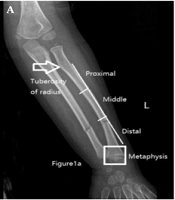
Xu D, Qin R, Wang W, Shen J, Zhang A, et al. Risk Analysis of Re-displacement After Conservative Treatment of Pediatric Unstable Fractures of Middle and Distal Forearm. Inn J Pediatr. 2022;32(1):e112155. doi: https://doi.org/10.5812/ijp.112155
Mehry Y. Treatment of supracondylar fractures of the humerus by closed reduction and percutaneous pinning. J Inflamm Dis. 2024;7(1):e154930. doi:
Sarrafan N, Mehdinasab SA, Nabaeefard S. Outcome Assessment of Hybrid External Fixation in the Treatment of Comminuted Distal Femur and Proximal Tibial Fractures. Jentashapir J Cell Mol Biol. 2016;7(1):e30014. doi: https://doi.org/10.17795/jjhr-30014
Tabrizi A, Mirza Tolouei F, Hassani E, Taleb H, Elmi A. Hematoma Block Versus General Anesthesia in Distal Radius Fractures in Patients Over 60 Years in Trauma Emergency. Anesth Pain Med. 2017;7(1):e40619. doi: https://doi.org/10.5812/aapm.40619
Last Update: 3 weeks ago
Last Update: 3 weeks ago
Last Update: 3 weeks ago
Last Update: 4 hours ago
Last Update: 1 day ago
Last Update: 4 days ago