
Full Text
Full text is available in PDF
Authors
We studied markers of both neonatal and maternal hemodynamic condition in preeclamptic patients receiving spinal anesthesia for cesarean section and evaluated primary neonatal outcome with Apgar scores.
44 preeclamptic patients randomized into two groups of 22 patients were enrolled in this trial in Tabriz Alzahra Hospital. The trials were conducted from December 2005 to August 2006. In group A, spinal anesthesia was performed with 6mg of bupivacaine and 3.3 ?g of sufentanyl, while Group B received 12mg of bupivacaine alone. Hypotension was treated with intravenous ephedrine boluses of 2.5-5 mg, up to maximum of 50 mg. After delivery, 1st and 5th minute Apgar scores were evaluated and umbilical arterial blood gas samples were drawn and analyzed.
All patients had satisfactory anesthesia. Five of 22 patients in group A required 5mg of ephedrine, while 17 of the 22 patients in group B required ephedrine. There was no significant between group differences for 1st and 5th minute Apgar scores (P=0.760, P=0.349) and umbilical arterial blood gas markers (p>0.05).
A 6mg dose of bupivacaine in combination with 3.3 ?g of sufentanyl provided satisfactory spinal anesthesia for cesarean section in preeclamptic patients, and caused substantially less hypotension than 12 mg of bupivacaine alone. There was no difference in immediate neonatal outcome, as assessed by Apgar scores and neonatal pH and base deficit.
© 2009, Author(s). This open-access article is available under the Creative Commons Attribution 4.0 (CC BY 4.0) International License (https://creativecommons.org/licenses/by/4.0/), which allows for unrestricted use, distribution, and reproduction in any medium, provided that the original work is properly cited.
Nikooseresht M, Seif Rabiei MA, Hajian P, Dastaran R, Alipour N. Comparing the Hemodynamic Effects of Spinal Anesthesia in Preeclamptic and Healthy Parturients During Cesarean Section. Anesth Pain Med. 2016;6(3):e11519. doi: https://doi.org/10.5812/aapm.11519
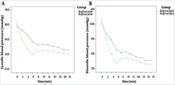
Hashemian M, Barouni M, Honarvar Z, Alidousti K, Mohajerani SA, et al. Comparison of Ropivacaine versus Bupivacaine in Spinal-Induced Hypotension in Preeclampsia Patients: A Randomized Control Trial. Anesth Pain Med. 2024;14(1):e142646. doi: https://doi.org/10.5812/aapm-142646
Nugroho AM, Sugiarto A, Chandra S, Lembahmanah L, Septica RI, et al. A Comparative Study of Fractionated Versus Single Dose Injection for Spinal Anesthesia During Cesarean Section in Patients with Pregnancy-Induced Hypertension. Anesth Pain Med. 2019;9(1):e85115. doi: https://doi.org/10.5812/aapm-85115
Chandra S, Nugroho AM, Agus H, Susilo AP. How Low Can We Go? A Double-Blinded Randomized Controlled Trial to Compare Bupivacaine 5 mg and Bupivacaine 7.5 mg for Spinal Anesthesia in Cesarean Delivery in Indonesian Population. Anesth Pain Med. 2019;9(2):e91275. doi: https://doi.org/10.5812/aapm.91275
Pournajafian A, Rokhtabnak F, Kholdbarin A, Ghodrati M, Ghavam S. Comparison of Remifentanil and Fentanyl Regarding Hemodynamic Changes Due to Endotracheal Intubation in Preeclamptic Parturient Candidate for Cesarean Delivery. Anesth Pain Med. 2012;2(2):. doi: https://doi.org/10.5812/aapm.6884
Last Update: 3 hours ago
Last Update: 1 year ago
Last Update: 17 years ago
Last Update: 5 days ago
Last Update: 2 hours ago
Last Update: 2 days ago