
1. Background
Non-transmissible diseases such as heart disease, stroke, cancer, chronic respiratory diseases, and diabetes mellitus lead to worldwide mortality. Diabetes mellitus (DM) is a significant threat to the health of the world. Additionally, diabetes and pre-diabetes global prevalence are increasing rapidly (1). The fourth leading cause of death (one and a half million deaths) is diabetes mellitus (2, 3), which is a rapidly increasing non-communicable disease (NCD) that has endangered global health. Early-onset diabetes indicates an unbalanced increase in developing countries, which results from fast-moving people from traditional to western or urban lifestyles (3, 4). Diabetes is now emerging as the epidemic of the 21st century. Asia is a dominant emerging area of the global type 2 diabetes mellitus (T2DM) epidemic contains most patients age between 45 to 64 years old (3, 5). Diabetes complications cause more than 52% of deaths over 60 years old individuals (1). Diabetes mellitus is about 90 - 95% of the total diabetes population in developed countries (6). The DM prevalence is 8.4% in adults aged 18 - 99 in 2017, rising to 9.9% in 2045 worldwide. The diabetes prevalence is 7.7% in Iran. Many factors lead to the high DM incidence in rural and urban areas. These factors include population growth, aging, urbanization, unhealthy eating habits, obesity, lifestyle, lack of mobility, deficiencies in helping health facilities, and the economy and health of a country (3, 7, 8). Frequent urination, thirstiness, weight losing, and rising hunger are short-term diabetes complications symptoms (8). Long-term complications include a microvascular disease, including diabetic foot infection and ulcers, a Charcot joint that results in amputation. A neuropathy that leads to disability, nephropathy leading to renal disease, and retinopathy leads to blindness (3, 7, 9). Knowledge and skill advances are an important social construct that modifies behaviors and produces positive health outcomes (10). A Malawian study discovered that diabetes knowledge among patients was low (9). Knowledge improvement and identification of the level of attitudes and society's lifelong attitudes are the most effective solutions for DM prevention (4, 8, 11). Self-care activities of DM like healthy nutrition, regular exercise, regular blood sugar control at home, and drug use play an important role in controlling blood glucose levels in the normal range (12). Education campaigns need to focus on priority education in less-privileged, urban, and less educated groups to prevent DM and its complications (4). According to Qin’s study, the appropriate health education for elderly individuals must incorporate DM prevention efforts with low educational levels (1). Information can help people assess their risk of DM, motivate them to seek proper treatment and care, and inspire them to take charge of their disease. Therefore, designing and developing a comprehensive health promotion strategy is desired for DM and its related risk factors. It is equally important to design and implement suitable diagnostic, management, and treatment protocols for people with DM (8). Health knowledge about DM management and an improved and well-resourced curriculum must be developed by healthcare professionals such as pharmacists, nurses, and physicians at health centers (3, 12-15). In addition, physicians and healthcare policymakers need good quality data on the distribution and determinants of DM health issues among their populations. These data need to design, frame, execute, and evaluate successful intervention programs. Healthcare practitioners and policymakers need consistent good quality data about the distribution and determinants of DM-related health issues among their population. These data are essential to design, frame, implement and evaluate successful interventional programs. Evaluation of several reviews of pharmacist-based interventions resulted in an absolute decrease in average HbA1c (12-16). Similarly, pharmacist-based DM education plus pharmaceutical care showed maximum efficacy on HbA1c and the rest of the clinical outcomes (17).
2. Objectives
The purpose of this study was to evaluate the level of KAP of DM among study participants in Iran in 2018.
3. Methods
3.1. Study Design
In a cross-sectional study, 384 individuals, who had been admitted to research, educational and medical centers in the west north of Tehran, were selected based on a suitable sampling approach in 2018. Based on the following formulas, the sample size was 284, with an alpha (error of the study) of 5% and d (accuracy) of 0.01 and P diabetes at 7.7% (18, 19) and (1-P) of 94.3%, respectively.
Inclusion criteria were individuals aged over 18 and their willingness to participate in this study. Exclusion criteria were severe physical illness and mentally handicapped in the past year attended the diabetes education program and declined to participate in this study. Niroomand et al. filled out the questionnaire containing some questions about the level of KAP in 2017. This questionnaire was collected in 2016 and validated by eight endocrinologists (18). To validate the questionnaires, 50 patients completed questionnaires two times a week for one week. The questionnaire consisted of four sections. Demographic information included: age, sex, height, weight, occupation, income, level of education, marital status, place of living, type 1 or type 2 diabetes (hemoglobin A1C more than 6/5 according to ADA, fasting blood glucose greater than or equal to 126, two-hourly sugar 200 over 75 grams of OGTT with non-hydrated glucose dissolved in water. For patients with classic DM, random sugar is greater than or equal to 200; each test should be repeated twice to confirm the diagnosis. If you have DM, how long is the diagnosis of it? Do you have DM complications? Family history of DM? Do you smoke? Do you have high blood lipids, including TG or LDL above the 10th percentile and HDL below 10th percentile, per 2 times of measurement separately after 12 hours of fasting? Are you at high blood pressure: stage 1 greater than 140/90 to 99/159 and stage 2 more than 160/100, cardiovascular disease diagnosed by your doctor? How did you get your information about DM? The number of questions in the knowledge part was ten and had multiple-choice questions with scores 0 to 1 (q2, 3,5,6,7 and 9), 0 to 3 Scores (q10), and 0 to 4 Scores (q1, 4 and 8). Questions were scored based on the number of correct answers. Questions of the attitude part were ten questions and had -2 to +2 Likert-like (strongly agree, agree, no idea, disagree, and strongly disagree). The practice included eleven questions for patients with DM and four questions for people without DM. Since having or not having diabetes was not among the inclusion criteria, the patients would respond to these four questions if they did not have DM. The score of each correct answer was one, and each wrong answer was zero. The total scores ranges were between 0 and 21 for the knowledge part, -20 to +20 for the attitude part and 0 to 11 for the practice part in people with DM, and 0 to 4 in non-diabetic. In 2017, Herath et al. offered a method based on four questions in the preventive strategy as follows: self-care (protection and attention to him/herself exactly), diet changes, and monitoring blood glucose control (19). These questions are continuous physical activity, keeping away from pure and unmixed sugar, check blood glucose levels, and getting medical advice if they or their family members get DM. Individuals' answers were assessed for evaluation of the positive/negative practices. The details of the study are described to patients, and written informed consent was obtained from all patients. Participants were made aware of their rights to leave this study at any stage. Individual’s private information was protected and unknown.
3.2. Statistical Analysis
Data were analyzed using statistical package for social science (SPSS) software version 22 for Windows. Quantitative variables were analyzed for normality using the Kolmogorov–Smirnoff test. We reported the results in two groups separately for better analysis and compared the two patients with/without DM. The difference of continuous variables between groups was analyzed using an independent t-test, and the chi-square test was used to compare qualitative variables. Moreover, the correlation between variables was tested using the Pearson test. One-way ANOVA and Tukey’s post hoc tests were used to compare KAP in different variables for comparing this variable both for the diabetic group and for the non-diabetic group. Multivariable linear regression modelling was applied to determine the variable associated with KAP about diabetes. The significance level was considered P < 0.05.
4. Results
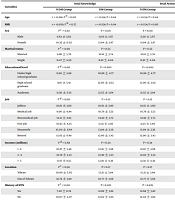
The mean age of the participants was 45.94 ± 17.47 years. The background information of individuals in diabetic and non-diabetic groups was shown in Table 1. The mean knowledge of people about diabetes was 12.13 ± 3.84, (maximum score of 21). This average for diabetics was 13.33 ± 3.63 and non-diabetic was 11.91 ± 3.94, the highest mean knowledge in these two groups belonged to the first question, namely, symptoms related to diabetes. The mean of the attitude was 5.52 ± 5, which indicates a low level of attitude toward diabetes. This means for a diabetic was 6.28 ± 4.04 and the highest mean for question 9 (appropriate treatment for diabetes-induced renal failure and blindness). Moreover, in non-diabetic cases, the mean of 4.77 ± 5.72, which is the highest mean of question 3, could be achieved by improving blood glucose and eliminating the symptoms of the disease. Most patients with/without DM had good practice with an overall mean of 10.68 ± 51.96. In diabetic patients, the mean was 3.24 ± 0.82 and more was related to smoking, and in non-diabetic patients, the mean was 3.27 ± 0.91, and most of the referrals to the doctor had a positive family history of diabetes. The KAP score of the study subjects, according to different variables, is shown in Table 2. In patients with DM, there was a significant relationship between knowledge and age, BMI, gender, education level, family history, smoking, cardiovascular disease, and information source (P < 0.05). There was a significant relationship between attitude and age, level of education, marital status, occupation, blood pressure, fat, family history, smoking, cardiovascular diseases, and information source (P < 0.05). The performance had a significant relationship with age and place of residence (P < 0.05). In patients without DM, knowledge was significantly related to age, gender, education level, family history, smoking, cardiovascular diseases, and information source (P < 0.05). Furthermore, attitudes had a significant relationship with age, gender, educational level, family history, smoking, cardiovascular diseases, and information source (P < 0.05). In the functional section, there was a significant relationship between age, marital status, education, blood pressure, fat, family history of diabetes, and cardiovascular diseases (P < 0.05). Attitude in the functional section significantly correlated with age, marital status, education, blood pressure, fat, family history of diabetes, and cardiovascular diseases (P < 0.05). Linear regression of KAP scores by selected variables among people with DM (DM) and without DM (NDM) groups is summarized in Tables 3 and 4. Regression analysis indicated that there was a significant relationship between knowledge score in the DM group with BMI, level of education, family history of DM and communication source (P < 0.05), (R square = 0.655 and R adjusted = 0.426). In the NDM group with age, BMI, level of education and attitude when knowledge was put as a dependent variable and the covariates of age, BMI, sex, marital condition, level of education, job, income (money one earns by working or by capitalizing on the work), location, history of high blood pressure, history of abnormality in blood lipids, family history of diabetes, smoking, alcohol drink, cardiovascular diseases, source of information and attitude as independent variables (P < 0.05), (R square = 0.575 and R adjusted = 0.322). When attitude was placed as a dependent and other confounding variable; the attitude score in the DM group was found that related to sex, duration of DM and knowledge (P < 0.05), (R square = 0.616 and R adjusted = 0.360), and in the NDM group with a place that some one's life and knowledge (P < 0.05), (R square = 0.604 and R adjusted = 0.341). Several formulas were used for the performance section score. Practice score in the DM group significantly correlated with level of education, work's name, place of living, cardiovascular diseases, and knowledge (P < 0.05), (R square = 0.622 and R adjusted = 0.450) and in the NDM group with age, cigarette smoke, knowledge, and attitude (P < 0.05), (R square = 0.404 and R adjusted = 0.432).
Table 1.
Demographic Characteristics of the Study Subjects in Diabetic and Non-diabetic Groups a
| Variables | Diabetic | Non-diabetic | Total | P |
|---|---|---|---|---|
| BMI | 27.55 ± 5.31 | 25.79 ± 4.37 | 26.07 ± 4.54 | 0.013 |
| Duration | 6.78 ± 8.06 | 6.78 ± 8.06 | ||
| Sex | 0.179 | |||
| Male | 21 (39.6) | 149 (50.5) | 170 (48.9) | |
| Female | 32 (64.4) | 146 (49.5) | 178 (51.1) | |
| Marital status | 0.100 | |||
| Single | 3 (5.7) | 84 (28.5) | 87 (25.00) | |
| Married | 48 (90.6) | 205 (69.5) | 253 (72.70) | |
| Divorce | 0 | 3 (1.0) | 3 (0.86) | |
| Widow | 2 (3.8) | 2 (0.7) | 4 (1.14) | |
| Educational level | 0.100 | |||
| Under high school graduate | 17 (32.1) | 38 (12.9) | 55 (15.80) | |
| High school graduate | 16 (30.2) | 76 (25.8) | 96 (27.58) | |
| Academic | 20 (37.7) | 181 (61.4) | 197 (56.62) | |
| Job | 0.001 | |||
| Jobless | 0 | 21 (7.1) | 21 (6.03) | |
| Medical job | 2 (3.8) | 42 (14.2) | 44 (12.64) | |
| Non-medical job | 3 (5.7) | 48 (16.3) | 51 (14.65) | |
| Free job | 16 (30.2) | 104 (35.3) | 120 (34.8) | |
| Housewife | 13 (24.5) | 37 (12.5) | 50 (14.36) | |
| Retired | 19 (35.8) | 43 (14.6) | 62 (17.81) | |
| Income | 0.712 | |||
| 1 - 2 Million | 29 (54.7) | 176 (59.7) | 205 (58.91) | |
| 2 - 4 Million | 17 (32.1) | 92 (31.2) | 109 (31.32) | |
| > 5 Million | 7 (13.2) | 27 (9.2) | 34 (9.77) | |
| Location | 0.140 | |||
| Tehran | 53 (100) | 276 (93.6) | 329 (94.5) | |
| Out of Tehran | 0 | 19 (6.4) | 19 (5.5) | |
| Complications in diabetic patients | - | - | - | |
| Yes | 17 (32.1) | 17 (32.1) | ||
| No | 36 (67.9) | 36 (67.9) | ||
| History of HTN | 0.100 | |||
| Yes | 28 (52.8) | 35 (11.9) | 60 (17.2) | |
| No | 25 (47.2) | 260 (88.1) | 288 (82.8) | |
| History of DLP | 0.12 | |||
| Yes | 23 (43.4) | 53 (18.0) | 83 (28.86) | |
| No | 30 (56.6) | 242 (82.0) | 265 (76.14) | |
| Family history of DM | 0.001 | |||
| Yes | 35 (66.0) | 72 (24.4) | 107 (30.8) | |
| No | 18 (34.0) | 223 (75.6) | 240 (69.2) | |
| Smoking | 0.075 | |||
| Yes | 3 (5.7) | 41 (13.9) | 44 (12.64) | |
| No | 50 (94.3) | 254 (86.1) | 304 (87.36) | |
| Alcohol drink | 0.053 | |||
| Yes | 1 (1.9) | 31 (10.5) | 32 (9.19) | |
| No | 52 (98.1) | 264 (89.5) | 316 (91.1) | |
| Cardiovascular disease | 0.21 | |||
| Yes | 14 (26.4) | 20 (6.8) | 34 (9.8) | |
| No | 39 (73.6) | 275 (93.2) | 314 (90.2) | |
| Source of information | 0.20 | |||
| Media | 9 (17.0) | 85 (28.81) | 89 (27.1) | |
| Internet | 0 | 33 (11.19) | 29 (8.8) | |
| Family and Friends | 9 (17.0) | 64 (21.7) | 68 (20.7) | |
| Doctor | 29 (54.7) | 89 (30.17) | 113 (34.4) | |
| Media, internet, family and doctor | 6 (11.3) | 24 (8.13) | 30 (9.1) |
aValues are expressed as No. (%) or mean ± SD.
Table 2.
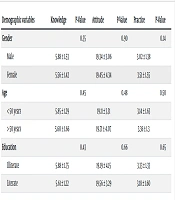
Correlation Between Knowledge, Attitude, and Practice Score of the Study Subjects to Different Variables a
| Variables | Total Knowledge | Total Attitude | Total Practice | |||
|---|---|---|---|---|---|---|
| N DM Group | DM Group | N DM Group | DM Group | N DM Group | DM Group | |
| Age | r = -0.214; P b = 0.00 | r = 0.154; P = 0.04 | r = 0.154; P = 0.04 | r = 0.32; P = 0.00 | r = 0.20; P = 0.00 | r = 0.165; P = 0.00 |
| BMI | r = -0.050; P b = 0.37 | r = 0.154; P = 0.04 | r = 0.154; P = 0.06 | r = 0.084; P = 0.128 | r = 0.068; P = 0.22 | r = 0.066; P = 0.24 |
| Sex | P c = 0.38 | P = 0.00 | P = 0.00 | P = 0.063 | P = 0.97 | P = 0.16 |
| Male | 9.83 ± 5.03 | 11.38 ± 3.67 | 11.38 ± 3.67 | 0.67 ± 2.27 | 2.77 ± 1.41 | 3.21 ± 0.98 |
| Female | 10.35 ± 6.02 | 12.84 ± 3.87 | 12.84 ± 3.87 | 1.22 ± 3.12 | 2.77 ± 1.49 | 3.35 ± 0.79 |
| Marital status | P c = 0.09 | P = 0.55 | P = 0.55 | P = 0.00 | P = 0.021 | P = 0.29 |
| Married | 9.68 ± 5.76 | 12.18 ± 3.74 | 12.18 ± 3.74 | 1.18 ± 2.92 | 3.09 ± 1.08 | 3.22 ± 0.88 |
| Single | 11.47 ± 4.59 | 11.91 ± 4.04 | 11.91 ± 4.04 | 0.04 ± 0.26 | 2.67 ± 1.53 | 3.20 ± 0.91 |
| Educational level | P d = 0.00 | P = 0.002 | P = 0.002 | P = 0.07 | P = 0.00 | P = 0.10 |
| Under high school graduate | 6.90 ± 5.98 | 10.96 ± 4.77 | 10.96 ± 4.77 | 4.71 ± 4.93 | 2.13 ± 1.62 | 3.05 ± 0.94 |
| High school graduate | 9.16 ± 5.41 | 12.00 ± 3.02 | 12.00 ± 3.02 | 4.03 ± 5.33 | 2.54 ± 1.56 | 3.02 ± 0.89 |
| Academic | 11.50 ± 5.01 | 12.55 ± 3.84 | 12.55 ± 3.84 | 5.55 ± 5.70 | 3.06 ± 1.24 | 3.35 ± 0.86 |
| Job | P d = 0.00 | P = 0.12 | P = 0.12 | P = 0.00 | P = 0.17 | P = 0.12 |
| Jobless | 10.61 ± 3.80 | 10.61 ± 3.80 | 10.61 ± 3.80 | 0 | 3.33 ± 1.27 | 3.33 ± 1.27 |
| Medical job | 9.06 ± 4.84 | 10.79 ± 3.53 | 10.79 ± 3.53 | 0.47 ± 1.59 | 2.67 ± 1.32 | 3.13 ± 0.85 |
| Non-medical job | 14.21 ± 4.85 | 14.92 ± 3.73 | 14.92 ± 3.73 | 0.48 ± 2.28 | 3.24 ± 0.83 | 3.24 ± 0.83 |
| Free job | 10.83 ± 4.35 | 11.35 ± 3.46 | 11.35 ± 3.46 | 0.52 ± 2.47 | 3.1 ± 31.23 | 3.32 ± 0.82 |
| Housewife | 10.00 ± 6.64 | 13.84 ± 3.36 | 13.84 ± 3.36 | 1.86 ± 3.37 | 2.66 ± 1.72 | 3.38 ± 0.85 |
| Retired | 12.83 ± 6.48 | 12.90 ± 3.43 | 12.90 ± 3.43 | 2.19 ± 4.13 | 2.77 ± 1.81 | 3.52 ± 0.90 |
| Income (million) | P d = 0.68 | P = 0.54 | P = 0.54 | P = 0.144 | P = 0.070 | P = 0.34 |
| 1 - 2 | 10.27 ± 5.56 | 12.10 ± 3.98 | 12.10 ± 3.98 | 0.86 ± 2.39 | 2.77 ± 1.40 | 2.22 ± 0.90 |
| 2 - 4 | 10.78 ± 5.23 | 12.40 ± 3.23 | 12.40 ± 3.23 | 0.71 ± 2.45 | 2.86 ± 1.36 | 3.28 ± 0.81 |
| > 5 | 9.47 ± 6.15 | 12.91 ± 4.36 | 12.91 ± 4.36 | 1.94 ± 4.57 | 2.76 ± 1.68 | 3.55 ± 0.94 |
| Location | P c = 0.58 | P = 0.17 | P = 0.17 | P = 0.119 | P = 0.130 | P = 0.002 |
| Tehran | 10.06 ± 5.65 | 12.21 ± 3.84 | 12.21 ± 3.84 | 1.01 ± 2.81 | 2.74 ± 1.47 | 5.22 ± 5.45 |
| Out of Tehran | 10.78 ± 3.66 | 10.77 ± 3.66 | 10.77 ± 3.66 | 3.26 ± 0.87 | 1.26 ± 5.40 | |
| History of HTN | P c = 0.00 | P = 0.225 | P = 0.225 | P = 0.000 | P = 0.00 | P = 0.66 |
| Yes | 7.20 ± 6.78 | 12.68 ± 3.82 | 12.68 ± 3.82 | 2.80 ± 4.32 | 1.91 ± 175 | 3.24 ± 0.84 |
| No | 10.07 ± 5.07 | 12.02 ± 3.84 | 12.02 ± 3.84 | 0.57 ± 2.10 | 2.95 ± 131 | 3.29 ± 0.90 |
| History of DLP | P c = 0.00 | P = 0.92 | P = 0.92 | P = 0.00 | P = 0.00 | P = 0.41 |
| Yes | 7.22 ± 6.09 | 12.17 ± 3.48 | 12.17 ± 3.48 | 2.40 ± 4.09 | 2.13 ± 1.83 | 3.35 ± 0.95 |
| No | 10.97 ± 5.10 | 12.12 ± 3.96 | 12.12 ± 3.96 | 0.52 ± 2.00 | 2.96 ± 1.25 | 3.26 ± 0.87 |
| Family history | P c = 0.001 | P = 0.001 | P = 0.001 | P = 0.00 | P = 0.00 | P = 0.27 |
| Yes | 8.56 ± 6.61 | 13.15 ± 3.52 | 13.15 ± 3.52 | 2.17 ± 3.72 | 2.13 ± 1.83 | 3.36 ± 0.87 |
| No | 10.78 ± 4.89 | 11.68 ± 3.90 | 11.68 ± 3.90 | 0.41 ± 1.96 | 2.96 ± 1.25 | 3.25 ± 0.90 |
| Smoking | P c = 0.67 | P = 0.002 | P = 0.002 | P = 0.010 | P = 0.147 | P = 0.62 |
| Yes | 9.76 ± 4.24 | 10.41 ± 3.28 | 10.41 ± 3.28 | 0.32 ± 1.32 | 3.06 ± 1.29 | 3.34 ± 0.99 |
| No | 10.14 ± 5.73 | 12.38 ± 3.86 | 12.38 ± 3.86 | 1.04 ± 2.88 | 2.72 ± 1.46 | 3.27 ± 0.87 |
| Alcohol | P c = 0.42 | P = 0.152 | P = 0.152 | P = 0.091 | P = 0.066 | P = 0.65 |
| Yes | 10.87 ± 3.64 | 11.1 ± 9 3.04 | 11.1 ± 9 3.04 | 0. 16 ± 0.89 | 3.22 ± 1.23 | 3.35 ± 1.08 |
| No | 10.02 ± 5.71 | 12.23 ± 3.90 | 12.23 ± 3.90 | 1.03 ± 2.85 | 2.72 ± 1.46 | 3.27 ± 0.87 |
| Cardiovascular | P c = 0.08 | P = 0.037 | P = 0.037 | P = 0.00 | P = 0.00+ | P = 0.06 |
| Yes | 7.70 ± 7.17 | 13.44 ± 4.03 | 13.44 ± 4.03 | 2.97 ± 5.05 | 2.08 ± 1.86 | 3.54 ± 0.66 |
| No | 10.36 ± 5.30 | 11.99 ± 3.08 | 11.99 ± 3.08 | 0.73 ± 2.27 | 2.84 ± 1.38 | 3.25 ± 0.90 |
| Source of information | P d = 0.86 | P = 0.00 | P = 0.00 | P = 0.014 | P = 0.21 | P = 0.22 |
| Media | 10.19 ± 5.033 | 11.88 ± 4.21 | 11.88 ± 4.21 | 0.82 ± 2.70 | 2.84 ± 1.40 | 3.14 ± 1.09 |
| Family and friends | 9.44 ± 4.42 | 10.48 ± 2.94 | 10.48 ± 2.94 | 0.61 ± 0.193 | 2.88 ± 1.34 | 3.10 ± 0.81 |
| Internet | 10.48 ± 2.94 | 10.92 ± 3.01 | 10.92 ± 3.01 | 0 | 3.10 ± 0.81 | 3.27 ± 0.85 |
| Doctor | 10.00 ± 7.00 | 13.31 ± 4.10 | 13.31 ± 4.10 | 1.69 ± 3.55 | 2.50 ± 1.65 | 3.36 ± 0.77 |
| All choices | 10.60 ± 6.00 | 12.90 ± 3.03 | 12.90 ± 3.03 | 0.73 ± 2.47 | 2.70 ± 1.55 | 3.42 ± 0.79 |
| Total score | 11.91 ± 3.94 | 13.33 ± 3.63 | 4.77 ± 5.72 | 6.28 ± 4.04 | 3.27 ± 0.91 | 3.24 ± 0.82 |
aValues are expressed as mean ± SD.
bPearson Correlation.
ct-test.
dANOVA.
Table 3.
Linear Regression of Knowledge, Attitude, and Practice Score by Selected Variables Among DM Group (N = 53)
| Variables | Knowledge Score | Attitude Score | Practice Score | ||||||
|---|---|---|---|---|---|---|---|---|---|
| Unstandardized Beta | Standardized Beta | P-Value | Unstandardized Beta | Standardized Beta | P-Value | Unstandardized Beta | Standardized Beta | P-Value | |
| Age | -0.052 | -0.169 | 0.604 | 0.092 | 0.278 | 0.184 | 0.009 | 0.050 | 0.859 |
| BMI | 0.256 | 0.361 | 0.014 | -0.223 | -0.241 | 0.126 | -0.034 | -0.098 | 0.685 |
| Sex | 1.085 | 0.146 | 0.514 | 3.478 | 0.428 | 0.032 | 1.065 | 0.290 | 0.259 |
| Marital status | -1.267 | -0.119 | 0.609 | 4.078 | 0.358 | 0.154 | 0.819 | 0.230 | 0.406 |
| Educational level | -2.180 | -0.441 | 0.007 | 1.528 | 0.288 | 0.083 | 1.379 | 0.583 | 0.023 |
| Job | 1.106 | 0.320 | 0.225 | -0.297 | -0.080 | 0.771 | 0.126 | 0.078 | 0.805 |
| Income | 2.121 | 0.403 | 0.114 | 1.326 | 0.235 | 0.375 | -0.341 | -0.134 | 0.540 |
| Location | 1.217 | 0.219 | 0.809 | 4.186 | 0.223 | 0.621 | -0.552 | -0.313 | 0.041 |
| Complication | -1.033 | -0.136 | 0.518 | 0.177 | 0.022 | 0.922 | -0.489 | -0.130 | 0.671 |
| History of HTN | -0.629 | -0.085 | 0.665 | -1.866 | -0.235 | 0.262 | -0.496 | -0.137 | 0.650 |
| History of DLP | 0.186 | 0.025 | 0.884 | 0.524 | 0.064 | 0.718 | -0.009 | -0.002 | 0.989 |
| Family history of DM | -2.958 | -0.390 | 0.023 | 2.862 | 0.352 | 0.090 | 0.943 | 0.229 | 0.374 |
| Smoking | 5.102 | 0.297 | 0.215 | -8.838 | -0.480 | 0.063 | -3.485 | -0.429 | 0.102 |
| Alcohol drink | -3.932 | -0.164 | 0.393 | 5.634 | 0.219 | 0.283 | 1.081 | 0.277 | 0.470 |
| Cardiovascular diseases | -1.184 | -0.146 | 0.579 | 3.880 | 0.445 | 0.117 | 0.141 | 0.646 | 0.027 |
| Duration of DM | 0.038 | 0.085 | 0.651 | 0.295 | 0.622 | 0.004 | 0.926 | 0.622 | 0.051 |
| Source of information | -1.166 | -0.414 | 0.010 | -0.077 | -0.025 | 0.873 | -0.064 | -0.135 | 0.591 |
| Knowledge | - | - | - | -0.178 | -0.167 | 0.360 | 0.277 | 0.581 | 0.015 |
| Attitude | -0.152 | -0.163 | 0.360 | - | - | - | -3.485 | -0.429 | 0.102 |
| Practice | 0.001 | 0.007 | 0.056 | 0.001 | 0.007 | 0.972 | - | - | - |
Table 4.
Linear Regression of Knowledge, Attitude, and Practice Score by Selected Variables Among NDM Group (N = 259)
| Variables | Knowledge Score | Attitude Score | Practice Score | ||||||
|---|---|---|---|---|---|---|---|---|---|
| Unstandardized Beta | Standardized Beta | P-Value | Unstandardized Beta | Standardized Beta | P-Value | Unstandardized Beta | Standardized Beta | P-Value | |
| Age | 0.048 | 0.208 | 0.011 | 0.005 | 0.015 | 0.859 | 0.014 | 0.260 | 0.002 |
| BMI | 0.179 | 0.202 | 0.001 | -0.145 | -0.110 | 0.077 | 0.017 | 0.082 | 0.175 |
| Sex | 0.804 | 0.104 | 0.093 | 1.110 | 0.096 | 0.138 | 0.220 | 0.120 | 0.058 |
| Marital status | -0.843 | -0.110 | 0.120 | -0.130 | -0.011 | 0.878 | -0.136 | -0.075 | 0.300 |
| Educational level | 1.383 | 0.257 | 0.000 | -0.430 | -0.054 | 0.410 | 0.057 | 0.045 | 0.478 |
| Job | -0.072 | -0.027 | 0.693 | -0.434 | -0.108 | 0.129 | -0.013 | -0.020 | 0.773 |
| Income | -0.549 | -0.092 | 0.118 | 0.018 | 0.002 | 0.974 | 0.045 | 0.032 | 0.594 |
| Location | 0.326 | 0.021 | 0.712 | -2.848 | -0.124 | 0.038 | 0.267 | 0.073 | 0.211 |
| History of HTN | -0.734 | -0.061 | 0.289 | 0.938 | 0.052 | 0.386 | 0.203 | 0.071 | 0.226 |
| History of DLP | 0.525 | 0.052 | 0.365 | 0.325 | 0.022 | 0.720 | -0.051 | -0.021 | 0.715 |
| Family history of DM | -0.320 | -0.035 | 0.522 | -1.035 | -0.077 | 0.184 | 0.115 | 0.054 | 0.341 |
| Smoking | 0.519 | 0.047 | 0.460 | 0.673 | 0.041 | 0.540 | -0.357 | -0.136 | 0.036 |
| Alcohol drink | -0.070 | -0.005 | 0.927 | -0.206 | -0.011 | 0.863 | -0.125 | -0.042 | 0.499 |
| Cardiovascular disease | -0.821 | -0.053 | 0.367 | 0.330 | 0.014 | 0.816 | -0.072 | -0.020 | 0.744 |
| Source of information | 0.380 | 0.135 | 0.017 | 0.116 | 0.028 | 0.645 | 0.000 | 0.000 | 0.994 |
| Knowledge | - | - | - | 0.384 | 0.258 | 0.000 | 0.064 | 0.271 | 0.000 |
| Attitude | 0.158 | 0.235 | 0.000 | - | - | - | 0.029 | 0.181 | 0.003 |
5. Discussion
Patients with diabetes were the target population in several studies on their knowledge, attitudes, and practice about diabetes. However, in this study, analyses were conducted on general individuals. The results showed that general awareness about DM among the subjects was at a moderate level of 12.13 ± 3.84, which was 13.33 ± 3.63 and 11.71 ± 3.64 amid diabetic and non-diabetic ones, respectively. In other words, people with diabetes inevitably receive more information from this disease, especially are informed by their doctors. Therefore, they are more likely to obtain more knowledge about their illness. According to Fatima et al. studies, the average level of knowledge among subjects without DM and respondents with T2DM are 70 and 68%, respectively. Our research is consistent with two other studies in Bangladesh (4). However, in most investigations in developing countries, poor knowledge of diabetes has been reported among the general population (20). In this study, people's knowledge of diabetes is significantly associated with age, BMI, gender, educational level, family history, smoking, cardiovascular diseases, and information source. Women were more knowledgeable than those with academic education, people with positive family history, non-smokers and cardiovascular diseases, and those who were the source of their information. In subjects without DM, knowledge is associated with age, level of education, occupation, high blood pressure, blood lipid, and family history. In this study, the most common source of information was in both groups of physicians. Having a chronic disease in a close relative may be a good source of health information, but such a resource is only helpful and cannot be a reliable source (21, 22). The knowledge levels among all partakers are directly associated with the level of ability to read and write, the activity level of imparting and acquiring skills received and ease to use of information on diabetes (23). According to the study of Fatema et al., the people's knowledge on diabetic/non-diabetic status is related to age, gender, place of residence, education, income, but contrary to our study that women's knowledge was greater. Researches showed higher knowledge levels belong to men and higher levels of attitude and performance belong to women (4). The findings of our study show that the gender gap is identical to studies in different countries, including Bangladesh, about KAP about DM (24). According to Salehi et al. in 2016, there was a significant relationship between the level of education and the family history of diabetes with knowledge gained, and younger ones were more likely to seek and increase knowledge about diabetes than their elderly counterparts (25). Against our study, the level of knowledge was related directly to age. In the study of Rezaee Esfahrood et al., an increase in the health literacy score was associated with increasing age and decreasing the incidence of diabetes. Furthermore, the mean health literacy score was significantly higher in males than in females and in retired people, residents of the city, people with a high school diploma and a high and medium economic status (26). In a study conducted in South Sri Lanka, men and educated people had more knowledge than women and those with lower education (19), which is consistent with the study of Fatema et al. (4). In another study, a significant relationship was found between gender and marital status with knowledge. So that men and married women had more information than single women (27). In a study done in China in 2016, diabetes health literacy was significantly different from age, family history of DM and chronic diseases, BMI, high blood pressure or type of diabetes, and others. Men and women without a hyperglycemia history and low education had lower health literacy levels about DM than others (1). Bukhsh et al. researched health literacy levels, which correlated significantly with age, education, and marital status, and married people with higher education and age had higher health literacy and a better understanding of health information and instructions taken (12). In the study of Demaio et al., the rural dwellers were unemployed, with a lower level of education than men with lesser knowledge (14). This knowledge gap indicates huge differences in the pattern of public health policy and interventions in countries (28). According to the regression test in this study, BMI, education, and information source was a common fact affecting the knowledge of and people with and without DM. Since obesity is one of the major risk factors for T2DM (4), the mean BMI in patients with DM was higher than in patients without DM. Therefore, regarding the development of practice programs for diabetics, especially in prevention clinics, more attention should be devoted to exercise and diet. Besides, individuals should gain more knowledge in the field of information supply than before. Participants in this research suffered from a lack of perception, and the mean of patients with DM was higher than participants without DM. Time-efficient diagnosis and proper treatment play a significant role to prevent renal failure and blindness. Fatema et al. 4 study indicated that attitude scores did not have a significant effect on different groups (P < 0.05). Many factors contribute to diabetes effectiveness, such as age, education level, marital status, occupation, high blood pressure, blood lipids, family history, smoking, cardiovascular diseases, and information source. The attitude of people related to educational academic level, martial, and occupation status. In people without DM, attitudes had a significant relationship with age, gender, educational level, family history, smoking, cardiovascular diseases, and information source. As a result, women have a better attitude than those with academic education, a positive family history of diabetes, non-smokers, people with cardiovascular diseases, and those who obtained information from the doctor. According to the regression test, the factors affecting the attitudes of diabetics and non-diabetics are different and people have a greater impact on gender and duration of diabetes, but in the case of non-diabetic people and their knowledge about diabetes. The performance of diabetics was related only to age and place of residence. The performance of people without DM significantly correlated with age, marital status, education, blood pressure, blood lipids, family history of DM, and cardiovascular diseases. Therefore, the performance of married, educated people, with a lack of blood pressure and lipids, with no positive family history, and with no history of cardiovascular diseases was better. According to Fatema et al., people with higher BMI had better performance (4). In Herath et al., individuals who were required to exercise and had a job had better control of their blood glucose than those with better physical activity and no occupation (19). According to the regression test, the knowledge of individuals is one of the most important factors affecting the performance of both diabetic and non-diabetic groups and indicates that increasing their knowledge about DM will improve their performance. The results of Fatema et al. study showed that good quality of performance rose with better educational levels and better income in both respondents with/without DM (4). Many studies have been done on the level of knowledge of patients' attitudes and practices in Iran (29). In the study of Niroomand et al., the patients in this study had a high level of general knowledge and attitude, and the practice score was good in comparison with previous evaluations in Iran (18). Not many studies are available, which indicate the relationship between knowledge and practice among NDM and DM groups. It has been described that patients with DM have a higher KAP score than patients without DM (30, 31). The present study shows a significant positive relationship between attitude and knowledge and practice. A high level of knowledge is connected with a high level of attitude and practice, and a high level of attitude is associated with a high level of practice. This means better knowledge, better attitude, and ultimately better performance toward diabetes. These results harmonize in opinion with the results of other studies (4, 32, 33).
5.1. Conclusions
Knowledge, attitude, and practice (KAP) regarding diabetes highly depend on the socioeconomic state, cultural, mental acceptance of a claim as true, and actions performed repeatedly. It is essential to be aware of these variables in planning strategies for preventing and handling diabetes. According to the increasing number of patients with diabetes, the general knowledge of diabetes, its risk factors, and its complications should come first in health education programs. In this case, pre-diabetes can be identified in the early stages, and at least self-care patients can be immune to complications. Besides, government and non-governmental organizations should often organize diabetes-related health programs, seminars, and activities related to diabetes. The limitation of this study is its cross-sectional design, so it cannot be argued, and it is not possible to determine the cause and effect relationships of the associations. Besides, we cannot deny that the self-reporting scheme has introduced bias, so further studies are needed to confirm these findings.