Fulltext
Fulltext is availale in the PDF.
Zahedan Journal of Research in Medical Sciences
The Official Journal of Zahedan University of Medical Sciences
Image Credit:Zahedan J Res Med Sci
Authors
Background: Organic brain pathology usually may be followed by mental disorders. This research was aimed at constructing a predictive model and investigating the risk factors in the incidence of mental disorders after traumatic brain injury (TBI).
Materials and Methods: Two hundred and thirty eight patients (195 males and 43 females) were entered the study in a descriptive-longitudinal design by non-probable and consecutive sampling method. They were undergone neurosurgical examinations and psychological evaluations. After a 4-month follow-up, 65.1% of the patients (N=155) referred to a psychiatrist in order to determine the nature of mental disorder following TBI, using a structured clinical interview based on DSM-IV diagnostic criteria.
Results: 75.48% (117 cases) of patients had a form of mental disorder secondary to TBI. The Results of binary logistic regression analyses for calculating odds ratio (OR) model with 95% confidence interval (CI) indicating the severity of TBI (OR=3.497, 95% CI =1.259-9.712), presence of subcranial injury (OR=2.834, 95% CI =1.022-7.857) and falling level of general compatibility, as measured by modified version of GHQ-28 (OR=1.072, 95% CI =1.035-1.111) indicated an increasing risk in the incidence of mental disorder.
Conclusion: Findings revealed that in the development of post-TBI mental disorders, first there was a close relationship with organic brain pathology (TBI severity and subcranial injury), although the role of effective psychological factors such as level of general compatibility after trauma should not be neglected. Also in order to predict the people at risk of mental disorders after TBI, the proposed predictive model in this study can be used.
© 2014, Author(s). This open-access article is available under the Creative Commons Attribution 4.0 (CC BY 4.0) International License (https://creativecommons.org/licenses/by/4.0/), which allows for unrestricted use, distribution, and reproduction in any medium, provided that the original work is properly cited.
Rezaei S, Salehi I, Yousefzadeh S, Moosavi HA, Rahnama N. Aggressive personality characteristics and it’s determinant factors in patients with traumatic brain injury. J Kermanshah Univ Med Sci. 2012;16(1):e78882. doi:
Shafiei E, Fakharian E, Omidi A, Akbari H, Delpisheh A, et al. Comparison of Artificial Neural Network and Logistic Regression Models for Prediction of Psychological Symptom Six Months after Mild Traumatic Brain Injury. Iran J Psychiatry Behav Sci. 2017;11(3):e5849. doi: https://doi.org/10.17795/ijpbs-5849
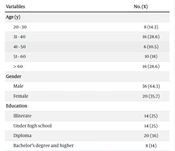
Mohammadi HR, Hatefi M, Rahmatian A, Sadeghi S. Risk Factors for Post-traumatic Epilepsy in Patients with Traumatic Brain Injuries. Arch Neurosci. 2024;11(1):e144357. doi: https://doi.org/10.5812/ans-144357
Shafiei E, Karimi Rouzbahani A, Nademi A, Jafarpour M. The Role of Emotion Regulation as a Mediator Between Difficulties in Emotion Regulation and Aggression and Bullying Behavior in Motorcyclists with Mild Traumatic Brain Injury. Iran J Psychiatry Behav Sci. 2024;18(2):e135435. doi: https://doi.org/10.5812/ijpbs-135435
Nademi A, Shafiei E, Valizadeh R. Forecasting Psychological Symptoms in Mild Traumatic Brain Injury: A Nonparametric Approach. Iran J Psychiatry Behav Sci. 2019;13(3):e82799. doi: https://doi.org/10.5812/ijpbs.82799
Last Update: 1 week ago
Last Update: 1 week ago
Last Update: 1 week ago
Last Update: 3 hours ago
Last Update: 6 hours ago
Last Update: 5 days ago